
A Hyundai H100 that refuses to start can disrupt deliveries, business operations, and daily transportation. The problem may appear suddenly, even when the truck was running normally the previous day. Sometimes the starter clicks without turning the engine, while in other cases the engine cranks repeatedly but never fires.
The right repair depends on these symptoms. Understanding what happens when you turn the key will help you narrow down the cause, perform a few safe checks, and determine when your H100 needs professional attention.
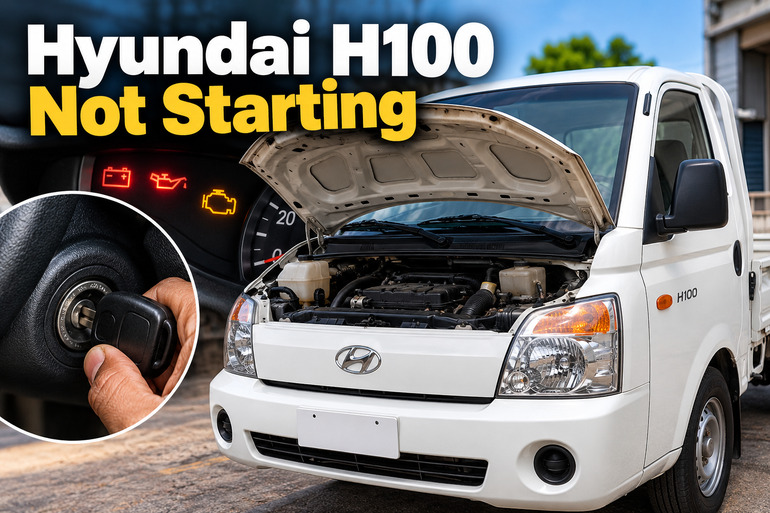
Understanding Why Your Hyundai H100 Won’t Start
The first step is to identify what the truck does when you turn the ignition key. A starting problem generally falls into one of two categories. The engine either fails to crank, or the starter turns the engine without getting it running. These symptoms point to different systems and require different diagnostic approaches.
When the engine does not crank, you may hear a single click, several rapid clicks, or nothing at all. The dashboard lights may also dim when you attempt to start the truck. These signs often point to a weak battery, poor electrical connections, or a faulty starter circuit. A problem with the ignition switch or a related safety interlock can also prevent the starter from operating.
If the engine cranks but does not start, the battery and starter may be functioning well enough to turn the engine. However, a running diesel engine also needs an adequate supply of fuel, sufficient compression, and the correct starting conditions. Depending on the H100’s engine and model year, a fault in the glow plug system, fuel supply, or electronic engine controls can prevent combustion.
Cold weather, a nearly empty fuel tank, recent maintenance, and a truck that has remained unused for several days can provide useful clues. Repeatedly turning the key without diagnosing the problem may drain the battery and overheat the starter. Identifying the exact symptom before replacing parts can save you considerable time and money.
Hyundai H100 Not Starting: Likely Causes
Several faults can prevent your Hyundai H100 from starting, and the symptoms often overlap. Start with the battery and basic electrical connections before investigating the fuel and diesel preheating systems.
1. A Weak or Discharged Battery
A weak battery is a common reason an H100 refuses to start. The battery supplies the electrical power needed to operate the starter motor and other systems involved in starting the engine. If its charge is too low, the starter may turn slowly, click repeatedly, or remain silent.
Leaving the headlights or interior lights on, keeping the truck unused for an extended period, or having a failing charging system can leave the battery discharged. Batteries also lose performance as they age. A battery may operate the dashboard lights and radio while still lacking enough power to crank the engine.
Pay attention to the lights when you attempt to start the truck. If they become noticeably dim or go out, the battery may be discharged or its connections may be poor. However, these symptoms do not prove that the battery itself is faulty. A damaged cable, corroded terminal, or defective starter can produce similar behavior.
2. Corroded Battery Terminals or Loose Connections
Even a battery with an adequate charge can fail to deliver enough power if its terminals or cables have poor electrical contact. Corrosion often appears as a white, blue, or greenish deposit around a battery terminal. Loose connections can develop through vibration, repeated use, or previous maintenance.
The Hyundai H100 is often used for commercial transportation, where vibration and frequent starting can place stress on electrical connections. A poor connection may cause intermittent starting problems. The truck might start normally one morning and fail the next, or the dashboard may lose power when you turn the key.
Inspecting the battery terminals can help identify this problem. Look for visible corrosion, damaged cable insulation, or terminals that appear loose. Also check for a visibly damaged ground cable, which provides the electrical return path between the engine, body, and battery. Avoid touching exposed electrical conductors or disconnecting battery cables while the ignition is on.
3. A Faulty Starter Motor, Solenoid, or Starting Circuit
The starter motor turns the engine until it can run independently. A solenoid, relay, ignition switch, and associated wiring help control the starting process. A failure in any of these components may prevent the engine from cranking.
A single click when you turn the key can indicate that the starter solenoid is engaging without the motor turning. Worn starter contacts, a failed motor, insufficient battery power, and poor connections can all produce this symptom. Rapid clicking often points to low battery voltage or a poor electrical connection, although proper testing is needed to confirm the cause.
When turning the key produces no sound, the fault may lie in the ignition switch, starter relay, a blown fuse, or a safety interlock. The exact arrangement varies with the H100’s model year and transmission configuration. If the battery checks out but the starter remains inactive, testing the starting circuit is more useful than replacing the starter immediately.
4. Failed Glow Plugs or a Faulty Preheating System
Diesel engines rely on compression to ignite fuel. During cold starts, glow plugs heat the combustion chambers to help the engine start more readily. The preheating system can include glow plugs, a relay, wiring, and a dashboard indicator.
When one or more glow plugs fail, the engine may take longer to start, especially when cold. Several failed plugs can make starting extremely difficult. You may notice prolonged cranking, uneven running immediately after the engine starts, or increased exhaust smoke during a difficult cold start.
A failed glow plug relay or disconnected wire can produce similar symptoms because the plugs may not receive the electricity needed to heat them. However, glow plugs are less likely to explain every no-start condition. If the engine will not crank at all, investigate the battery and starting circuit first.
5. Fuel Supply Problems
Your H100’s diesel engine needs a continuous supply of clean fuel at the correct pressure. An empty tank, clogged fuel filter, air trapped in the fuel system, or a failing fuel pump can prevent the engine from starting.
The problem may begin after the truck runs out of diesel, receives contaminated fuel, or undergoes fuel filter replacement. Depending on the engine, air entering the fuel lines can interrupt fuel delivery until the system is correctly primed. A restricted filter can also reduce the amount of fuel reaching the engine.
A truck that cranks normally but refuses to start may have a fuel supply problem, particularly if it recently ran low on diesel or stalled during operation. Newer H100 variants with electronically controlled injection systems may also develop fuel pressure or injector control faults. These require appropriate diagnostic equipment rather than guesswork.
Hyundai H100 Not Starting: DIY Fixes
Start with the checks you can complete safely without dismantling the engine or fuel system. The following methods address common causes, but the correct repair depends on your H100’s exact symptoms and engine configuration.
1. Check the Battery Charge and Condition
Turn off the headlights, interior lights, radio, and other electrical accessories. Make sure the truck is parked safely, with the parking brake applied and the transmission in the appropriate starting position. For a manual transmission, select neutral and follow the owner’s manual instructions regarding the clutch.
Turn the key to the starting position and observe what happens. If the starter turns slowly or the dashboard lights dim sharply, the battery may be discharged. Inspect the battery case for cracks, swelling, or leakage. Do not attempt to jump-start a visibly damaged or leaking battery.
If you have a digital multimeter, measure the voltage across the battery terminals with the engine off. A fully charged conventional 12-volt lead-acid battery typically reads around 12.6 volts at rest, although temperature, battery design, and recent charging affect the reading. A voltage reading alone cannot establish the battery’s full condition.
If the battery is discharged and shows no signs of damage, recharge or jump-start it using the procedure specified in the H100 owner’s manual. Use suitable equipment, follow the correct connection sequence, and keep sparks away from the battery. If the truck starts but repeatedly fails after being switched off, have the battery and charging system tested.
2. Inspect and Clean Accessible Battery Connections
With the ignition switched off, examine the battery terminals and visible cables. Look for corrosion, loose-looking clamps, damaged insulation, and signs of overheating. Do not reach into a moving engine compartment or use metal tools in a way that could bridge the battery terminals.
If the connections are corroded, cleaning them can restore proper electrical contact. However, disconnecting a battery can affect electronic settings, and the correct procedure depends on the vehicle. Follow the owner’s manual and use appropriate protective equipment. If you’re unfamiliar with battery maintenance, ask a technician to carry out the cleaning.
After the connections have been secured, try starting the truck again. If the starter now cranks normally, poor electrical contact may have contributed to the problem. If nothing changes, the battery may still be weak, or the starter circuit may have another fault.
3. Use the Correct Diesel Starting Procedure
Diesel H100 variants may require preheating before starting, particularly when the engine is cold. Insert the key and switch the ignition to the ON position. If the vehicle has a glow plug indicator, allow the light to go out before turning the key to START, following the instructions for your particular model.
Once the preheating cycle is complete, crank the engine according to the owner’s manual. Avoid holding the key in the starting position for an extended period or making repeated attempts without pauses. Continuous cranking can overheat the starter and rapidly discharge the battery.
If the engine starts readily when warm but struggles after sitting overnight, investigate the glow plugs, relay, battery, and fuel supply. If the preheating indicator does not behave as described in the manual, a fault in the indicator circuit or preheating system may be present. The indicator alone cannot establish whether every glow plug is working correctly.
4. Verify the Fuel Level and Look for Visible Leaks
Check the fuel gauge and add the correct grade of diesel if the tank is low. A fuel gauge can sometimes be inaccurate, especially if its sender or electrical circuit has a problem. If the truck stopped after running low on fuel, the system may need to be primed according to the manufacturer’s procedure.
With the engine switched off, inspect accessible parts of the engine compartment and the ground beneath the truck for signs of fuel leakage. Look for damp patches, an unusual diesel smell, or visibly damaged hoses. Do not touch suspected leaks or attempt to start a truck with an active fuel leak.
If you recently replaced the fuel filter or allowed the tank to run empty, trapped air may be preventing the engine from starting. Priming procedures differ between older mechanical injection systems and newer electronically controlled diesel engines. Use the method specified for your model, or have a qualified technician prime the system.
Do not loosen high-pressure diesel injection pipes to release air. High-pressure fuel can penetrate the skin and cause severe injury. If the fuel level is adequate and no obvious external problem is visible, further testing may be necessary to establish whether the filter, pump, injectors, or pressure controls are responsible.
5. Check Relevant Fuses and Visible Wiring
Electrical faults can interrupt power to the starter circuit, preheating system, or engine control components. If your H100’s battery is in good condition but the starter does not respond, a blown fuse or damaged connection may be responsible.
Consult the fuse diagram in the owner’s manual for your exact model year and inspect the relevant fuses using the recommended method. Replace a blown fuse only with another fuse of the same specified rating. Never install a higher-rated fuse to keep the circuit operating, and do not bridge a fuse with wire or metal.
You can also inspect accessible wiring for disconnected plugs, damaged insulation, or obvious corrosion. On diesel versions, the glow plug connectors and relay wiring are particularly relevant if the engine cranks normally but struggles to start when cold.
If a replacement fuse blows immediately, stop replacing it and seek professional diagnosis. A recurring blown fuse often indicates a short circuit or another electrical fault that needs proper testing.
Final Solution. Contact a Qualified Automotive Technician
If the H100 still refuses to start after these checks, a qualified automotive technician should diagnose the fault before any major components are replaced. This is especially necessary when the starter operates normally but the engine does not fire, the truck stalls repeatedly, or the problem returns soon after a temporary repair.
A technician can perform a battery load test, measure voltage drops across starting cables, test the starter and glow plug circuits, and assess fuel pressure where appropriate. Newer electronically controlled diesel engines may also need a diagnostic scan to identify relevant fault codes and investigate sensor readings or injection system problems.
Stop attempting to start the truck if you notice a strong fuel leak, smoke from electrical wiring, a burning smell, or unusual mechanical noises. Do not push or tow-start the vehicle unless the instructions for your exact model expressly permit it. Hyundai’s H100 owner’s manuals warn that push or pull starting can cause damage and create a fire hazard.
Professional testing can help distinguish a failed component from a wiring, power supply, or fuel delivery problem. This approach reduces unnecessary parts replacement and helps ensure the truck is safe and reliable before returning to service.
Wrap-Up
A Hyundai H100 that won’t start may have a weak battery, poor electrical connections, a faulty starter, failed glow plugs, or a fuel supply problem. The most useful starting point is determining whether the engine cranks and whether the symptoms change when the engine is cold or warm.
Begin with safe visual checks and follow the correct starting procedure for your particular model. Avoid repeated cranking, unsafe fuel system work, and unapproved starting methods. When basic checks fail to resolve the problem, professional diagnosis is the sensible next step. An accurate diagnosis will help you address the actual fault and reduce the risk of unnecessary repair costs.