
Your Hyundai Getz may crank strongly when you turn the key, yet the engine refuses to start. You might hear the starter motor spinning normally without the engine firing, or the engine may briefly sputter before stopping. These symptoms can result from a fuel delivery problem, an ignition fault, a faulty sensor, or another mechanical issue.
Fortunately, a few simple checks can help narrow down the cause before you spend money on replacement parts. The right approach depends on your Getz’s engine type and the symptoms you notice.
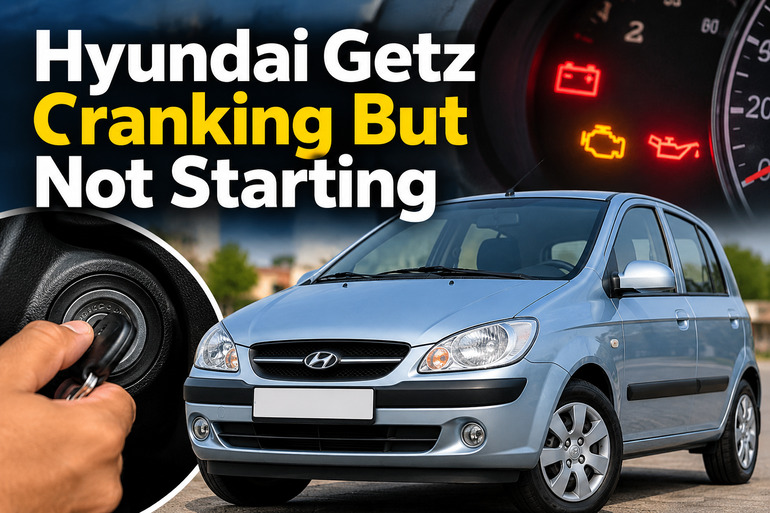
What It Means When Your Hyundai Getz Cranks But Won’t Start
Cranking occurs when the starter motor turns the engine after you turn the ignition key. During normal operation, the engine needs an appropriate supply of fuel, air, sufficient compression, and correctly timed combustion to start and continue running.
On petrol powered Hyundai Getz models, the ignition system must also produce a strong spark at the correct moment. Diesel models use compression ignition, so their starting requirements differ. Cold weather can make diesel starting more difficult when the glow plug system is faulty.
The sound and behavior of the engine provide useful diagnostic clues. A steady cranking sound suggests the starter is turning the engine, while unusually fast or uneven cranking can indicate a mechanical timing or compression problem. An engine that starts briefly before dying may have a fuel supply problem or an issue involving the engine management or immobilizer system.
Hyundai’s Getz owner’s manual recommends starting with basic checks such as the fuel level, relevant ignition connections, and fuel lines in the engine compartment. If these checks do not resolve the fault, further diagnosis may be necessary. The exact procedure depends on the vehicle’s model year and engine specification. Hyundai Getz owner’s manual
Hyundai Getz Cranking But Not Starting: Likely Causes
Several faults can produce the same cranking but no-start symptom. The following are five areas worth investigating before replacing any components.
1. Insufficient Fuel Delivery
Your Getz needs fuel to reach the engine at the required pressure and quantity. If the fuel tank is empty, the pump has failed, a fuse has blown, or the fuel filter is restricted, the engine may crank normally without starting.
A faulty fuel pump may produce no recognizable humming sound when the ignition is switched on. However, some pumps are quiet, and the sound alone cannot confirm whether the pump works. A pump can also operate while producing insufficient pressure.
A restricted fuel filter is another possibility, particularly if the car developed poor acceleration, hesitation, or repeated stalling before refusing to start. Hyundai’s maintenance guidance identifies the fuel filter and fuel lines as service items, with abnormal fuel pressure and hard starting calling for attention. Hyundai Getz maintenance information
2. Faulty Ignition Components or Cold Starting System
On a petrol Getz, the spark plugs, ignition coils, coil connections, and related electrical circuits help initiate combustion. A failed coil, worn or fouled spark plugs, or a loose electrical connector can prevent the engine from starting even when fuel is available.
You may notice that the car previously misfired, idled roughly, or struggled to accelerate. In some cases, the engine stops suddenly and subsequently cranks without firing. However, the absence of these earlier symptoms does not rule out an ignition fault.
On diesel versions, the glow plugs and their control circuit deserve attention if the problem occurs mainly during cold starts. Glow plugs help heat the combustion chambers before starting. A faulty plug or relay may make cold starting difficult, although other faults can cause the same symptoms. Petrol spark plug tests do not apply to diesel engines.
3. A Faulty Crankshaft Position Sensor
The crankshaft position sensor supplies information about the engine’s position and rotational speed to the engine control unit. This information helps the control system coordinate ignition and fuel injection.
If the sensor fails or its wiring becomes damaged, the engine computer may lose the signal needed to control combustion. The starter can continue turning the engine normally, but the engine may never fire. A failing sensor can also cause intermittent stalling or starting problems that become more noticeable as the engine heats up. Crankshaft and camshaft sensor diagnosis
A faulty camshaft position sensor, where fitted, can produce related symptoms. However, replacing either sensor based on symptoms alone can waste money. A mechanic can use diagnostic trouble codes, live engine speed readings, and electrical tests to determine whether the sensor or its circuit is responsible.
4. An Immobilizer or Engine Management Fault
Some Hyundai Getz models have an electronic immobilizer that checks whether the key is authorized to start the vehicle. If the system cannot recognize the key correctly, it may prevent the engine from starting even though the starter motor turns.
Watch the security or immobilizer indicator when you switch on the ignition. A warning light that flashes in an unusual pattern or remains on when it normally should not may indicate a problem. The exact behavior depends on the model and immobilizer version. The owner’s manual for the specific year provides the relevant guidance. Hyundai Getz immobilizer information
An electrical supply problem can produce similar symptoms. A blown engine control fuse, defective relay, damaged wiring, or poor electrical connection may interrupt power to an essential component. A diagnostic scan can help distinguish an authorization problem from a fuel, sensor, or engine management fault.
5. Incorrect Engine Timing or Low Compression
An engine must draw in air, compress the mixture, and ignite it at the correct point in its operating cycle. If the timing belt breaks or slips, the engine may crank without starting because the valves and pistons no longer operate in the correct sequence.
Pay attention to the cranking sound. An engine that suddenly spins noticeably faster or more freely than usual may have lost compression, although the sound alone cannot establish the cause. A timing problem can also appear after a loud mechanical noise or sudden engine shutdown.
Low compression can also result from damaged valves, worn internal parts, or other mechanical faults. Because many Getz petrol and diesel engines use timing belts, an overdue belt or uncertain replacement history deserves attention. Stop cranking if you suspect a broken belt or a sudden change in cranking speed. Further attempts may increase engine damage, depending on the engine design.
Hyundai Getz Cranking But Not Starting: DIY Fixes
Start with the checks that require little equipment and carry minimal risk. Work through them in order, paying attention to your Getz’s engine type and any warning signs.
1. Check the Fuel Level and Try a Correct Starting Procedure
Begin by checking the fuel gauge. A low reading, a faulty gauge, or parking on a slope can sometimes leave the fuel pickup unable to draw enough fuel. If the tank is nearly empty, add a suitable quantity of the correct fuel before trying again.
Switch the ignition on and watch the dashboard indicators. If the car has a petrol engine, listen for a brief fuel pump hum if audible, but do not treat silence as proof that the pump has failed. Some systems operate the pump differently, and environmental noise can conceal it.
Attempt to start the engine using the normal procedure described in your owner’s manual. Avoid repeated, prolonged cranking because it can overheat the starter and discharge the battery. If the engine still refuses to start, move to the next check.
2. Inspect Accessible Electrical Connections and Fuses
Switch the ignition off before inspecting accessible connectors. Look for a plug that has visibly become disconnected, damaged insulation, or an obviously loose connection around the ignition components on a petrol model. Hyundai’s owner’s manual specifically identifies ignition coil and spark plug connections among the basic checks for an engine that cranks without starting.
You can also inspect the relevant fuses using the diagram provided for your exact vehicle. Fuse assignments may differ between petrol and diesel models and between model years, so use the markings on your fuse box and the correct owner’s manual. Replace a blown fuse only with one of the specified rating. If it blows again, stop replacing it and have the circuit checked for a fault.
Do not disconnect sensors or handle ignition wiring while the engine is being cranked. Ignition systems can produce dangerous high voltage, and careless handling may damage electronic components.
3. Check the Immobilizer Indicator and Spare Key
If the immobilizer warning behaves abnormally, try the spare programmed key if one is available. A damaged key or an issue with its transponder may prevent the car from authorizing a start.
Observe the security indicator before and during the starting attempt, then compare its behavior with the instructions for your particular Getz. Do not assume that every flashing light signals the same fault, since the indicator’s behavior depends on the system fitted to the vehicle.
If the spare key works, the original key or its authorization system may need inspection. If neither key starts the engine, a technician may need to diagnose the immobilizer reader, wiring, or engine control system. Avoid attempting random immobilizer reset procedures, as these can make diagnosis more difficult.
4. Check the Service History and Relevant Engine Components
Consider when the problem began. A Getz that previously hesitated under acceleration or stalled under load may have a fuel delivery problem. A petrol model that misfired before failing to start may need ignition system testing. A diesel model that struggles mainly when cold may need its glow plug system checked.
Review the service records for the fuel filter, spark plugs where applicable, and timing belt. Hyundai’s Getz maintenance schedules include these items, with the prescribed intervals varying by engine and model year. If the belt’s replacement history is unknown, arrange an inspection rather than assuming it is safe to continue cranking. Getz scheduled maintenance
A visual check of accessible components may reveal disconnected wiring or obvious damage. However, do not remove timing covers, dismantle the fuel system, or replace sensors simply because their symptoms seem plausible. Those jobs require appropriate tools and diagnostic checks.
5. Have the Fuel and Engine Control Systems Tested
If the basic checks do not identify the fault, the next step is to establish whether the engine is receiving the fuel, electrical signals, and mechanical conditions it needs to start. An automotive technician can perform these checks without replacing parts at random.
For a petrol Getz, useful diagnostic tests may include reading fault codes, checking engine speed data while cranking, testing ignition spark with suitable equipment, and measuring fuel pressure against the correct specification. If these checks are satisfactory, compression and mechanical timing may need investigation.
Diesel diagnosis may involve checking the low pressure fuel supply, fuel filter, glow plug circuit, and the engine’s fuel injection system. High pressure diesel fuel systems can cause serious injection injuries. Do not loosen injector pipes or fuel rail connections yourself to see whether fuel comes out.
6. Contact a Qualified Automotive Technician
Professional diagnosis is appropriate if the engine still will not start after the basic checks, the same fault returns, or the dashboard displays an abnormal security or engine warning. It is also the correct next step when you suspect a failed timing belt, low compression, an internal engine fault, or a problem with the fuel injection system.
Tell the technician whether the engine cranks at its normal speed, whether it previously stalled while driving, whether the failure occurred after maintenance, and whether the problem happens only when the engine is cold or hot. These details can help narrow the investigation.
If you smell strong fuel, see a fuel leak, notice smoke, or hear unusual mechanical noises, stop attempting to start the engine. Arrange suitable assistance instead of risking a fire or further damage.
Wrap-Up
A Hyundai Getz that cranks but refuses to start may have a straightforward problem, such as insufficient fuel or a loose connection, or a fault involving the ignition, sensors, immobilizer, or engine timing. The symptoms provide useful clues, but a confirmed diagnosis requires testing the affected systems.
Start with the fuel level, visible connections, relevant fuses, and warning indicators. Avoid prolonged cranking and unnecessary parts replacement. If these checks do not restore normal operation, a technician can test the fuel supply, electrical signals, and mechanical condition to identify the fault. Acting promptly can help prevent further damage and keep a relatively simple starting problem from becoming a larger repair.