
There’s nothing quite like the sinking feeling you get when you turn your key and your Nissan Dualis refuses to start. Maybe you hear a click, maybe a grinding noise, or worse—complete silence. Whatever the case, you’re stuck, and you need answers fast.
Your Dualis is typically a reliable crossover, but even the best vehicles have their off days. The good news is that most starting problems have straightforward causes, and many of them you can fix yourself with basic tools and a little patience. Let’s break down what’s happening under your hood and get you back on the road.
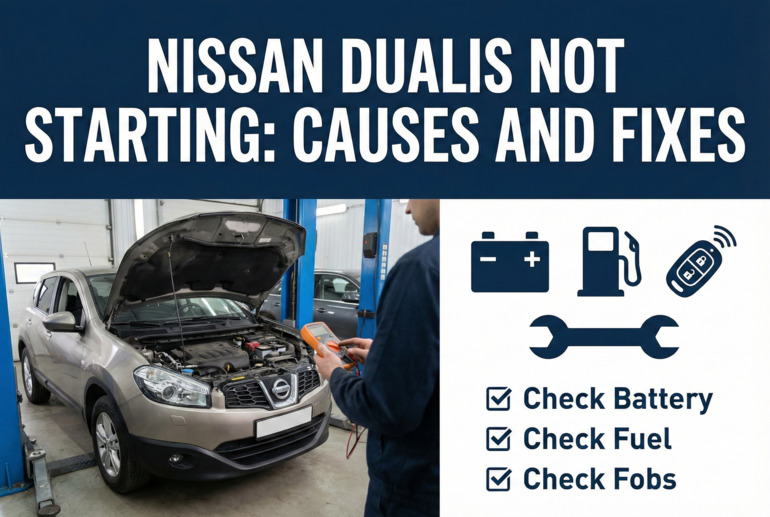
What’s Really Happening When Your Dualis Won’t Start
Starting problems fall into a few distinct categories, and understanding which one you’re dealing with makes all the difference. Your engine needs three things to fire up: fuel, spark, and air. When one of these is missing or something in the starting system fails, you’re going nowhere.
Listen carefully to what your Dualis does when you turn the key. A rapid clicking sound usually points to battery issues. A single click often means your starter motor is struggling. If your engine cranks over but won’t catch, you’re likely looking at fuel or ignition problems. Complete silence might indicate an electrical fault or a failed starter.
Temperature plays a bigger role than most people realize. Cold mornings can expose weak batteries or thickened engine oil that makes cranking harder. Hot weather, on the other hand, can cause vapor lock in your fuel system or reveal failing electrical components. Your Dualis might start perfectly fine in mild weather but struggle when temperatures swing to extremes.
Pay attention to any warning lights on your dashboard before the starting problem occurs. The check engine light, battery light, or immobilizer warning can all give you clues about what’s failing. Sometimes your car tries to tell you something’s wrong days or weeks before it leaves you stranded.
Nissan Dualis Not Starting: Common Causes
Most starting failures trace back to a handful of culprits, and knowing what to look for saves you time and money. Let me walk you through the most frequent offenders I’ve seen in my years working on these vehicles.
1. Dead or Weak Battery
Your battery is the heart of your electrical system, and it’s usually the first suspect when starting problems appear. Batteries typically last three to five years, but extreme temperatures, short trips, and leaving accessories on can shorten that lifespan considerably.
You’ll often notice warning signs before complete failure. Dim headlights, slow power window operation, or sluggish engine cranking all hint at battery trouble. Your radio might lose its presets, or your clock might reset—small annoyances that point to voltage drops.
Cold weather is particularly brutal on aging batteries. The chemical reactions inside slow down, reducing available power right when your engine needs extra juice to turn over thick oil. If your Dualis struggles on cold mornings but starts fine later, your battery is probably on its last legs.
2. Corroded or Loose Battery Connections
Even a perfectly healthy battery won’t help if the connections are poor. Corrosion builds up on battery terminals over time, creating a crusty white or blue-green substance that blocks electrical flow. Sometimes the cables just work themselves loose from vibration.
This issue is sneaky because your battery might test fine, yet your car still won’t start. The corrosion acts like an insulator, preventing the starter from getting the current it needs. You might see your dashboard lights flicker or notice intermittent electrical problems.
3. Faulty Starter Motor
The starter motor is a workhorse component that spins your engine to life. After thousands of starts, the internal components wear down. Brushes deteriorate, the solenoid contacts burn, or the armature develops dead spots.
A failing starter often gives you warning through sound. You might hear grinding, whining, or a loud click without the engine turning over. Sometimes it works fine when the engine is cold but fails after your Dualis has been running and everything heats up.
4. Failed Ignition Switch
Your ignition switch does more than just turn your key position into action. It’s an electrical component that can wear out from repeated use, especially if you carry heavy keychains that stress the mechanism. Internal contacts corrode or break, disrupting the signal to your starter.
This problem can be intermittent and frustrating. Your Dualis might start perfectly fine ten times, then suddenly refuse on the eleventh attempt. You might notice that wiggling the key or holding it in certain positions makes a difference.
5. Fuel Delivery Problems
Your engine can crank all day, but without fuel, it’s not going anywhere. The fuel pump in your Dualis sits inside the gas tank, quietly working every time you drive. When it starts failing, you might hear a whining noise from the rear of your vehicle, or the engine might start then immediately stall.
Clogged fuel filters can also starve your engine of gas. Nissan recommends replacing the fuel filter periodically, but many owners skip this maintenance. Over time, debris and sediment build up, restricting flow until your engine can’t get enough fuel to fire.
Nissan Dualis Not Starting: DIY Fixes
Fixing a starting problem doesn’t always require a mechanic, and you can save yourself a tow bill with some basic troubleshooting. Here’s how to tackle the most common issues.
1. Jump-Start and Battery Testing
Start by attempting a jump-start from another vehicle or a portable jump box. Connect the positive cable to the positive terminal on both batteries, then the negative cable to the good battery and a metal ground point on your Dualis—not directly to the dead battery.
Let the good battery charge yours for a few minutes before trying to start. If your Dualis fires right up, your battery is likely the problem. Drive straight to an auto parts store where they’ll test your battery for free. Most stores can tell you the battery’s condition, whether it’s just discharged or actually failed.
If jump-starting works but your battery keeps dying, you might have a parasitic drain or a failing alternator. Check that all your interior lights, trunk light, and accessories turn off properly when you exit the vehicle.
2. Clean Battery Terminals and Tighten Connections
Pop your hood and locate your battery. Mix baking soda with water to create a paste, then use an old toothbrush to scrub away any corrosion on the terminals and cable ends. The mixture will fizz as it neutralizes the acid.
Rinse everything with clean water and dry thoroughly. Remove each cable and clean the inside of the connectors and the battery posts until you see shiny metal. Reconnect everything and tighten the bolts firmly—the cables shouldn’t wiggle at all when you try to move them.
Apply a thin coat of petroleum jelly or battery terminal protector spray to prevent future corrosion. This simple maintenance step takes ten minutes and prevents countless starting headaches down the road.
3. Check and Replace Fuses
Your Dualis has multiple fuse boxes protecting different electrical circuits. The main box sits under your hood near the battery, and there’s another inside the cabin, usually below the dashboard on the driver’s side.
Open your owner’s manual to find the fuse diagram. Look for fuses related to the starting system, fuel pump, and ignition. Pull each one out and hold it up to the light—you should see an intact metal strip inside. If the strip is broken or the fuse looks burned, replace it with one of the exact same amperage.
Keep spare fuses in your glove box for emergencies. They’re cheap insurance against getting stranded, and replacing a blown fuse takes seconds once you know which one failed.
4. Test the Starter Motor
If your battery is good but you only hear clicking, the starter might be stuck. Try tapping the starter housing gently with a wrench or hammer while someone turns the key. Sometimes this dislodges stuck brushes or armature, buying you enough starts to get to a repair shop.
The starter on most Dualis models sits low on the engine, accessed from underneath. You’ll need to get your vehicle on ramps or jack stands safely. Look for loose connections on the starter solenoid—tighten them and try starting again.
5. Address Fuel System Issues
Listen for your fuel pump when you turn the key to the “on” position without cranking. You should hear a brief humming sound from near your rear seat or trunk area for a few seconds. No sound means your pump might not be receiving power or has failed.
Check your fuel pressure if you have a gauge. Your Dualis should show around 45-50 PSI when the key is on. Low pressure indicates a weak pump or clogged filter. If you’re handy with tools, replacing the fuel filter is straightforward on most model years—it’s usually under the vehicle near the fuel tank.
Try adding a fuel system cleaner to your tank if you suspect clogged injectors. While this won’t fix a failed pump, it can help with minor blockages that prevent proper starting. Always keep at least a quarter tank of gas, as running too low can damage your fuel pump.
6. When All Else Fails
If you’ve tried these fixes and your Dualis still won’t start, it’s time to call a qualified mechanic. Some problems—like a failed ignition switch, broken timing chain, or computer module failure—require diagnostic equipment and expertise you won’t have at home. A professional can quickly identify issues that would take you hours of guesswork, and they have the tools to fix complex problems safely. Your local Nissan dealer or a trusted independent shop with experience on Japanese vehicles is your best bet for accurate diagnosis and repair.
Wrapping Up
Starting problems with your Nissan Dualis usually come down to batteries, connections, or fuel delivery—all things you can check yourself before spending money on a mechanic. The key is listening to what your vehicle tells you and addressing small issues before they become big ones.
Regular maintenance makes all the difference here. Clean your battery terminals twice a year, replace your battery before it fails completely, and don’t ignore warning lights or unusual sounds. Your Dualis will reward you with reliable starts for years to come, and you’ll have the confidence to handle minor problems yourself when they pop up.