
You turn the key, and your Nissan Almera cranks over like it’s ready to go. The engine spins, the starter motor does its job, but nothing happens. No roar to life, no purr of the engine settling in. Just that frustrating cranking sound that goes nowhere.
This is one of those moments that can ruin your morning before it even starts. You’re already late, and now your car won’t cooperate. The good thing is that this particular problem often has a clear cause, and many of the fixes are things you can handle yourself without breaking the bank at a repair shop.
This article walks you through what’s actually happening when your Almera cranks without starting, the most common reasons behind it, and practical solutions you can try right in your driveway.
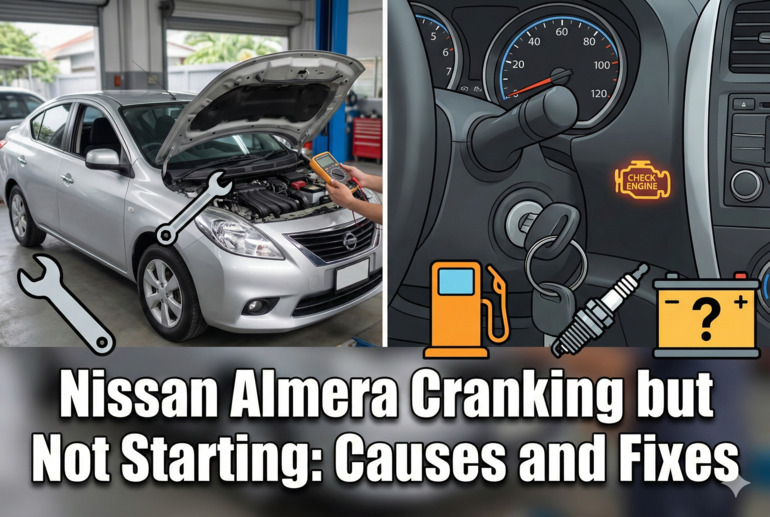
What’s Really Happening When Your Almera Cranks but Won’t Start
When your engine cranks but refuses to start, your car is telling you something specific. The starter motor is working fine because you can hear it turning the engine over. That rules out battery issues or starter problems right away.
What you’re dealing with is a breakdown somewhere in the starting process itself. Your engine needs three basic things to fire up: fuel, air, and spark. If any one of these is missing or not working properly, your Almera will crank all day long without ever coming to life.
Think of it like trying to light a gas stove. You can turn the knob and hear the clicking, but if there’s no gas flowing, or if the igniter isn’t sparking, nothing happens. Your car works on the same principle. The cranking sound means the mechanical parts are moving, but the combustion process isn’t happening.
This issue can show up suddenly after your car was running fine yesterday, or it might develop gradually with the engine taking longer to start each time. Either way, your Almera is usually trying to point you toward a specific system that needs attention. Left unfixed, you risk getting stranded somewhere far less convenient than your driveway, and you might cause additional damage to other components that are working overtime trying to compensate.
Nissan Almera Cranking but Not Starting: Likely Causes
Several issues can prevent your Almera from starting even when the engine cranks properly. Each one affects a different part of the combustion process, and knowing what to look for helps you fix the problem faster.
1. Fuel Pump Failure
Your fuel pump sits inside the gas tank and pushes fuel through the lines to your engine. When it fails, no fuel reaches the cylinders, and you get cranking without starting.
Fuel pumps often give warning signs before they die completely. You might notice your engine sputtering at high speeds or struggling when you accelerate hard. Sometimes the car starts fine when cold but has trouble after it warms up.
The pump can fail from simple wear over time, especially in older Almeras. Contaminated fuel with dirt or water damages the pump’s internal parts. Running your tank near empty regularly makes the pump work harder because it uses fuel to stay cool, which shortens its life.
2. Dead or Failing Ignition Coil
The ignition coil transforms your battery’s voltage into the thousands of volts needed to create a spark at the spark plugs. Without that spark, fuel in the cylinders just sits there unburned.
A failing coil might work when your engine is cold but quit once things heat up. You might also notice rough idling or misfires before the coil dies completely. These symptoms happen because the coil’s internal windings break down from heat cycles and vibration over thousands of miles.
3. Clogged Fuel Filter
Your fuel filter catches dirt, rust, and debris before they reach your engine. Over time, it gets clogged with all that trapped material, and fuel flow drops to almost nothing.
This problem usually builds gradually. First, your Almera might hesitate during acceleration. Then it becomes harder to start, especially after sitting overnight. Eventually, enough blockage builds up that fuel can’t get through at all, even though the pump is working fine.
Most people forget the fuel filter exists until it causes problems. Nissan recommends changing it every 40,000 to 60,000 miles, but that often gets skipped during routine maintenance. Dirty fuel or rust in the tank accelerates clogging.
4. Faulty Crankshaft Position Sensor
This small sensor tells your car’s computer exactly where the crankshaft is positioned and how fast it’s spinning. Your engine control module uses this information to time the fuel injection and spark perfectly.
When the sensor fails, the computer has no idea when to fire the spark plugs or inject fuel. Everything just stops working, even though the engine physically cranks. The sensor typically fails from heat exposure because it sits close to the engine, or from vibration that loosens its internal connections.
5. Empty Fuel Tank or Bad Fuel Gauge
Sometimes the simplest answer is the right one. Your fuel gauge might show quarter tank, but the sending unit could be broken, and you’re actually running on fumes.
This happens more often than you’d think. The float inside your tank that moves the gauge needle can stick or break. You might also have a small leak you haven’t noticed, or someone might have siphoned fuel overnight if you park on the street. Before you tear into complex repairs, verify you actually have fuel in the tank.
Nissan Almera Cranking but Not Starting: DIY Fixes
Fixing a cranking-but-not-starting problem often requires testing to find the exact cause, but you can handle most of these repairs yourself with basic tools and a little patience.
1. Check for Fuel Pressure
Start by confirming fuel is actually reaching your engine. Turn your key to the ON position without cranking, and listen carefully near the rear seat area. You should hear a faint humming sound for a few seconds as the fuel pump primes the system.
No humming sound usually means a dead fuel pump or blown fuse. Check your fuse box for a blown fuel pump fuse first because that’s the easiest fix. If the fuse looks good, tap on the bottom of your fuel tank with a rubber mallet while someone turns the key. Sometimes a stuck pump will start working temporarily, which confirms that’s your problem.
2. Test Your Spark Plugs
Remove a spark plug and reconnect it to the plug wire. Hold it against a metal part of your engine (being careful not to touch it yourself) while someone cranks the engine. You should see a bright blue spark jumping across the gap.
No spark means you need to check your ignition system further. Try this test on all cylinders because sometimes only one coil fails in a coil-on-plug setup. Weak or yellow spark suggests worn plugs that need replacement. This test takes about ten minutes and eliminates half your potential problems right away.
3. Replace the Fuel Filter
The fuel filter usually sits under your car along the frame rail or near the fuel tank. You’ll need basic wrenches and a drain pan because some fuel will spill when you disconnect the lines.
- Relieve fuel system pressure by removing the fuel pump fuse and running the engine until it dies
- Place your drain pan under the filter location
- Disconnect the fuel lines from both ends of the filter (note which direction fuel flows)
- Install the new filter with the arrow pointing toward the engine
- Reconnect the lines and tighten all fittings
- Reinstall the fuse and turn the key to ON several times to prime the system
The whole job takes about 30 minutes. New filters cost between $15 and $40, which is a lot cheaper than towing and diagnosis fees.
4. Inspect and Replace Ignition Components
Pull your ignition coil and check for cracks, oil contamination, or corrosion. A coil covered in oil means you have a valve cover gasket leak that needs fixing, or the new coil will fail quickly too.
Test the coil with a multimeter if you have one. Most Almera coils should read between 0.5 and 2 ohms on the primary side. Higher readings mean the coil is bad. You can also swap coils between cylinders to see if a misfire moves with the coil, confirming it’s faulty.
Replacing a coil is straightforward. Disconnect the electrical connector, remove the mounting bolt, pull out the old coil, and install the new one. Make sure the boot that connects to the spark plug is seated properly, or you’ll create a new problem.
5. Clean or Replace the Crankshaft Position Sensor
This sensor typically bolts to the engine block near the crankshaft pulley or transmission bellhousing. It’s often covered in oil and road grime that can cause false readings.
- Locate the sensor using your owner’s manual or a quick online search for your specific Almera year
- Disconnect the electrical connector
- Remove the mounting bolt and pull out the sensor
- Clean the sensor tip with electrical contact cleaner and a soft cloth
- Check the connector for corrosion and clean if needed
- Reinstall everything and test
If cleaning doesn’t work, sensors run about $30 to $60 for aftermarket parts. The computer can’t adjust or compensate for a bad crankshaft sensor, so replacement is the only option when they fail.
6. Verify Actual Fuel Level
Pop your fuel filler cap and use a long stick or fuel measuring tool to check the actual fuel level. Yes, this feels silly, but it’s happened to professional mechanics too.
If you’re truly empty, add at least two gallons of fresh fuel. After sitting empty, your fuel pump might need a minute or two of cranking (in short bursts to avoid overheating the starter) to pull fuel through the lines and prime the system. Sometimes air gets trapped in the fuel lines when you run completely dry, and it takes time to clear.
7. Contact a Professional Mechanic
If you’ve worked through these fixes and your Almera still won’t start, something more complex is going on. You might be dealing with computer issues, timing problems, or multiple simultaneous failures that require professional diagnostic equipment to identify.
A qualified mechanic has scan tools that read sensor data in real time and can pinpoint problems you can’t see or test with basic tools. Some issues like timing chain problems or internal engine damage aren’t DIY-friendly repairs anyway. Knowing when to call for help saves you time, frustration, and the risk of making things worse.
Wrapping Up
Your Nissan Almera cranking without starting feels like a major crisis when you’re trying to get somewhere, but it’s usually pointing you toward one specific system that needs attention. Most of these problems start small and give warning signs before they leave you stranded, so paying attention to how your car behaves helps you catch issues early.
The fixes here cover the most common culprits, and many of them cost less than $100 in parts when you handle the work yourself. Start with the simple checks like fuel level and fuses before moving to more involved repairs. Your Almera is trying to communicate what’s wrong through what’s missing: fuel, spark, or the computer signals that coordinate everything. Once you figure out which piece of the puzzle is missing, getting back on the road is usually straightforward.