
A Kia that refuses to start can leave you unsure whether the trouble is in the engine, battery, or key. When a scan reveals P1693, the immobilizer system deserves attention, but replacing the key immediately may waste money.
On applicable Kia models, this code points to a missing or abnormal response from the key’s transponder. Finding the reason means separating a key problem from interference or a fault in the vehicle’s reader circuit before choosing a repair.
What Kia P1693 Means
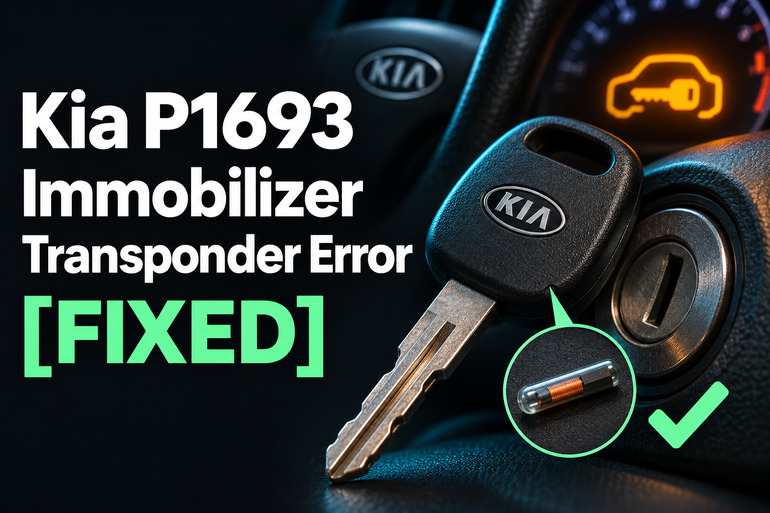
Kia service information for applicable models describes P1693 as an immobilizer transponder error, including no response or an invalid response. The transponder is a small electronic chip inside the key. During starting, the vehicle checks its response before allowing the engine to run. The code identifies a failed exchange, rather than proving which part caused it.
On conventional systems covered by Kia’s service information, an antenna coil near the ignition lock supplies energy to the chip. The chip then sends its identification response. This passive transponder works differently from the remote buttons, so a working door remote doesn’t establish that the immobilizer chip works. Replacing the remote battery also won’t repair a damaged passive chip.
The main concern is a starting failure, sometimes accompanied by an unusual immobilizer indicator. However, light behavior differs between conventional keys and smart keys. Kia manuals describe blinking that can indicate a malfunction, a missing smart key, or a weak smart key battery, depending on the system. Check your manual before treating every flashing security light as the same fault.
Confirm the code’s definition for your exact model, year, engine, and market. Some American Kia vehicles were sold without an electronic engine immobilizer, as Kia’s own service bulletin confirms. If your vehicle lacks that equipment, have the scanner’s description checked against the correct service information before buying transponder parts. Equipment differences matter even when two vehicles share a model name.
Kia P1693 Immobilizer Transponder Error [FIXED]: Common Causes
Several faults can prevent the vehicle from receiving a usable transponder response. The clues below help narrow the possibilities without assuming that the code names a failed component.
1. A Damaged or Missing Transponder
A key can still turn the ignition lock even when its electronic chip is missing or cannot respond. Kia’s immobilizer training material lists absent transponders and corrupted transponder data among the conditions associated with P1693. A correctly cut metal blade alone cannot complete the electronic check.
The timing can provide a useful clue. Tell the repairer if the trouble began after a key case replacement, physical damage, or moisture exposure. Kia cautions against moisture, static electricity, and rough handling because they can damage the immobilizer system. These events support checking the key, although none confirms the diagnosis by itself.
A previously working spare is especially useful here. If it starts the vehicle under the same conditions while your usual key repeatedly fails, attention should shift toward that key. Ask for its transponder to be tested before ordering a replacement.
2. Interference From Nearby Keys or Accessories
Starting trouble can come from the objects surrounding a valid key. Kia warns that other immobilizer keys, metal accessories, and certain electronic devices near the starting area can interfere with recognition. Its technical training also identifies multiple transponders within the antenna’s field as a possible P1693 condition.
This possibility deserves attention when the problem appears after adding another vehicle key or a bulky accessory to your key ring. Removing those items gives you a simple comparison. If recognition becomes reliable, keep the keys separate and watch for a recurrence before buying parts.
3. A Faulty Antenna Coil or Its Circuit
The reader around a conventional ignition lock must energize the transponder and receive its reply. If that reader or its circuit fails, a good key may appear unreadable. Kia’s service information specifically warns that an antenna fault code, P1691, can appear together with P1693.
Both registered keys failing makes a shared vehicle fault more plausible. However, that result doesn’t prove the antenna itself is defective. Its wiring and connections need consideration too.
A technician can compare key recognition data while following the antenna circuit test for your vehicle. Avoid using resistance values or connector pin numbers from another Kia model. The correct service procedure should determine which measurements apply.
4. Poor Connections or Immobilizer Communication Trouble
Loose connectors, damaged wiring, or corrosion can interrupt the reader’s operation or the communication needed for recognition. Kia service procedures include checks for poor connections, bent terminals, contamination, and harness damage before replacing components.
Mention recent ignition repairs, electrical accessory installation, or damage around the steering column when arranging diagnosis. Those details give the technician a sensible starting point. They don’t establish that a control module needs replacement, and P1693 alone provides too little evidence for that expense.
Kia P1693 Immobilizer Transponder Error [FIXED]: DIY Fixes
Start with checks that help distinguish the key from the vehicle’s recognition system. Keep a record of each result so any necessary professional diagnosis can build on useful evidence.
1. Record the Fault and Try a Registered Spare
Before clearing anything, photograph the scanner’s full results, including other codes and any status labels it provides. Note whether the engine turns over, how the immobilizer light behaves, and which key you used. Also record whether the problem happens every time or only occasionally. Include recent work, a battery discharge, and whether the fault began with a newly supplied key. Keep these notes with the scan results rather than relying on memory when you reach the shop.
Next, park safely, apply the parking brake, switch the ignition off, and move the usual key away. Try a spare that previously started this vehicle. Kia’s diagnostic procedure uses comparisons between keys and scan data to help separate transponder trouble from reader trouble. An untested duplicate provides a less useful comparison because its own compatibility is uncertain. Keep the starting conditions as similar as possible when comparing keys. Otherwise, a change in the surrounding objects could make the result harder to interpret.
2. Remove Interference and Retry Normally
Take the starting key off the crowded key ring. Move other vehicle keys, metal accessories, and nearby electronic devices away from the ignition lock or start button. Keep only the key you’re testing in the immediate starting area.
Switch the ignition fully off, then make a normal starting attempt using your owner’s manual. Kia recommends an off and on retry when a smart key’s coding isn’t recognized. This is a recognition check, rather than a programming procedure or a guaranteed reset.
If the vehicle starts, note exactly what changed. Keep the interfering items separate during later use and report any repeat failure. One successful attempt helps identify a pattern, but it doesn’t settle an intermittent fault that continues under the same conditions. Avoid declaring the repair complete solely because the vehicle starts once after several failures.
3. Address Signs of a Weak Vehicle Battery
Pay attention to how the vehicle behaves during the starting attempt. Slow engine turnover or an interior light that dims sharply deserves a battery check. Kia’s starting guidance directs owners to check battery connections and identifies a dimming or extinguished interior light during cranking as a sign of discharge.
With the ignition off, look for obvious corrosion or damage at accessible battery connections without disconnecting or probing them. If the battery seems weak, arrange a battery and connection test through roadside assistance or a repair shop. Use the vehicle’s own manual for any permitted charging or jump starting procedure.
Treat this as a check for another starting problem, rather than proof that low battery power caused P1693. After the supply problem is addressed, reassess key recognition. If the engine now turns over normally but still won’t start, the immobilizer fault needs further diagnosis.
4. Use the Approved Smart Key Backup Method
If your Kia has a start button and the manual provides a backup method for a weak smart key battery, follow that procedure. For example, the 2022 Stinger manual instructs the driver to apply the parking brake, select Park, press the brake pedal, and press the start button directly with the smart key. It specifies which side of the key contacts the button. Your model’s directions take priority.
If this works and the fob battery is weak, replace it with the type specified in your manual. Kia explains that a weak or dead smart key battery can prevent normal starting. However, this backup check applies to compatible smart key systems and doesn’t establish the cause of P1693 on a conventional ignition key.
5. Have a Suspect Key Tested Before Replacement
When the spare works consistently and the original doesn’t, ask a Kia dealer or an automotive locksmith equipped for your vehicle to test the original transponder. Explain whether the case was changed, the key was damaged, or a replacement key never worked correctly. Bring both keys so the results can be compared.
If replacement is necessary, confirm compatibility and the required programming before purchasing. Kia service information describes key registration through suitable diagnostic equipment, with security information required for the applicable procedure. A matching key shape or a seller’s broad compatibility claim doesn’t establish that the electronics will work with your vehicle.
Ask whether every existing key must be present for the planned programming. Before leaving, check that each key intended for use starts the vehicle. Avoid repeated programming attempts based on instructions for a different model or system. If a replacement key has never started the vehicle, give the supplier its exact part details and the vehicle identification number before approving further work.
6. Contact a Qualified Kia Technician
Arrange professional diagnosis if neither registered key works, P1693 returns, or the simple checks don’t produce a clear pattern. Seek assistance sooner if there is visible wiring damage, smoke, or a burning smell. Stop using the vehicle if an electrical hazard is present, and arrange recovery if starting is unreliable.
Ask for a diagnosis that includes the complete code list, key recognition data, and the relevant antenna or communication checks. A suitable scan tool can show whether the system recognizes the key and whether required components have been registered. Kia’s service information uses these status checks as part of diagnosis.
Ask the shop to explain what its tests found before approving a key, antenna, or module replacement. A clear estimate should identify the proposed repair and any programming it requires. Keep the diagnostic report with the invoice in case the same symptoms return. Leave steering column wiring, connector probing, and security module work to the repairer. After the repair, have the fault cleared and the vehicle checked again. Kia’s verification procedure calls for operating the vehicle and checking whether codes return. For an intermittent complaint, explain the original conditions so the shop can assess whether the repair holds under similar use.
Wrapping Up
P1693 is a reason to check the key recognition system carefully before approving repairs. The most useful early steps are recording the symptoms, testing a registered spare, and removing possible interference. Together, those observations can help a technician focus the diagnosis and avoid replacing parts based only on the code’s name.
If the problem persists, bring the scan results and every available key to a qualified repairer. A dependable result means the vehicle recognizes its keys and starts consistently after the underlying fault has been addressed.