
A Hyundai Getz that starts easily in the morning but refuses to restart after a drive can be frustrating, particularly when you need to get back on the road quickly. The engine may crank without firing, or you may hear a click when you turn the key and nothing else happens. These symptoms can point to different faults, so identifying exactly what happens during a failed restart is the first step toward an effective repair.
Heat can expose weaknesses in electrical components, fuel delivery systems and engine sensors. Fortunately, a few simple checks can help you narrow down the cause before spending money on replacement parts.
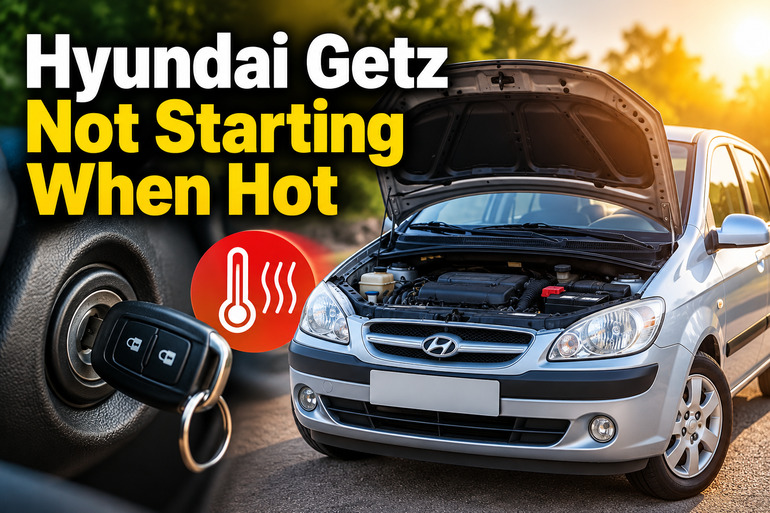
What It Means When a Hyundai Getz Won’t Start When Hot
A hot-start problem occurs when your Getz runs normally at its usual operating temperature but struggles or fails to restart after you switch off the engine. The fault may appear after a short trip, during heavy traffic or following a longer drive. After the car sits for some time and cools down, it may start again without any repair.
The first distinction is whether the engine cranks but will not start or does not crank at all. Cranking means the starter motor turns the engine, producing the familiar repeated sound as the engine attempts to run. If you hear only a click, or the engine remains completely silent, the starter circuit, battery or electrical connections deserve closer attention.
When a gasoline-powered Getz cranks normally but fails to start, the engine may be missing a suitable spark, adequate fuel delivery or the crankshaft position signal needed by its engine control unit. A diesel version has a different ignition and fuel system, so the diagnosis must match the engine fitted to your vehicle.
Pay attention to any symptoms that appear before the failure. A recent loss of power, rough idling, engine misfires, a flashing security indicator or an unusually high temperature reading can help narrow the possibilities. If the engine has overheated, stop driving until the underlying problem is assessed.
Hyundai Getz Not Starting When Hot: Likely Causes
Several faults can produce the same hot-start symptoms, but their warning signs often differ. The most useful clues are whether the starter turns the engine, whether the problem disappears after cooling and whether other engine problems occur before the restart failure.
1. A Failing Crankshaft Position Sensor
The crankshaft position sensor monitors the crankshaft’s position and rotational speed. This information allows the engine control unit to coordinate fuel injection and ignition timing in gasoline engines. If the sensor stops producing a usable signal, the engine may crank normally without starting.
Heat can expose an internal sensor fault or a problem with its wiring. A sensor that works when cold may develop an intermittent electrical failure after the engine compartment warms up. Once it cools, the signal may return, allowing the engine to start again.
A typical clue is an engine that turns over at its usual speed but never fires while hot. Some vehicles may also stall while driving or develop a check engine light. A diagnostic scan may reveal a crankshaft position sensor code, although an intermittent fault can occur without a stored code.
2. A Weak Starter Motor or Faulty Electrical Connections
If the starter works when the engine is cold but struggles immediately after a drive, heat may be affecting the starter motor or its solenoid. The solenoid is the component that helps engage the starter and connect electrical power to its motor.
A heat-soaked starter can crank slowly or fail to turn at all until temperatures fall. A weak battery, corroded battery terminals, a damaged cable or a poor engine ground connection can make the problem worse by restricting the current available to the starter.
Listen carefully when the fault occurs. A single click with no engine movement can indicate a starter or electrical supply problem, while rapid clicking may suggest insufficient battery power. These sounds are clues rather than definitive diagnoses because several faults can produce similar symptoms.
3. A Weak Fuel Pump or Faulty Fuel Pump Relay
The fuel pump supplies fuel to the engine at the pressure required by the vehicle’s fuel system. If the pump becomes weak or its electrical supply fails, it may deliver insufficient fuel when the engine is hot.
A failing pump motor or relay can develop an intermittent fault as temperatures rise. Your Getz may crank normally but refuse to start, take longer than usual to fire or exhibit hesitation and power loss before the problem becomes severe.
You may hear a brief humming sound from the fuel tank area when you switch on the ignition, depending on the vehicle’s system and operating conditions. However, hearing the pump does not prove that it is delivering adequate pressure, and not hearing it does not automatically mean the pump has failed.
A fuel pressure test performed to the correct specification for your particular Getz is the more reliable way to assess fuel delivery.
4. A Faulty Ignition Coil or Related Ignition Component
On gasoline versions of the Hyundai Getz, the ignition system produces the spark needed to ignite the air and fuel mixture. A failing ignition coil, damaged wiring or a problem with another ignition component can prevent the engine from starting once it becomes hot.
An ignition fault may also cause rough running, misfires, hesitation or an engine that stalls during a drive. If the fault disappears after cooling, a heat-sensitive coil or electrical connection becomes a possibility.
Spark plugs and their connections can contribute to starting problems too, particularly if they are worn, fouled or damaged. However, replacing spark plugs or ignition coils without testing the system can waste money when the actual fault lies elsewhere.
Diesel Getz models use a different combustion and starting arrangement, so gasoline ignition-coil checks do not apply to them.
5. A Faulty Engine Coolant Temperature Sensor
The engine coolant temperature sensor tells the engine control unit how hot or cold the engine is. The computer uses this information to adjust fuel delivery and other operating settings.
If the sensor gives an incorrect reading, the engine may receive an unsuitable fuel mixture during a hot restart. Depending on the direction of the error and the engine’s control strategy, starting can become difficult or the engine may run poorly.
Possible clues include difficult starting, rough idling, unusual fuel consumption or black exhaust smoke on some gasoline engines. These symptoms can also arise from other faults, so the temperature sensor should be checked rather than replaced on suspicion alone.
A diagnostic scan that shows an implausible coolant temperature reading when the engine is fully warm can help identify a sensor or wiring issue.
Hyundai Getz Not Starting When Hot: DIY Fixes
Start with simple checks that help distinguish a starter problem from an engine that cranks but will not fire. The following methods can narrow down the fault without requiring you to replace expensive components unnecessarily.
1. Identify the Exact Starting Symptom
Begin by observing what happens when you turn the key while the engine is hot. Put an automatic transmission in Park, or follow the normal starting procedure for your manual transmission, and apply the parking brake.
Listen for the starter motor and watch the dashboard lights. If the engine cranks at its normal speed but does not start, the investigation should focus on fuel delivery, ignition, sensor signals and engine management. If you hear clicking or the starter barely turns, begin with the battery and starter circuit instead.
Avoid holding the key in the starting position for prolonged periods or making repeated, lengthy attempts. Allow the starter to cool between brief attempts, and stop if you notice burning smells, smoke or unusual mechanical noises.
2. Check the Battery and Visible Electrical Connections
A weak battery or poor connection can become especially noticeable when the engine compartment is hot. Inspect the battery terminals and accessible battery cables for corrosion, looseness or visible damage. Also look for an obviously damaged or disconnected ground strap.
If you have a multimeter, a battery voltage check can provide useful information, but a battery may show a reasonable resting voltage and still fail under the heavy electrical load required for starting. A proper battery load test and starter circuit voltage drop test provide a better assessment.
Do not touch exposed starter terminals or attempt to bridge electrical connections. Have a technician test the starter motor and solenoid if the battery is in good condition but the hot engine still will not crank.
3. Check the Fuel Supply and Relevant Fuses
Confirm that there is sufficient fuel in the tank. A fuel gauge reading alone may not be completely reliable, particularly if the vehicle has developed another electrical fault.
Consult the owner’s manual for the correct fuse and relay locations. With the ignition switched off, inspect the relevant fuses for visible damage and replace a blown fuse only with one of the specified rating. A fuse that blows again indicates an unresolved electrical problem that requires diagnosis.
You may listen for the fuel pump’s brief operating sound when switching on the ignition, provided your vehicle normally makes this sound. Do not open fuel lines or loosen fuel fittings to test delivery at home. Fuel systems may be pressurized, and escaping petrol can ignite easily. A technician can measure fuel pressure and check the pump’s electrical supply during the actual hot-start failure.
4. Scan the Engine Control System for Fault Codes
An appropriate OBD-II scanner can help identify problems stored by the engine control system. Connect it using the manufacturer’s recommended procedure and check for relevant fault codes, especially when the check engine light has appeared.
Codes relating to the crankshaft position sensor, ignition system or coolant temperature sensor can provide a useful starting point. The absence of a code does not rule out an intermittent fault, particularly if the sensor works again after cooling.
A scanner with live-data capability can provide further clues. For example, a technician may examine engine speed while cranking or compare the reported coolant temperature with the engine’s actual condition. These readings help separate a possible sensor problem from a fuel delivery or ignition fault.
Avoid replacing a sensor solely because a code appears. Wiring damage, poor connectors and other system faults can produce similar results.
5. Inspect Accessible Connectors and Check the Immobilizer
With the engine switched off and sufficiently cool, inspect accessible electrical connectors around the ignition system and engine compartment. Look for loose plugs, damaged insulation or wiring that appears to have been affected by engine heat. Do not disconnect components while the engine is running.
If the immobilizer warning indicator behaves abnormally or the vehicle fails to recognize the key, try a spare, correctly programmed key if one is available. The security system may prevent the engine from starting when it does not recognize the key’s transponder.
The indicator’s normal behavior can differ by model year, so consult the manual supplied with your Getz. Persistent security warnings or repeated key-recognition failures require appropriate diagnostic equipment. Avoid attempting to bypass the immobilizer, which could create further electrical or security problems.
Final Solution: Contact a Qualified Automotive Technician
Professional diagnosis is the appropriate next step if the Getz still refuses to start when hot, repeatedly stalls or develops the same problem after temporary recovery. The most useful approach is to test the vehicle while the fault is present, before cooling allows an intermittent component to start working again.
A qualified technician can test battery and starter performance, read engine data, inspect sensor signals and measure fuel pressure. If necessary, the technician can also assess the ignition system, relays, wiring and engine compression.
Take note of how long you drove before the failure, whether the starter turned the engine and how long the car needed to cool before restarting. These details can reduce diagnostic time and help avoid unnecessary parts replacement.
If you notice steam, coolant loss, an overheating warning or a temperature gauge above its normal range, stop the engine when safe and arrange assistance. Never open the coolant cap while the system is hot.
Wrap-Up
A Hyundai Getz that will not start when hot may have a failing crankshaft position sensor, a heat-sensitive starter, a fuel delivery problem or another electrical or engine management fault. The sound made during a failed start is one of the most useful clues for deciding which system to investigate first.
Start with safe observations and basic checks, then use diagnostic testing to confirm the cause before buying replacement parts. If the fault keeps returning, arrange a professional inspection while the problem is present. A properly tested repair is more likely to restore reliable starting and prevent another unexpected breakdown.