
A Hyundai Getz that refuses to start can leave you stranded, especially when the engine was running normally the previous day. You might hear rapid clicking when you turn the key, find that the dashboard lights come on without the engine cranking, or notice that the engine turns over but never fires.
The right repair depends on these symptoms. A weak battery requires a different solution from a failed starter motor, faulty ignition component, or fuel delivery problem. Understanding what happens when you turn the key will help you narrow down the cause and avoid replacing parts unnecessarily.
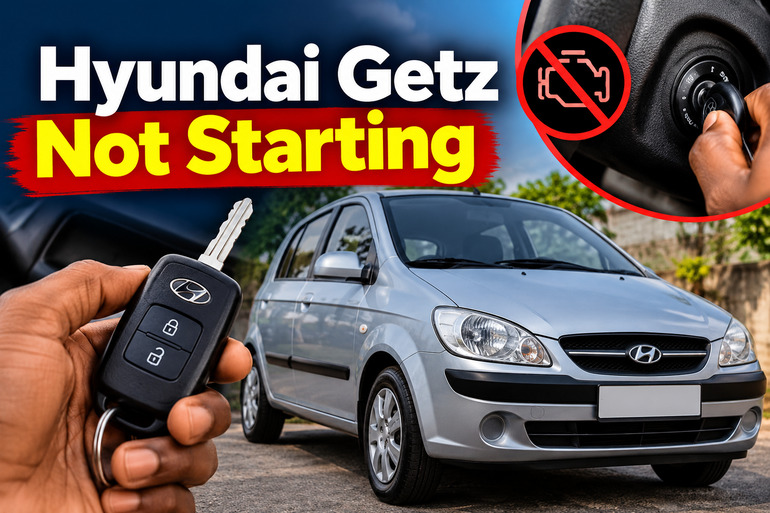
Why Your Hyundai Getz Won’t Start
When you turn the ignition key, the battery supplies electrical power to the starter motor and the vehicle’s engine management systems. The starter motor turns the engine until combustion begins. On gasoline models, the engine needs the correct mixture of air and fuel, a properly timed spark, and sufficient compression to run. Diesel models use a different ignition process, relying on the heat produced by compressing air.
A failure in any essential part of this process can prevent your Hyundai Getz from starting. Electrical problems often cause the starter to remain silent or turn the engine slowly, while fuel or ignition faults can allow normal cranking without the engine running.
Pay attention to the sound and behavior of your car. Rapid clicking often points to insufficient battery power, while a single click may indicate a starter circuit problem. If the engine cranks at its usual speed but does not start, fuel delivery, ignition, engine sensors, or the immobilizer system may need attention.
Your Getz’s model year, engine type, and transmission also matter. Fuse assignments and diagnostic procedures can vary, so use the owner’s manual for your specific vehicle. Avoid repeatedly cranking the engine for long periods, since this can overheat the starter and further discharge the battery.
Hyundai Getz Not Starting: Likely Causes
Several faults can produce similar starting symptoms, so the first step is to establish whether the engine cranks at all. The following are common possibilities, along with the clues that can help you distinguish them.
1. A Weak or Dead Battery
A weak battery is one of the first things to investigate when your Hyundai Getz will not start. The battery powers the starter motor, which needs considerably more electrical current than dashboard lights or the radio.
If the battery is discharged, you may hear repeated clicking, see the dashboard lights dim when you turn the key, or notice that the engine turns unusually slowly. In other cases, the dashboard may remain completely dark because the battery has lost its charge or an electrical connection has failed.
Battery problems can develop after leaving the lights on, repeatedly making short trips, or allowing the car to sit unused for a long period. An aging battery may also fail to hold enough charge even when the alternator previously appeared to work correctly.
2. Corroded Battery Terminals or Loose Connections
Your battery can still contain charge and fail to start the engine if electricity cannot flow properly through the terminals and cables. Corrosion creates resistance at the connection, while a loose terminal can interrupt the heavy current required by the starter.
Look for white, blue, or greenish deposits around the battery terminals. You might also find that the car starts intermittently, the dashboard flickers when you turn the key, or the electrical system loses power under load.
The battery’s negative cable must also make a good connection with the vehicle body or engine ground. A damaged ground cable can cause symptoms similar to a discharged battery or defective starter motor, making careful inspection important before replacing expensive parts.
3. A Faulty Starter Motor or Starter Circuit
The starter motor turns the engine during startup. If its internal components wear out, the solenoid fails, or the electrical supply to the motor is interrupted, your Getz may not crank even when the battery is adequately charged.
A single click when you turn the key can point to a starter solenoid problem, a weak electrical connection, or insufficient power. Complete silence can indicate a fault in the starter control circuit, ignition switch, fuse, relay, or transmission safety switch.
Sometimes the starter produces a spinning sound without turning the engine itself. This can indicate a problem with the starter drive mechanism or the teeth that engage with the engine’s flywheel. That symptom requires a different repair from a weak battery, so avoid replacing the starter without confirming the fault.
4. Fuel Delivery or Ignition Problems
If the starter turns the engine normally but it refuses to fire, investigate whether the engine receives fuel and, on gasoline models, whether the ignition system produces a correctly timed spark.
A failed fuel pump, blocked fuel filter, damaged wiring, or faulty fuel pump relay can prevent sufficient fuel from reaching the engine. The car may crank continuously without starting, or it may start briefly and then stop. Simply hearing or not hearing a short fuel pump sound is not enough to confirm a pump failure.
On gasoline versions, worn spark plugs, a faulty ignition coil, or damaged electrical connections can prevent combustion. Diesel versions may experience problems with fuel supply, air entering the fuel system, or glow plugs that assist cold starting. A qualified technician may need to test fuel pressure, ignition output, or diesel fuel system operation to identify the actual fault.
5. A Faulty Engine Sensor or Immobilizer
The engine management computer relies on sensor signals to determine when to deliver fuel and, where applicable, trigger ignition. A faulty crankshaft position sensor can prevent the system from detecting engine rotation correctly, resulting in a crank but no start.
An immobilizer fault can produce similar symptoms because the anti-theft system may prevent the engine from running when it cannot recognize the key. On a Getz equipped with an immobilizer, a security indicator that flashes abnormally or stays illuminated when it should not can be a useful clue.
These problems are harder to identify through visual inspection alone. Fault codes, wiring tests, and live sensor readings may be required. A flashing warning light does not automatically confirm that a sensor or immobilizer component has failed, since related wiring and control system faults can produce similar signs.
Hyundai Getz Not Starting: DIY Fixes
Start with simple checks that can be performed safely before moving on to more involved troubleshooting. The following steps can resolve basic battery, connection, and operating issues, while helping you recognize when professional diagnosis is necessary.
1. Check the Battery and Charge It if Necessary
Begin by switching off the headlights, air conditioning, radio, and other electrical accessories. Turn the ignition key to the appropriate position and observe the dashboard lights before attempting to start the engine.
If the lights are unusually dim or go out when you turn the key, the battery may be discharged or unable to deliver sufficient current. This is a useful clue, although it does not distinguish a weak battery from every possible connection fault.
If you have a suitable battery charger, follow its instructions and the vehicle’s manual to charge the battery safely. You can also arrange a battery load test at an automotive workshop to determine whether the battery still holds sufficient power.
If the battery is swollen, cracked, leaking, or producing an unusual smell, do not attempt to charge or jump-start it. Arrange professional assistance instead. A battery that repeatedly loses charge after being recharged may also indicate a charging system fault or an electrical drain that needs investigation.
2. Inspect the Battery Terminals and Cables
With the ignition switched off and the key removed, look at the battery terminals and accessible cables. Check for visible corrosion, loose connections, or damaged insulation.
Do not place metal tools across the battery terminals, and avoid working around exposed electrical connections. If a cable appears loose or badly corroded, have the connection cleaned and secured properly. Disconnecting battery cables in the wrong order or allowing a tool to bridge the terminals can cause serious injury or electrical damage.
Once the connections have been checked, try starting the engine again. If the electrical lights are now steady and the starter cranks normally, a poor connection may have contributed to the problem. Persistent clicking or slow cranking means the battery, cables, ground connection, or starter circuit still needs further testing.
3. Try a Safe Jump-Start
If the battery is discharged, a jump-start may provide enough power to start your Hyundai Getz. Use a suitable booster pack or another vehicle with compatible electrical specifications, following the instructions supplied with the equipment and your Getz owner’s manual.
Before connecting anything, ensure both vehicles are secured, the ignitions are switched off, and the batteries are undamaged. Use the designated connection points and correct polarity. Follow the specified connection and disconnection sequence rather than guessing where each clamp belongs.
Once the connections are secure, start the assisting vehicle or activate the booster as directed, then attempt to start the Getz. Avoid repeated, prolonged cranking attempts. If the engine starts, do not assume the battery is healthy simply because the car is running.
A successful jump-start suggests that the battery or its electrical supply may be involved, but it does not establish the exact cause. Have the battery and charging system tested, particularly if the vehicle needs another jump-start soon afterward. If the car still will not crank, the starter or its control circuit may be at fault.
4. Check the Fuel Level, Gear Position, and Warning Lights
Some starting problems come from basic operating conditions. Confirm that there is sufficient fuel in the tank, especially if the fuel gauge is inaccurate or the vehicle has been parked on a slope.
For an automatic Hyundai Getz, place the transmission in Park and apply the parking brake before trying again. If the car does not crank, you can try Neutral if the owner’s manual permits it. A faulty transmission range or starter interlock switch may prevent starting when the vehicle does not correctly recognize the selected gear.
For a manual model, ensure the transmission is in neutral and follow the normal starting procedure. Observe the instrument panel when the ignition is switched on. An unusual security indicator, engine warning light, or other warning may provide diagnostic information.
Check the vehicle’s manual for the meaning of the specific warning light and its normal behavior during startup. Do not bypass a safety switch or attempt to defeat the immobilizer. If a security warning persists, a spare programmed key may help determine whether the original key is the issue, but further testing may still be necessary.
5. Inspect the Relevant Fuses and Visible Connections
If the engine cranks normally without starting, or the starter remains silent despite a healthy battery, checking the relevant fuses may be useful. Your Getz has fuse and relay circuits associated with engine management and starting, but their exact assignments depend on the vehicle version.
Use the fuse diagram in your owner’s manual to identify the appropriate circuit. With the ignition switched off, inspect the relevant fuse for a broken internal element, or use a suitable fuse tester if you know how to operate it safely.
Replace a blown fuse only with one of the specified type and rating. Never install a higher-rated fuse or bridge the fuse terminals with wire. If the replacement fuse blows again, stop attempting replacements and have the circuit inspected for a short circuit or another electrical fault.
You can also look for visibly disconnected connectors in accessible areas of the engine compartment. Avoid unplugging sensors or ignition components unnecessarily, and never disconnect electrical components while the engine is being cranked. If the fuse and visible connections appear sound, further testing is likely to be more useful than replacing random parts.
6. Contact a Qualified Mechanic
Professional diagnosis is necessary when these checks do not resolve the issue, the engine starts intermittently, or the same fault returns. A mechanic can test battery performance, starter current, voltage drops across electrical connections, and the operation of the starter relay and ignition switch.
If your Getz cranks but does not start, the technician can investigate fuel pressure, ignition output, engine sensor signals, and relevant fault codes. Diesel models may require additional checks of the fuel injection system and cold-start equipment. If the engine cranks unusually fast, produces abnormal mechanical noises, or appears to have lost compression, avoid further starting attempts until the mechanical condition has been assessed.
Stop using the vehicle and arrange recovery if you notice smoke, burning electrical smells, leaking fuel, or signs of severe mechanical damage. These symptoms warrant immediate attention rather than continued DIY troubleshooting.
Wrap-Up
A Hyundai Getz that will not start can have an electrical, fuel delivery, ignition, sensor, or immobilizer problem. The most useful starting point is to establish whether the engine cranks and listen carefully to what happens when you turn the key. Those observations help narrow the likely causes before any parts are replaced.
Begin with safe battery checks, inspect accessible connections, and confirm the basic starting conditions. If the problem persists, proper testing can identify the failed component and prevent unnecessary repairs. Taking a methodical approach gives you a clearer path to getting your Getz running again.