
A Hyundai Santa Fe horn that stops working can leave you unable to warn other drivers, pedestrians, or cyclists when you need to. Sometimes, the problem comes from a blown fuse or a failed horn assembly. In other cases, a faulty relay, damaged wiring, or a problem inside the steering column may be responsible.
The right repair depends on the symptoms. A few simple checks can help you identify the likely cause before spending money on replacement parts.
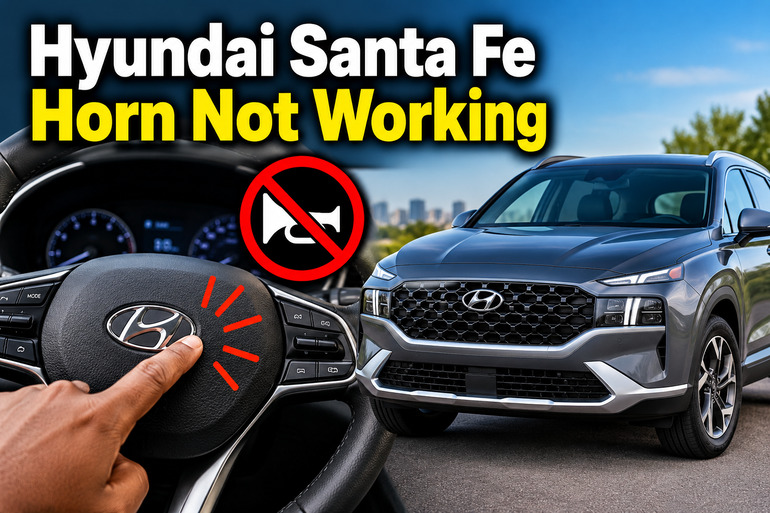
Understanding Why Your Hyundai Santa Fe Horn Is Not Working
Your Hyundai Santa Fe uses an electrical circuit to operate the horn. When you press the horn pad in the center of the steering wheel, a switch sends a signal through the control circuit. A relay then allows electrical current to reach the horn assembly, producing the sound that alerts nearby road users.
The exact circuit arrangement varies by model year and equipment level, so your owner’s manual is the best reference for identifying the correct fuse, relay, and related components.
When the horn stops working, you may notice complete silence, a faint or unusual sound, or intermittent operation. A Santa Fe equipped with two horns may still produce a sound when one unit fails, although the tone may become weaker or noticeably different.
The timing of the fault provides useful clues. A horn that stops after heavy rain or exposure to moisture may have a problem with its connectors or internal components. If it works occasionally or changes behavior as the steering wheel turns, the steering wheel switch, clock spring, or another electrical connection may need attention.
A nonworking horn should be addressed promptly because it is an important safety feature. Avoid driving the vehicle until the horn is restored, particularly in heavy traffic where a warning signal may be needed.
Hyundai Santa Fe Horn Not Working [FIXED]: Likely Causes
Several faults can prevent your Santa Fe horn from operating. The most useful starting point is to distinguish an electrical supply problem from a failed horn unit or a fault in the steering wheel controls.
1. A Blown Horn Fuse
The horn fuse protects the circuit against excessive electrical current. If a short circuit or electrical fault causes the current to exceed the fuse’s rating, the fuse element melts and interrupts the circuit.
A blown fuse can cause the horn to stop completely, even if the horn assembly itself remains in good condition. The failure may happen suddenly, with no gradual decline in sound beforehand.
Your Santa Fe’s fuse panel contains information about the circuits protected by individual fuses. The horn fuse may be located in the engine compartment fuse panel, but the position and amperage depend on the model year and configuration. Check the diagram on the fuse box cover and the owner’s manual rather than relying on a generic fuse chart.
A fuse that blows again shortly after replacement suggests an underlying electrical fault. Repeatedly installing new fuses without finding the cause can create further problems.
2. A Failed Horn Assembly
The horn assembly converts electrical energy into sound. Many Santa Fe models use separate high-pitch and low-pitch horns that work together to create a fuller warning sound.
Individual horn units can deteriorate because of age, moisture intrusion, corrosion, or internal component failure. The result may be a completely silent horn or a weak, raspy, or unusually high-pitched sound.
When one of two horns fails, the remaining unit may still operate. This can make the problem seem less serious because the horn still produces some noise, even though its normal sound has changed.
Hyundai issued a February 2026 technical service bulletin covering certain Santa Fe vehicles whose horn assemblies may become inoperative when foreign substances cause internal oxidation. The listed vehicles include specified 2021 to 2023 Santa Fe models and certain hybrid and plug-in hybrid versions. The bulletin describes extended horn replacement coverage of 10 years or 120,000 miles for eligible vehicles in the applicable program. Check your vehicle identification number (VIN) with an authorized Hyundai dealer to confirm eligibility.

3. A Faulty Horn Relay
The horn relay acts as an electrically controlled switch. It allows the horn circuit to carry the current required to operate the horns without routing all that current through the steering wheel switch.
A relay can develop worn internal contacts or a mechanical fault that prevents it from switching properly. When this happens, the horn may remain silent even though its fuse is intact.
A relay fault may also produce intermittent operation. For example, the horn might work occasionally but fail on another attempt.
The relay and the horn fuse serve different purposes. A good fuse does not prove that the relay is working, and a relay that clicks does not necessarily mean its internal contacts can carry current correctly. Proper testing may be necessary to identify the faulty component.
4. A Damaged Clock Spring or Horn Switch
The clock spring is a flexible electrical connection inside the steering column. It allows the steering wheel to turn while maintaining electrical connections between steering wheel controls and the vehicle’s electrical system.
Over time, the clock spring can wear or develop a break in its internal ribbon conductor. When the affected circuit supplies the horn switch, the horn may stop working or operate intermittently.
Other symptoms can strengthen this suspicion. The steering wheel controls may stop responding, or the airbag warning light may illuminate. However, these symptoms have several possible causes and do not independently confirm clock spring failure.
The horn switch itself may also fail because of worn contacts or damage to the switch assembly. If the horn does not respond when pressed, but the fuse and relay are functioning correctly, a technician can test the switch circuit and clock spring.
Do not remove the steering wheel or airbag assembly to investigate this problem yourself. Accidental airbag deployment can cause serious injury, and these components require the correct safety procedures and diagnostic equipment.
5. Damaged Wiring, Loose Connections, or Corrosion
Electrical current must travel through the vehicle’s wiring and connectors before it reaches the horns. Damaged wires, loose terminals, poor grounding, or corrosion can interrupt this path.
Exposure to water, dirt, road debris, and moisture can contribute to deterioration around components mounted near the front of the vehicle. Wiring can also become damaged during previous repairs, front-end collisions, or work involving the bumper.
The symptoms vary with the location of the fault. A disconnected horn connector may leave the affected unit completely silent, while a poor connection may allow the horn to work intermittently.
If the vehicle has recently undergone front bumper repairs, pay particular attention to the possibility of an improperly reconnected component. However, the fault should be confirmed by inspection and electrical testing rather than assuming that recent work is responsible.
Hyundai Santa Fe Horn Not Working [FIXED]: DIY Fixes
The best approach is to start with simple external checks before replacing parts. These steps can help resolve straightforward faults while reducing the risk of damaging other electrical components.
1. Check the Horn Fuse
Inspecting the horn fuse is a useful first step because it can reveal a simple electrical interruption without requiring you to remove the bumper or steering wheel.
Park the Santa Fe in a safe location, switch off the ignition, and consult the owner’s manual for the correct fuse panel and horn fuse identification.
Follow these steps:
-
Locate the relevant fuse panel using the owner’s manual or the diagram on the fuse box cover.
-
Identify the fuse marked for the horn or the corresponding horn circuit.
-
Remove the fuse using the recommended fuse puller, if provided.
-
Examine the fuse element. A visibly broken or melted element indicates that the fuse has blown.
-
Replace a blown fuse only with one of the exact specified amperage.
Once the replacement is installed, test the horn briefly. If it works normally, the immediate interruption may have been resolved.
If the replacement fuse blows again, stop replacing fuses and arrange an electrical diagnosis. A short circuit or another fault may be drawing excessive current. Never install a higher-rated fuse or bridge the fuse terminals with wire.
2. Inspect the Horn Relay
If the fuse is intact but the horn remains silent, the relay is another component to investigate.
Use the fuse box diagram to locate the horn relay. With the ignition off, inspect the relay and its socket for obvious external damage, such as signs of overheating or corrosion. Do not open the relay or probe an energized circuit unless you have the correct equipment and training.
Some relays produce an audible click when activated. If you have another person available, ask them to press the horn while you listen near the appropriate relay panel. A click may indicate that the relay’s control circuit is activating, but it does not establish that the relay is delivering power properly.
If your owner’s manual or a qualified technician confirms that an identical, interchangeable relay is available, a controlled substitution test may help identify the fault. Never swap relays simply because they look alike. The terminal arrangement and electrical specifications must match.
When the relay remains suspect, replacement should follow confirmation of the correct part number and circuit arrangement.
3. Test Whether the Horn Produces Any Sound
Pay attention to exactly what happens when you press the horn pad. The sound, or absence of sound, can help narrow the possibilities.
If you hear a weak or altered warning tone, one of the horn units may have failed while another continues working. If the horn is completely silent, the fault may involve the fuse, relay, wiring, horn assembly, or control circuit.
Listen for changes in the sound during brief presses. A raspy tone or inconsistent response can support the suspicion of a failing horn or poor electrical connection, although neither symptom proves a particular cause.
Avoid striking the horn assembly, spraying cleaning products into it, or attempting to supply power directly to its terminals. Direct electrical testing requires suitable equipment and knowledge of the correct terminals. A wrong connection can damage components or cause a short circuit.
If the fuse and relay check out but the horns remain silent, have the electrical supply and ground connections tested before purchasing replacement horn units.
4. Check for Visible Wiring or Connector Problems
If the horn is accessible without removing major components, inspect the visible wiring and connectors for obvious damage. Make sure the vehicle is parked, the ignition is switched off, and the engine has cooled before looking under the hood.
Look for disconnected plugs, crushed wires, damaged insulation, or visible corrosion around accessible connectors. If the vehicle recently had front-end bodywork, an improperly reconnected horn plug is another possibility.
Do not pull hard on the wiring or disconnect plugs while the circuit is energized. Avoid reaching into spaces near the radiator fan or other moving components. The fan may start unexpectedly on some vehicles.
Horn assemblies on many Santa Fe models are mounted behind the front bumper cover. Access may require removing bumper trim or other components. Leave this work to a technician if you are unfamiliar with automotive trim removal or cannot reach the horn safely.
If visible damage is found, the connection or affected wiring may need professional repair. Corroded terminals sometimes require connector replacement rather than simple cleaning.
5. Check for a Hyundai Horn Replacement Coverage Program
For certain newer Santa Fe vehicles, replacing the horn may be necessary even when the fuse, relay, and wiring are functioning correctly.
Hyundai’s February 2026 technical service bulletin, numbered 26-BE-001H-1, covers specified 2021 to 2023 Santa Fe models and certain hybrid variants with inoperative horn assemblies associated with internal oxidation. The bulletin specifies replacement of the affected horn assembly or assemblies and extends coverage under the stated conditions.
Before paying for a new horn, contact a Hyundai dealer and provide your VIN, model year, and mileage. Ask whether the vehicle qualifies for the relevant horn replacement coverage or another applicable warranty provision.
This check is particularly useful if your Santa Fe falls within the listed model years. Eligibility is not automatic for every vehicle carrying the Santa Fe name, and coverage can depend on the vehicle’s precise configuration and applicable market.
For older models or vehicles outside the program, a technician can establish whether the horns themselves have failed and provide a repair estimate.
6. Contact a Qualified Automotive Technician
If the fuse and relay appear functional but the horn still does not work, professional diagnosis is the appropriate next step. The technician can test circuit voltage, grounding, relay operation, wiring continuity, and the horn assemblies to locate the interruption.
Specialist attention is especially important when the horn fault appears alongside an airbag warning light, nonworking steering wheel controls, or other electrical symptoms. These signs may indicate a fault within the steering column or another shared electrical circuit.
If the horn remains on continuously, park the vehicle safely and seek assistance. A stuck horn switch, faulty relay, or short circuit may be responsible. Do not drive with a continuously sounding horn, and do not disconnect airbag-related wiring to silence it.
Ask for the diagnosis before authorizing component replacement. Confirming whether the problem originates in the fuse, relay, wiring, clock spring, switch, or horn assembly can help prevent unnecessary repairs.
Wrap-Up
A Hyundai Santa Fe horn that stops working may have a blown fuse, a failed relay, a defective horn assembly, damaged wiring, or a problem involving the steering wheel controls. Checking the fuse and identifying the exact symptoms are sensible first steps, but electrical faults sometimes require professional testing.
For a 2021 to 2023 Santa Fe or an eligible hybrid variant, check Hyundai’s horn replacement coverage before paying for a repair. For other models, have the suspected fault confirmed before buying parts. Restoring the horn promptly helps keep your vehicle safe and ensures you can give other road users an audible warning when necessary.