
Nothing feels worse than turning on your Honda Civic’s air conditioning on a scorching afternoon, only to get a blast of warm air instead of that refreshing coolness you were counting on. Your car becomes an oven on wheels. Trust me, I’ve been there more times than I care to admit, both in my own vehicles and while working on countless Civics that roll into the shop with the same complaint.
The air conditioning system in your Honda Civic is more complex than you might think, with multiple components working together to keep you comfortable. A breakdown anywhere along the line can leave you sweating through your shirt during rush hour traffic.
Throughout this article, you’ll learn what causes your Civic’s AC to stop working, how to identify the specific problem affecting your car, and practical fixes you can try yourself before spending money at a repair shop.
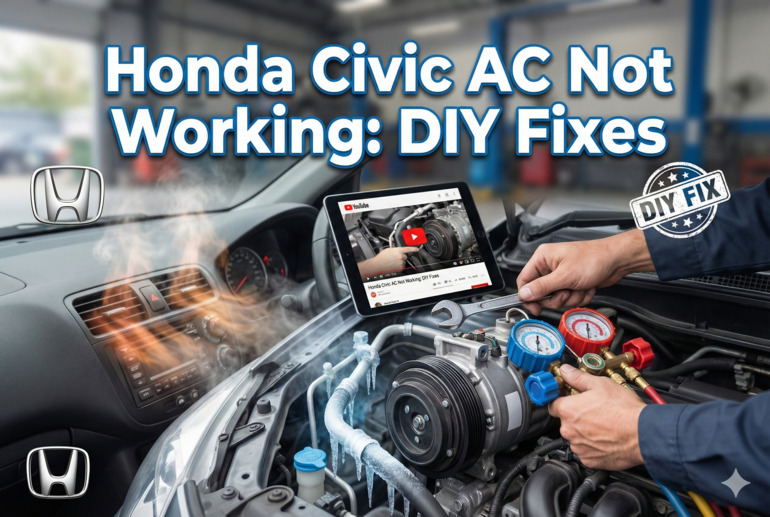
What’s Actually Happening Inside Your AC System
Your Honda Civic’s air conditioning system works by moving refrigerant through a closed loop of components. This refrigerant absorbs heat from inside your car and releases it outside, creating that cool air you feel from the vents. The system includes the compressor, condenser, evaporator, expansion valve, and several other parts that must all function properly for cold air to flow.
Problems typically show up in a few distinct ways. You might notice warm air coming from the vents even though the AC is on. Sometimes the air starts cold but gradually warms up after a few minutes of driving. Other times, you’ll hear strange noises like clicking, hissing, or grinding from under the hood. Some people experience weak airflow where the AC seems to work but barely pushes any air through the vents.
Each symptom points toward different potential failures within the system. Warm air usually means refrigerant loss or compressor failure. Gradually warming air often indicates a partially clogged expansion valve or low refrigerant. Strange noises typically signal compressor problems or loose belts. Weak airflow usually stems from cabin air filter blockage or blower motor issues.
Ignoring AC problems might seem tempting if you can roll down the windows, but putting off repairs often makes things worse. A failing compressor can damage other expensive components. Low refrigerant might indicate a leak that will only grow larger. What starts as a minor inconvenience can snowball into a repair bill that makes you wince.
Honda Civic AC Not Working: Common Causes
Several culprits typically cause AC failures in Honda Civics. Understanding these common issues helps you pinpoint what’s affecting your specific vehicle.
1. Low or Empty Refrigerant
Refrigerant is the lifeblood of your AC system, and losing it means losing cooling power. Your Civic’s AC system should maintain the same refrigerant level for years, but leaks happen. Small cracks in hoses, worn seals around connections, or corrosion in the condenser can all allow refrigerant to escape slowly over time.
You won’t see refrigerant leaking because it evaporates quickly. Instead, you’ll notice the AC gradually becomes less effective before stopping completely. Some mechanics use UV dye to trace leaks, but sometimes they’re so small that even professionals struggle to find them.
2. Faulty Compressor
The compressor is basically the heart of your AC system, pumping refrigerant through all the components. Honda Civic compressors can fail due to age, lack of use, or contamination in the system. If you rarely use your AC, the seals inside the compressor can dry out and crack.
A failing compressor often makes noise before it quits completely. You might hear clicking when you turn on the AC or grinding sounds from under the hood. Sometimes the compressor clutch won’t engage at all, meaning the compressor never starts working even though you’ve turned on the AC button.
3. Clogged Cabin Air Filter
Your cabin air filter sits behind the glove box in most Civics, cleaning the air before it enters your car. Over months and years, this filter collects dust, pollen, leaves, and all sorts of debris. Eventually, it becomes so clogged that air can barely pass through.
This blockage drastically reduces airflow from your vents. The AC might actually be working perfectly and producing cold air, but you’ll barely feel anything because the filter is choking off the flow. Many people overlook this simple cause and assume they have a major AC problem.
Replacing your cabin air filter is one of the easiest maintenance tasks you can do yourself. Most people should change it every 12,000 to 15,000 miles, but if you drive on dusty roads or park under trees, you might need to replace it more frequently.
4. Electrical Problems
Modern Honda Civics rely on various electrical components to control the AC system. Relays, fuses, switches, and sensors all play crucial roles. A blown fuse can prevent the compressor from receiving power. A faulty pressure switch might tell the system to shut down even though everything else works fine.
Electrical gremlins can be frustrating because they’re not always obvious. Your AC might work intermittently, functioning perfectly one day and failing the next. Loose connections, corroded terminals, or damaged wiring can all cause sporadic failures that seem random.
5. Blocked Condenser
The condenser sits at the front of your Civic, right behind the grille where it catches airflow while you drive. This location makes it vulnerable to damage and blockage. Road debris, bugs, leaves, and dirt accumulate on the condenser fins over time. Even minor fender benders can bend these delicate fins, restricting airflow.
A blocked condenser can’t release heat properly, causing the entire system to work inefficiently or shut down. You might notice the AC works fine at highway speeds but struggles in stop-and-go traffic because there’s less airflow through the condenser at lower speeds.
Honda Civic AC Not Working: DIY Fixes
Before you hand over your keys and wallet to a repair shop, try these fixes yourself. Many AC problems have simple solutions that take minimal time and tools.
1. Replace Your Cabin Air Filter
Start with the easiest fix first. Pop open your glove box and remove the contents. Look for the tabs or pins on the sides that allow the glove box to drop down. Once it drops, you’ll see the cabin air filter housing right behind it.
Pull out the old filter and check its condition. If it looks dirty, gray, or has leaves and debris stuck in it, replacing it might solve your airflow problem. Slide in the new filter, making sure the airflow direction arrows point the correct way.
Reinstall the glove box and test your AC. You should immediately notice stronger airflow if the old filter was the culprit. This fix costs less than $20 and takes about five minutes.
2. Check and Clean the Condenser
Look through the front grille of your Civic at the condenser. You’ll see a radiator-like component with thin metal fins. Shine a flashlight through the grille to inspect for blockages.
If you spot debris, bugs, or dirt clogging the fins, you can carefully clean them. Use a soft brush or low-pressure water spray to remove the buildup. Be gentle because these fins bend easily. Straightening bent fins with a fin comb can also improve airflow.
After cleaning, take your car for a test drive. Pay attention to whether the AC performs better, especially at lower speeds where airflow through the condenser matters most.
3. Inspect Fuses and Relays
Your owner’s manual shows exactly where your AC fuses and relays live, usually in fuse boxes under the hood and inside the cabin. Pull out each AC-related fuse and examine it closely. A blown fuse will have a broken metal strip inside or appear blackened.
Replace any blown fuses with ones of the exact same amperage. Never use a higher-rated fuse because it could damage your electrical system. If a fuse blows again immediately after replacement, you have a deeper electrical problem that needs professional diagnosis.
4. Test the Compressor Clutch
Pop your hood and locate the AC compressor. It’s a metal component with a pulley on the front, connected to the engine by a serpentine belt. Start your car and turn on the AC to maximum cold.
Watch the center of the compressor pulley. You should hear a click and see the clutch engage, causing the center section to start spinning with the pulley. If nothing happens, the clutch might be faulty or not receiving power.
Sometimes gently tapping the compressor body with a rubber mallet while someone turns on the AC can temporarily free a stuck clutch. This isn’t a permanent fix but helps confirm whether the clutch is your problem.
5. Add Refrigerant
You can buy AC recharge kits at auto parts stores that include refrigerant and a pressure gauge. These kits work for topping off low refrigerant levels, but they won’t fix leaks.
Attach the recharge hose to the low-pressure port on your AC system. Your owner’s manual or a label under the hood shows which port is which. Start the engine, turn the AC on high, and follow the kit instructions for adding refrigerant while monitoring the pressure gauge.
Add refrigerant in short bursts, checking the pressure frequently. Overcharging your system can damage components. If you need to add a full can of refrigerant and the AC still doesn’t work, you likely have a significant leak that requires professional repair.
6. Contact a Professional Mechanic
If you’ve tried these fixes and your AC still blows warm air, it’s time to visit a qualified automotive technician. Some problems require specialized equipment like vacuum pumps, refrigerant recovery machines, and leak detection tools that most home mechanics don’t own. Complex issues like compressor replacement, evaporator leaks, or electrical system diagnosis really need professional expertise. A good mechanic can properly diagnose your problem and ensure repairs are done correctly.
Wrap-Up
Your Honda Civic’s air conditioning keeps you comfortable during hot weather, but various issues can knock it offline. From simple causes like dirty cabin air filters to more complex problems like refrigerant leaks or compressor failures, identifying the specific issue helps you decide whether to grab your tools or call a professional.
Start with the easy checks and work your way through the list. Many AC problems have straightforward solutions that save you money compared to immediate shop visits. Just remember that some repairs truly require professional help, and there’s no shame in knowing your limits.