
An ABS warning light can leave you unsure whether your Kia needs a sensor, a wiring repair, or something more involved. If a scan shows C1209, the next step is to confirm what that code means for your particular model before buying any parts.
The fault usually points to the right rear wheel speed sensor circuit. However, identifying the circuit is only the beginning. A sound diagnosis separates a failed sensor from damaged wiring, connector trouble, and other possible faults.
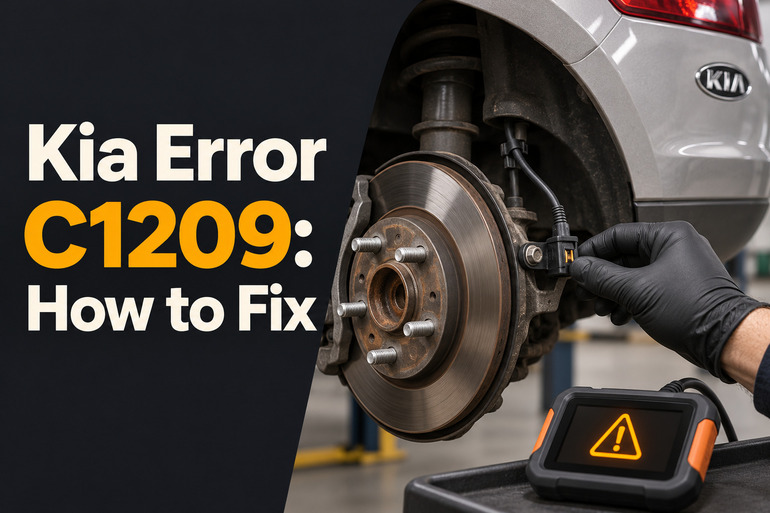
What Kia Error C1209 Means
Kia service information commonly identifies C1209 as a right rear wheel speed sensor open or short circuit fault. An open circuit means the electrical path is interrupted. A short circuit means electricity has an unintended path. Neither description proves that the sensor itself needs replacement. Kia’s diagnostic information also identifies wiring faults and the ABS control unit as possible causes.
Wheel speed sensors tell the braking control system how fast individual wheels are turning. The system uses that information to help manage wheel lock during braking. When a sensor circuit stops providing usable information, the vehicle may illuminate the ABS warning light and disable related assistance. The exact response depends on the vehicle and its stored faults.
The code’s full description matters. For example, Kia bulletin CHA 059 distinguishes C1209, an electrical circuit fault, from C1210, a right rear sensor performance fault, and C1211, an invalid or missing signal fault. Those distinctions help a technician choose the correct tests instead of treating every wheel speed problem alike.
Assess the warning lights before attempting any troubleshooting. Kia states that normal braking remains available with an ABS malfunction, but without ABS assistance. Both the ABS and red brake warning lights require greater concern. If braking feels abnormal, fluid is leaking, or the red brake warning remains on with the parking brake released, stop safely and arrange professional help.
Kia Error C1209: Common Causes
Several faults can interrupt the right rear sensor circuit. The most useful clues are the complete scan results, when the warning appears, and whether anything recently changed around that wheel.
1. A Failed Wheel Speed Sensor
The sensor contains electrical components that can fail internally. An internal break or short can make its circuit fall outside the conditions expected by the ABS control unit, even when the visible cable looks undamaged.
However, a code naming a sensor circuit doesn’t establish which part of that circuit failed. A replacement sensor connected to damaged wiring can leave you with exactly the same warning. Testing should establish whether the sensor receives the correct supply and produces the expected response for that model.
Sensor construction also varies. Some repairs involve a separate sensor, while certain Kia applications require work involving the hub or sensor housing. Confirm the vehicle’s year, model, drivetrain, and VIN before deciding which replacement part applies.
2. Damaged Sensor Wiring
A wire can break, become pinched, or lose insulation. If the electrical path is interrupted or touches an unintended conductor, the ABS unit may register a circuit fault. Wheel speed sensor troubleshooting therefore includes the wiring between the sensor and control unit.
Recent work provides useful context. If the warning began after a wheel bearing, suspension, or brake repair, tell the shop what was done. That timing doesn’t prove a repair caused the fault, but it gives the technician a reason to examine cable routing, attachment points, and nearby connectors early in the diagnosis.
3. Moisture or Trouble at the Sensor Connection
A poor electrical connection can interrupt an otherwise working sensor circuit. Water exposure deserves particular attention on vehicles covered by relevant Kia service information, although rain or a car wash alone doesn’t confirm the cause.
Kia campaign SC148 addresses certain 2011 through 2015 Sorento models with two wheel drive and specific eligibility conditions. The bulletin explains that significant seawater exposure can allow water into the rear sensor housing covers, interrupting the signal and illuminating ABS or stability control warnings.
This is a specific documented concern, rather than a diagnosis for every Kia displaying C1209. Your vehicle’s production details and campaign status must match. Simply drying the outside of a connector also doesn’t establish whether moisture has damaged anything inside.
4. An ABS Control Unit Fault
The ABS control unit monitors the wheel speed sensor circuits. Kia service information includes a faulty hydraulic and electronic control unit, often abbreviated HECU, among the possible explanations for this type of fault.
That possibility needs evidence before replacement. If the sensor and its wiring haven’t been properly checked, replacing the control unit skips important diagnostic steps. Ask the technician which test results identify the unit as faulty and how the external circuit was ruled out.
Kia Error C1209: DIY Fixes
Start with information gathering and safe observations, then use the results to choose the appropriate repair. Because this fault involves a braking assistance system, electrical testing and component replacement belong with a qualified technician.
1. Confirm and Record the Complete Fault
Use a scan tool that explicitly supports the ABS system on your Kia’s year and model. A reader that only checks engine faults may not provide the information needed here. Follow its connection instructions with the vehicle parked securely, and record the code before clearing anything.
Save the complete description, any suffix, its current or history status, and every related code. A photograph of the results is useful. For example, Kia’s Telluride bulletin SC301Y lists C120901 for the right rear sensor open or short fault. Retaining that extra detail helps the shop match your results to the correct service information.
2. Check for Visible Damage Without Taking Anything Apart
Park on level ground, switch off the vehicle, and let nearby components cool. From a position outside the vehicle, look only at areas you can see safely around the right rear wheel. A flashlight may help you spot an obviously hanging cable, damaged protective covering, or loose component.
Keep this observation limited. Don’t crawl underneath, remove the wheel, pull on wiring, or disconnect brake system connectors to get a better view. If access requires lifting the car or removing parts, have a shop perform the inspection.
Photograph anything unusual without disturbing it. Also note whether the warning began after road debris struck the underside or after recent service. These details can help the technician focus the inspection, but a normal appearance doesn’t rule out a hidden electrical fault.
3. Check Whether Kia Has an Applicable Service Action
Contact a Kia dealer with your VIN and ask about service campaigns, applicable technical bulletins, and previous repairs involving the rear wheel speed sensors. Give the dealer the full code and warning light details. Ask which current instructions apply to your vehicle.
Model details can change the recommended repair substantially. Kia’s CHA 059 bulletin concerns certain earlier Sorento vehicles and specifies rear hub replacement, while SC148 addresses eligible Sorento sensor housing covers. For certain 2020 through 2024 Tellurides, SC301Y specifies replacement of both rear sensors when its conditions are met after the SC301 software upgrade. None of these procedures applies automatically to every Kia with C1209.
4. Have the Circuit Tested Before Authorizing Parts
If the cause isn’t clear, request diagnosis of the right rear wheel speed sensor circuit. Explain that you want the shop to distinguish the sensor from its wiring and connections before approving replacement. This makes the repair decision easier to assess.
The technician should use Kia’s model specific test procedure and electrical diagram. Depending on the system, diagnosis may involve checking the sensor supply, circuit condition, and signal. Exact test values and connector terminals vary, so measurements copied from another Kia aren’t a dependable basis for repair.
Avoid attempting a generic resistance test on the sensor. HELLA explains that active wheel speed sensors cannot be evaluated by measuring their internal resistance. Its guidance also calls for suitable diagnostic equipment and qualified brake system repair. Ask the shop to explain the failed test in plain language before deciding on parts.
5. Match the Repair to the Confirmed Fault
Once testing identifies the problem, approve the repair that addresses it. A failed sensor calls for the correct replacement. Damaged wiring or a defective connection needs an appropriate repair. An applicable Kia service action may specify a different scope, including work on both rear sides.
Ask the estimate to identify the failed part, the proposed work, and any required follow up. If a hub assembly is recommended instead of a separate sensor, request an explanation of your vehicle’s design or the applicable bulletin. That clarification helps you understand what the repair includes without guessing from the code alone.
Afterward, ask for verification of normal operation and another fault scan. Kia’s CHA 059 procedure includes clearing stored codes and a test drive to confirm the repair. A light that disappears immediately after codes are erased isn’t enough by itself to establish success. Leave road testing to the technician, and never attempt a hard braking test to check ABS operation.
6. Contact a Qualified Automotive Technician
Arrange professional diagnosis when C1209 remains active, returns after clearing, or accompanies persistent ABS or stability control warnings. Seek help sooner if the warning follows wheel or suspension work, especially if you can see displaced wiring. You don’t need to identify the failed component before booking an inspection.
Bring a short record of the symptoms. Include when the lights appeared, whether they stay on after restarting, recent repairs, relevant water exposure, and the complete scan report. Note any changes in braking separately rather than assuming every symptom comes from the sensor circuit.
If the pedal feels unusually soft, braking performance changes, or you see a brake fluid leak, stop using the vehicle and arrange towing. For an ABS warning without those symptoms, follow your model’s owner’s manual and arrange prompt inspection. Kia specifically warns that combined ABS and brake warnings can indicate abnormal brake operation.
Wrapping Up
C1209 gives you a useful starting point, but the repair depends on what testing finds in your Kia’s right rear wheel speed sensor circuit. Keeping the full scan results and checking applicable service information can help you avoid approving parts without a clear reason.
Your next step should reflect the symptoms. Stop driving if braking is abnormal, and arrange a qualified inspection for persistent warnings. With a documented diagnosis and proper checks after the repair, you can make a more informed decision about the work your vehicle needs.