
An EPB warning on your Kia Sportage can leave you unsure whether the parking brake will release or hold the vehicle securely. Sometimes, the warning appears alongside other dashboard lights. In other cases, the brake simply doesn’t respond as expected.
The right next step depends on the warning, the brake’s behavior, and your Sportage’s model year. Understanding those differences helps you separate a basic operating issue from a fault that needs professional diagnosis before you drive again.
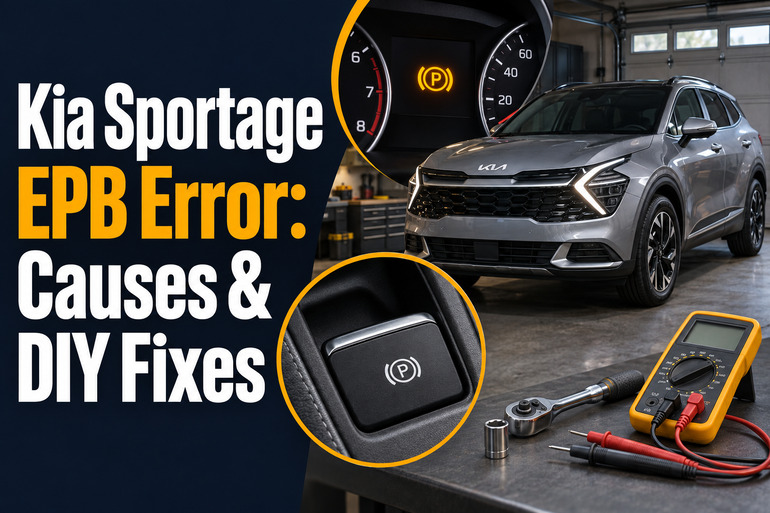
What an EPB Error Means on Your Kia Sportage
Your Sportage’s electronic parking brake uses electric power to apply the parking brake when you operate its switch. A brief click or motor sound during application or release can be normal. The system also has a warning indicator that normally lights for about three seconds when you switch the ignition on, then goes out.
A warning that stays on or appears while driving needs attention. However, the EPB malfunction indicator and the parking brake indicator have different purposes. One warns about a possible system fault, while the other shows parking brake status. Depending on the instrument cluster, the red brake warning can also indicate low brake fluid.
Automatic parking brake application doesn’t always mean something has failed. On equipped Sportage models, Auto Hold can transfer to the EPB under certain conditions, including opening the driver’s door or remaining stopped for an extended period. A message announcing that the parking brake has applied can therefore describe normal operation.
Stop driving if the brake won’t release, the vehicle resists moving, or braking feels abnormal. A red brake warning that remains on after release also needs immediate attention. Don’t attempt a road test to identify the problem when the brakes may be dragging or the vehicle cannot stop normally.
Kia Sportage EPB Error: Common Causes
An EPB warning identifies a system that needs checking, but it doesn’t identify the failed part. These possible causes require different checks, so replacing a switch or brake motor without diagnosis can waste money.
1. Insufficient Battery Power
The EPB needs electrical power to operate. If the vehicle’s battery is discharged, the system may be unable to apply or release the parking brake. Kia documents this limitation in its EPB operating guidance, so the power supply deserves attention before an expensive brake component is blamed.
Battery trouble becomes more plausible if your gasoline Sportage also cranks slowly or its interior light dims sharply during starting. Those clues support checking the battery, although they don’t prove that every EPB warning comes from low voltage. A battery and charging system test can help establish whether an electrical supply problem is present.
The timing matters, too. Tell the technician if the problem began after the vehicle sat unused, required a jump start, or struggled to start. That information helps direct the first checks without turning a possible connection into a confirmed diagnosis.
2. Abnormal EPB Switch Operation
Kia specifically states that abnormal operation of the EPB switch can bring on the warning. This makes the switch a reasonable area to investigate when the problem appears as you apply or release the parking brake. However, the warning alone doesn’t establish that the switch needs replacement.
A visibly broken control or a switch that no longer moves normally deserves professional inspection. Avoid forcing it or repeatedly pulling it harder. Describe whether the control feels damaged, whether the brake responds at all, and whether the warning appears every time you operate it.
3. A Related Stability Control Fault
An EPB warning alongside an Electronic Stability Control warning can point to a related system problem. Kia explains that an ESC fault may illuminate the EPB indicator even when the parking brake itself has not malfunctioned. Consequently, two warning lights don’t automatically mean two separate components have failed.
This distinction matters because replacing EPB parts may leave the underlying fault unresolved. Record every warning that appears together, including ABS and Auto Hold indicators, rather than focusing only on the letters “EPB.”
Diagnosis should establish which system reported the original fault. Suitable diagnostic equipment can read stored faults and display operating information, helping a technician check the suspected component before recommending repairs.
4. A Fault in the Electrical Supply Circuit
The battery is only one part of the electrical supply. The brake control system also depends on its protected circuits. For example, Kia’s 2026 Sportage documentation lists several combined ABS and EPB fuse circuits, showing why a supply fault can affect related brake functions.
Nevertheless, that fuse arrangement should not be applied to every Sportage. Fuse names, locations, and ratings can vary with the model and equipment. A technician should use the correct diagram and test the circuit rather than assume that an unresponsive brake needs a new motor.
5. An Actuator or Brake Mechanism Problem
The electrical command must ultimately operate a mechanical brake. A fault in the actuator, which supplies the movement, or in the brake mechanism can prevent normal application or release. General EPB diagnostic guidance calls for checking both mechanical operation and electronic control rather than treating either side as the only possible cause.
Recent rear brake work is useful diagnostic information. EPB systems may require a maintenance mode and a specified procedure before parts are replaced, followed by calibration where required. ZF’s service guidance emphasizes these requirements and directs repairers to follow the vehicle manufacturer’s instructions.
Tell the repair shop if the warning began immediately after pad, rotor, or caliper work. That timing doesn’t prove the work caused the fault, but it gives the technician a clear reason to review the repair procedure and check the affected area.
Kia Sportage EPB Error: DIY Fixes
The useful home checks involve reading the warning correctly, confirming operating conditions, and trying the normal controls. If the brake is stuck or braking performance has changed, arrange assistance before attempting these checks.
1. Identify the Warning and Record the Symptoms
With the vehicle safely stationary, photograph the dashboard and write down the exact message. Note whether the warning appears at startup, during parking brake operation, or while driving. Include other lights that appear at the same time.
Compare the symbols with the owner’s manual for your exact model year and powertrain. A parking brake indicator, an EPB malfunction warning, and a yellow Auto Hold indicator should not be treated as interchangeable. Kia identifies yellow Auto Hold illumination as a malfunction requiring inspection.
This check may establish that you’re seeing normal automatic application rather than an EPB error. If a malfunction warning remains, your notes will still help the repair shop reproduce the problem and avoid guessing.
2. Try the Normal Manual Release Procedure
If there are no signs of abnormal braking, use the release procedure listed in your manual. On the Sportage models covered by Kia’s cited guide, manual release requires the ignition in the ON position, your foot pressing the brake pedal, and a press of the EPB switch. Confirm that the parking brake indicator goes out.
Remain seated with your foot firmly on the brake throughout the check. Don’t press the accelerator to overcome resistance. If the parking brake doesn’t release normally, stop trying and arrange recovery. Kia specifies transport by flatbed tow truck when the EPB cannot be released.
3. Check the Door, Seat Belt, and Auto Hold Conditions
If automatic release fails but the manual control works, check the conditions required for automatic operation. Kia’s Sportage guidance includes fastening the driver’s seat belt and closing the driver’s door, hood, and liftgate for the relevant automatic release procedure. Exact conditions vary, so follow your own manual.
Read any message about an open panel or unmet operating condition. Close the indicated panel properly and check whether the display recognizes it. If the vehicle continues to report an open door or hood that is securely closed, mention that mismatch when booking diagnosis.
You can also cancel Auto Hold while stationary by holding the brake pedal and pressing its switch, as described in Kia’s instructions. This helps you distinguish Auto Hold behavior from parking brake behavior. It does not repair a persistent EPB fault or make an active warning safe to ignore.
4. Try One Normal Restart
For an EPB warning associated with abnormal switch operation, Kia describes switching the engine off and restarting after a few minutes. Try this only when the vehicle is safely secured and you have no signs of dragging brakes, poor braking, or unintended movement.
After restarting, check whether the warning clears and whether the parking brake operates normally. If it stays on or returns, arrange inspection. A warning that disappears once does not establish why it appeared, so keep your photograph and symptom notes rather than repeatedly restarting the vehicle to suppress it.
5. Follow Up on Signs of Battery Trouble
If the EPB problem accompanies starting trouble, arrange a battery and charging system test. Explain whether the starter turns slowly, whether lights dim during starting, and whether the vehicle recently needed assistance. These details are more useful than buying a battery solely because the EPB warning appeared.
For any charging or starting assistance, use the instructions for your exact Sportage. Gasoline, hybrid, and plug in hybrid versions should not be treated as having identical battery arrangements. If you’re uncertain about the correct procedure, request roadside assistance instead of improvising connections.
Kia warns against attempting to jump start a frozen battery and recommends qualified assistance when the procedure is unclear. Once power has been restored, the EPB must still apply and release normally. A successful engine start alone does not confirm that the brake problem has been resolved.
6. Contact a Qualified Kia Technician
Book diagnosis if the warning persists, returns after a restart, or began following brake repairs. Ask whether the shop can access the relevant Kia brake control systems. A tool’s ability to read engine codes does not establish that it supports the EPB functions needed for your vehicle.
Professional EPB diagnosis can involve reading faults, checking switch inputs, and testing actuator operation. Repair procedures may also require maintenance mode and calibration. Leave motor removal, brake disassembly, wiring repairs, and attempts to bypass the system to a qualified technician.
Arrange a flatbed tow if the brake remains applied, and tell the recovery operator about the EPB fault before loading. Likewise, seek immediate help for a persistent red brake warning or abnormal pedal feel. Don’t rely on a cleared dashboard message when the vehicle’s actual braking behavior remains wrong.
Wrapping Up
A Kia Sportage EPB error calls for a careful look at both the warning and the brake’s behavior. Normal automatic application, unmet release conditions, electrical supply trouble, and a genuine component fault can lead to different next steps. Clear symptom notes help you avoid treating every case as the same repair.
Start with the safe operating checks that match your owner’s manual. If the warning persists or the brake won’t work normally, arrange qualified diagnosis. Restoring reliable parking brake operation matters more than making the warning disappear.