
A check engine light paired with code P0014 can leave you wondering whether your Kia needs an oil change or a major engine repair. Both oil supply problems and faults in the valve timing system deserve consideration, so buying parts before checking the basics can get expensive.
The right repair depends on why the exhaust camshaft isn’t reaching its commanded position. Understanding what the code means helps you recognize useful clues, make safe checks, and know when professional testing is necessary.
What P0014 Means on a Kia
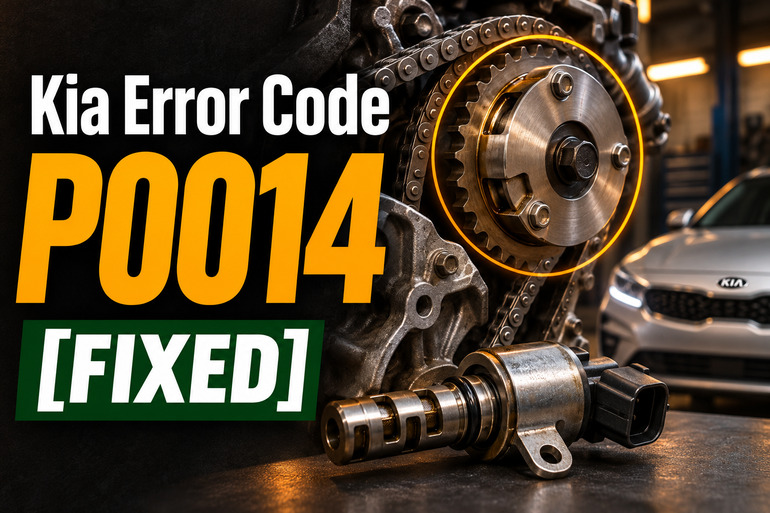
P0014 identifies an exhaust camshaft timing problem on Bank 1. Kia describes it as exhaust camshaft timing that is too far advanced or a system performance fault. In simple terms, the engine computer has detected that the exhaust camshaft’s position doesn’t match the expected timing under the conditions being monitored. The code identifies the affected function, but it doesn’t identify a failed part by itself.
The camshaft controls when the engine’s valves open and close. On engines with hydraulic continuously variable valve timing, an electrically controlled oil valve directs engine oil into a camshaft adjuster, often called a cam phaser. That adjuster changes valve timing as operating conditions change. A problem with oil delivery, control, or mechanical movement can prevent the requested adjustment.
You may notice rough idling, hesitation, or poor acceleration alongside the warning light. However, those symptoms also occur with other engine faults. Kia’s oil control valve bulletin specifically calls for testing before replacement when timing codes or these running problems appear. A code description containing “camshaft position” doesn’t automatically mean the camshaft sensor needs replacing.
Your immediate response should depend on the symptoms. If the oil pressure warning stays on while the engine runs, pull over safely and shut the engine off. Kia warns that continued operation can cause serious engine damage. Loud knocking, severe shaking, repeated stalling, or a major loss of power also call for stopping and arranging qualified assistance instead of attempting a test drive.
Kia Error Code P0014 [FIXED]: Common Causes
Several faults can prevent the exhaust camshaft from following the engine computer’s commands. Your oil condition, maintenance history, and any recent engine work help determine which possibility deserves attention first.
1. Incorrect Oil or Inadequate Oil Supply
The hydraulic timing system needs suitable engine oil and an adequate supply. A low oil level warrants an early check, while oil with the wrong viscosity can affect how the timing mechanism responds. Viscosity describes how readily oil flows at different temperatures.
Oil supply problems can also exist when the dipstick reading looks normal. Oil level measures how much oil is present, while pressure concerns its delivery through the engine. A full dipstick cannot confirm that operating pressure meets the engine’s specifications.
Check your last service receipt for the oil grade and filter used. If the warning appeared soon after maintenance, share that timing with the repair shop. It’s a useful lead, although it doesn’t prove the service caused the fault. Kia’s technical material identifies unsuitable oil and restricted oil flow as factors that can affect CVVT operation.
2. A Sticking or Failed Oil Control Valve
The exhaust oil control valve regulates oil delivery to the camshaft adjuster. If its internal moving part sticks, the system may struggle to change or release the camshaft’s position as requested. Debris inside the valve is one possibility. An electrical failure within the valve is another.
These faults require different checks. Kia’s inspection bulletin calls for checking electrical resistance and valve movement, then examining for trapped foreign material when appropriate. It also says that a valve operating normally should not be replaced simply because it was suspected. That distinction can save you from installing a new solenoid while leaving the actual problem unresolved.
3. A Loose Connector or Damaged Wiring
A control valve needs a sound electrical connection to respond correctly. A loose plug, damaged terminal, or wiring fault can interfere with that control. This possibility deserves attention if the problem started after work near the engine cover, cylinder head, or valve connector.
The useful clue is the condition of the connection, rather than the appearance of the valve itself. Kia’s basic OCV inspection includes checking connector security, terminal tension, and connector seals. Electrical testing should follow the wiring diagram for your particular engine, since connector layouts and test specifications vary. Avoid treating a resistance value found for another Kia as a universal standard.
4. A Mechanical Timing or Camshaft Adjuster Fault
A properly controlled oil valve cannot correct every mechanical problem. A camshaft adjuster that binds or has worn components may fail to reach the requested position. Problems affecting the engine’s underlying mechanical timing also require consideration when the diagnostic evidence points in that direction.
This is where companion codes matter. P0016 and P0017 concern the relationship between crankshaft and camshaft position. Their presence gives the technician additional information, although none of these codes alone proves that the timing chain needs replacement.
Ask for the findings that support a mechanical repair. A useful explanation should connect the proposed work to measured camshaft behavior, verified timing alignment, or an identified damaged component. Replacing a chain or phaser solely because P0014 appeared leaves too much uncertainty.
5. An Incorrect Camshaft Signal After Engine Replacement
Recent engine replacement changes the diagnostic priorities. Kia bulletin PS731 describes certain Soul vehicles that may develop P0011, P0014, P0016, or P0017 after replacement because a camshaft reluctor wheel is positioned incorrectly. This wheel provides a reference that the computer uses to interpret camshaft position.
That bulletin applies to specified vehicles and engines, rather than every Kia. Still, the practical lesson is useful. If P0014 first appeared after major engine work, tell the shop exactly when it began and provide the repair paperwork. Verifying the replacement engine’s configuration may be more productive than repeatedly changing sensors or control valves.
Kia Error Code P0014 [FIXED]: DIY Fixes
Begin with checks that help establish what happened and whether the engine can be operated safely. Then use the results to guide any service or repair, rather than assuming one replacement part will clear the fault.
1. Save the Codes and Record the Symptoms
If you have a compatible code reader, follow its instructions to scan the vehicle while safely parked. Save every reported code before clearing anything. Take a photograph of the results, including whether the reader labels a code as current, pending, or stored.
Also note the circumstances surrounding the warning. Useful details include whether it appeared after an oil change, during a cold start, after the engine warmed up, or following engine repairs. Record any rough running or unusual sound without repeatedly running the engine to reproduce it.
Give those details to the technician alongside the codes. They create a clearer starting point than “the check engine light came on.” Clearing P0014 before saving the available information can make the original complaint harder to assess, and clearing it does not establish that the cause has been repaired.
2. Check and Correct the Engine Oil Level
Park on level ground, switch the engine off, and follow the oil checking procedure in your Kia owner’s manual. The specified engine temperature and waiting period can vary, so use the instructions for your exact model and engine. Don’t start an engine merely to warm it for this check if it has an oil pressure warning or serious mechanical noise.
For a conventional dipstick check, wipe the stick with a clean cloth, fully reinsert it, and check the reading again. If the level is low, add only the specified oil in small amounts and recheck. Keep the level within the marked range, avoid hot components, and use a funnel to prevent spills. Kia’s owner guidance stresses level ground, a clean dipstick, and the specified oil.
3. Correct an Overdue or Incorrect Oil Service
Review the maintenance record before scheduling another oil change. If the service is overdue, the wrong oil was installed, or the filter’s suitability is uncertain, have those issues corrected using the specifications for your vehicle. Provide the shop with your engine details rather than choosing oil solely by the Kia model name.
Replacing deteriorated oil restores an essential maintenance condition, but it cannot establish that a sticking valve, damaged adjuster, or mechanical timing fault has been repaired. Ask the shop to reassess the original complaint afterward. If P0014 returns, further diagnosis is needed.
Avoid adding an engine flush or oil additive as a trial repair. Kia’s owner guidance warns against engine oil additives because they can alter the oil’s properties. Follow the proper service schedule and use the recommended oil and filter instead. Oil color alone also gives you too little information to decide why the timing fault occurred.
4. Look for an Obvious Connector Problem
With the ignition off and the engine cool, use the correct component diagram to identify the exhaust oil control valve connector. If it is easily visible, look for a plug sitting loose, a broken locking tab, damaged insulation, or wiring trapped against another component. Photograph anything questionable before disturbing it.
Keep this inspection limited to what you can safely see and identify. Don’t pull on wires, force a connector, probe terminals with loose metal objects, or apply battery power to the valve. A damaged plug or harness needs proper repair, and the valve’s electrical and movement tests belong with someone using the correct service procedure. Kia’s bulletin includes specific precautions for powered testing.
5. Check Whether a Specific Kia Procedure Applies
Before approving replacement parts, ask the shop to check Kia service information against your vehicle identification number, engine, and symptoms. A published procedure may change the next diagnostic step. Matching only the brand and trouble code is insufficient because Kia has used several engine and timing system designs.
For example, Kia issued bulletin PS461 for some 2017 Forte vehicles with the 2.0L Nu MPI engine. It describes a technician procedure that compares commanded and actual exhaust camshaft positions and attempts a relearn under specified conditions. If that procedure is unsuccessful, the bulletin directs the technician back to normal P0014 diagnosis.
This is a reason to seek the applicable procedure, rather than copy an engine revving routine from an online video. The bulletin requires particular operating conditions and diagnostic data. Your shop should confirm whether it applies and whether a newer instruction is available before performing it.
6. Contact a Qualified Automotive Technician
Arrange professional diagnosis if P0014 remains after the basic checks, returns after service, or comes with other timing codes. Ask the technician to explain how the findings support the proposed repair. Depending on the vehicle and evidence, diagnosis may involve checking valve operation, comparing commanded and actual camshaft positions, measuring oil pressure, or verifying mechanical timing. Kia service material uses these kinds of checks to separate control problems from other engine faults.
A repair should include verification under suitable operating conditions, rather than simply erasing the warning light. Request a written record of the diagnosis and completed work, especially after a recurring fault. If the engine has an oil pressure warning, loud mechanical noise, or unreliable running, arrange towing and let the shop determine when it can be operated safely.
Wrapping Up
P0014 gives you a useful starting point, but the repair depends on what prevents your Kia’s exhaust camshaft from following its commanded timing. Oil checks, service records, and the circumstances surrounding the warning help narrow that search without committing you to unnecessary parts.
Start with the safe checks you can complete confidently, and keep a record of what you find. If the fault persists or serious symptoms appear, let a qualified technician confirm the cause. A clear diagnosis gives you a stronger basis for approving the repair and checking the result.