
Your Hyundai Sonata’s air conditioning should deliver cool air within a few minutes of starting the system. When the vents produce warm air, airflow becomes weak, or the AC stops cooling during a drive, the cause could range from a clogged cabin air filter to a refrigerant leak or a failing compressor.
The right repair depends on the symptoms. Some checks take only a few minutes, while refrigerant and electrical faults require proper diagnostic equipment. Identifying the likely cause before replacing parts can help you avoid unnecessary expenses.
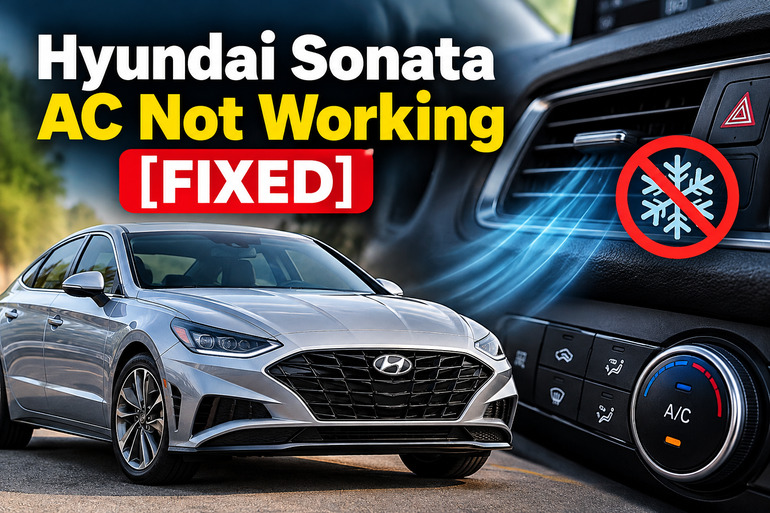
What It Means When Your Hyundai Sonata AC Stops Working
Your Hyundai Sonata’s air conditioning system removes heat from the cabin and releases it outside the vehicle. The compressor circulates refrigerant through the system, the condenser releases heat, and the evaporator cools the air entering the passenger compartment. The blower motor then pushes that air through the dashboard vents.
A fault in any part of this process can affect cooling. For example, low refrigerant can reduce the system’s ability to absorb heat, while a weak blower motor can prevent enough air from reaching the cabin even when the evaporator is cold.
The symptoms provide useful clues. Warm air with normal airflow often points to a refrigerant, compressor, condenser, or temperature-control problem. Weak airflow despite selecting the highest fan speed suggests a clogged cabin air filter, a blower motor problem, or restricted airflow. If the climate control panel does not respond, an electrical fault may be involved. These symptoms are starting points for diagnosis, not proof of a specific failure.
You should also pay attention to when the fault occurs. An AC system that cools during highway driving but becomes warm in traffic may have a condenser airflow problem. Cooling that gradually fades after several minutes could involve evaporator icing or another system fault. These differences help a technician narrow down the cause.
Hyundai Sonata AC Not Working [FIXED]: Likely Causes
Several faults can produce similar air conditioning symptoms in a Hyundai Sonata. The following five causes are useful starting points when diagnosing the problem.
1. Low Refrigerant or a Refrigerant Leak
Refrigerant is the substance that absorbs heat inside the cabin and carries it to the condenser for release outside the vehicle. When the system contains too little refrigerant, its cooling performance can decrease significantly.
Refrigerant levels can fall when a hose, seal, condenser, compressor seal, or another part develops a leak. Damage from road debris may also affect the condenser, which sits near the front of the vehicle.
You may notice that the AC takes longer to cool the cabin, produces air that is only slightly cool, or stops cooling consistently. In some cases, the compressor may cycle on and off frequently. These signs can also occur with other faults, so a pressure and leak test is needed to confirm the diagnosis.
Adding refrigerant without locating a leak may restore cooling temporarily, but the problem can return. Both insufficient and excessive refrigerant can affect system performance.
2. A Faulty AC Compressor or Its Electrical Circuit
The compressor maintains refrigerant circulation through the air conditioning system. Depending on the Sonata’s model year and compressor design, it may use an electromagnetic clutch or a different control arrangement.
When the compressor fails internally, it may struggle to circulate refrigerant or stop working entirely. Problems with its wiring, control circuit, pressure sensor, or related electrical components can also prevent the system from operating as intended.
Listen for unusual grinding or rattling sounds when the AC is switched on. You might also notice that the cabin remains warm despite normal airflow. On vehicles with a visible compressor clutch, the clutch may fail to engage, although its behavior varies by design and operating conditions. Modern systems can regulate compressor output without the clutch behavior found in older designs.
Do not assume the compressor needs replacement simply because it does not engage. Low refrigerant pressure, an electrical fault, a sensor reading, or a control command may be preventing operation. A technician should test these possibilities before condemning the compressor.
3. A Dirty Cabin Air Filter or Restricted Airflow
The cabin air filter catches dust, leaves, and other airborne particles before they enter the ventilation system. As the filter collects debris, it can restrict the volume of air passing through the evaporator and into the cabin.
A clogged filter is particularly plausible when the fan runs but very little air comes from the dashboard vents. You may also notice that the fan sounds unusually loud at higher settings or that dust and unpleasant odors accumulate around the ventilation outlets.
This fault differs from low refrigerant. A dirty filter generally reduces airflow, whereas a refrigerant or compressor problem can produce warm air even when the fan moves plenty of air.
The filter’s location varies by vehicle generation and configuration, although it is commonly accessed behind the glove compartment. Follow the maintenance schedule for replacement and check the filter more frequently under dusty driving conditions.
4. A Dirty Condenser or Faulty Cooling Fan
The condenser releases heat absorbed from the cabin. It is commonly installed near the engine radiator at the front of the vehicle, where air can pass over its fins.
Dirt, insects, leaves, or other debris can obstruct the condenser and reduce heat transfer. A damaged condenser fan or an electrical fault that prevents the fan from operating correctly can cause similar problems, especially when the car is stationary or moving slowly.
One recognizable symptom is an AC system that cools reasonably well on the highway but blows warmer air in traffic. Vehicle movement supplies additional airflow across the condenser, which may partly compensate for a weak or malfunctioning fan.
A technician should check the condenser for blockage or physical damage and verify that the cooling fan operates as commanded. A fan that fails to run does not automatically mean the motor itself is defective because its fuse, wiring, relay, or control system may be responsible.
5. A Blown Fuse, Faulty Climate Control, or Blend Door Actuator
Your Hyundai Sonata relies on electrical controls to operate the blower, compressor, temperature regulation, and air distribution system. A blown fuse, damaged wiring, failed relay where fitted, or malfunctioning control module can interrupt one or more of these functions.
The symptoms depend on the affected circuit. A completely inactive blower may indicate a blower fuse, motor, or speed-control fault. If the climate display is blank or the buttons do not respond, a power supply, connection, or control module problem deserves attention.
A faulty blend door actuator can produce a different symptom. This small electric motor moves an internal flap that regulates how much air passes through the heating and cooling pathways. When the flap gets stuck or the actuator fails, the vents may continue blowing strongly but deliver warm air despite a functioning AC system. Some vehicles may also produce clicking sounds behind the dashboard.
The correct fuse locations, circuit ratings, actuator arrangements, and diagnostic procedures vary between Sonata model years. Use the owner’s manual for your exact vehicle, and avoid replacing electrical components without checking the relevant circuit first.
Hyundai Sonata AC Not Working [FIXED]: How to Fix
Start with checks that do not require opening the refrigerant system or working on exposed electrical components. These steps may resolve a simple airflow or control issue and help you identify when professional diagnosis is necessary.
1. Check the AC Settings and Restart the System
Incorrect climate control settings can make a working AC system appear faulty. This is an easy first check, especially when the problem starts suddenly.
Park the car safely, start the engine, and set the temperature to its lowest setting. Select the AC button, increase the fan speed, and direct airflow toward the dashboard vents. If your Sonata has automatic climate control, try selecting manual settings temporarily to see whether the system responds.
Switch recirculation on to help cool the cabin using interior air rather than continuously drawing in hot outside air. Check that the vents are open and that the temperature setting has not been changed accidentally.
If the AC starts producing cold air, observe whether it stays cold during normal driving. A temporary improvement does not confirm that the underlying fault has disappeared. If the control panel is unresponsive, the cooling remains weak, or the system repeatedly stops working, continue with the checks below.
2. Inspect and Replace the Cabin Air Filter
A restricted cabin air filter can reduce cooling comfort without requiring an AC system repair. Checking it is especially worthwhile if the airflow has weakened gradually or the filter has not been replaced according to the maintenance schedule.
Consult your owner’s manual to locate the filter. On many Sonata models, you can access it behind the glove compartment by opening the compartment and releasing the appropriate stops or retainers. The procedure differs by generation, so avoid forcing the plastic components.
Remove the filter according to the vehicle’s instructions and inspect it for heavy dust, leaves, or visible blockage. Replace it with the correct filter if it is dirty or damaged. Install it in the direction indicated by the airflow markings, and make sure the cover fits securely.
Start the vehicle and test the fan at several speeds. Airflow should improve if the old filter was restricting circulation. However, replacing the filter will not repair a refrigerant leak, a failed compressor, or a defective blend door actuator.
3. Inspect the Condenser Area and Cooling Fan
When an AC system cools better at speed than in traffic, inspect the front of the vehicle for visible obstructions. With the vehicle switched off and cool, look through the grille for leaves, plastic bags, heavy dirt, or obvious damage around the condenser.
Remove loose debris only where you can reach it safely without dismantling vehicle components. Avoid pressing against the thin aluminum fins or using a high-pressure water jet, which can bend the fins and restrict airflow further.
If the AC becomes warm while idling, the condenser fan may also need testing. Keep your hands, clothing, and tools away from the fan assembly because electric cooling fans can start unexpectedly, even after the engine has been switched off.
Do not attempt to repair fan wiring or reach into the engine compartment while components are moving. If the fan does not appear to operate when expected, have a technician test its power supply, control circuit, and operation under the correct conditions.
4. Check the Relevant Fuses
A blown fuse can stop the blower motor, compressor control circuit, or another part of the climate system from receiving electrical power. This check is useful when the AC has stopped working abruptly, the fan is inactive, or the controls behave unusually.
Find the fuse diagrams in your Sonata’s owner’s manual. Depending on the model year, relevant fuses may be located in the cabin fuse panel or the engine compartment fuse box.
With the vehicle switched off as specified in the manual, inspect the relevant fuse. If it has failed, replace it only with a fuse of the same type and rated amperage. Never install a higher-rated fuse to keep the system running.
Test the affected function after replacement. If the new fuse blows again, stop replacing it and arrange an electrical diagnosis. A repeated failure can indicate a short circuit, damaged wiring, or a faulty component that needs repair.
5. Observe the Symptoms Before Arranging AC Service
If the basic checks do not restore cooling, collecting useful symptom information can make professional diagnosis more efficient.
Test the system under safe, ordinary operating conditions and note whether the vents produce no air, weak air, or strong but warm air. Observe whether the cooling changes when driving slowly or at normal road speed. Record any unusual noise, clicking, warning lights, or changes in the climate control display.
Also note whether the problem began immediately or developed over several days. If the AC was recently serviced, tell the technician what work was performed and whether the problem changed afterward.
Do not disconnect refrigerant lines, connect improvised gauges, bypass pressure switches, or add an unidentified refrigerant. The system operates under high pressure, and incorrect refrigerant or lubricant quantities can damage components. Refrigerant handling should be performed by trained technicians using the appropriate equipment.
6. Contact a Qualified Automotive AC Technician
If your Sonata still blows warm air after the basic checks, professional testing is the most reliable way to identify the underlying fault. This is particularly necessary when the compressor does not operate, the cooling deteriorates repeatedly, or you suspect a refrigerant leak.
Ask the technician to check system pressures, test for leaks, verify compressor operation, inspect the condenser fan, and examine relevant electrical circuits. If the airflow is strong but the air remains warm, the technician may also need to test the temperature-control doors and sensors.
A proper diagnosis should establish why the system failed before parts are replaced. Depending on the findings, the repair may involve replacing a leaking seal, repairing wiring, cleaning a restricted component, replacing an actuator, or installing a new compressor.
If the compressor has failed internally, ask whether debris has contaminated the system and whether other components require cleaning or replacement. Replacing the compressor alone may not address contamination left behind by a serious internal failure.
Stop using the AC and seek prompt assistance if you notice smoke, a burning electrical smell, severe mechanical noise, or signs of engine overheating. These symptoms may indicate a problem beyond ordinary loss of cooling.
Wrap-Up
A Hyundai Sonata AC that stops working can have several causes, from a dirty cabin air filter to a faulty compressor or electrical control. The most useful starting point is to distinguish weak airflow from air that flows normally but remains warm. That difference helps narrow the likely fault and prevents unnecessary parts replacement.
Begin with the climate settings, filter, visible obstructions, and relevant fuses. If cooling does not return, professional testing can identify the failed component and determine the appropriate repair. Addressing the fault promptly can also prevent a minor issue from causing additional damage to the air conditioning system.