
Classic cars are special. They carry history in every curve of their bodywork and every note of their exhaust. But the older the engine, the more sensitive it is to what goes into the cooling system. Picking the wrong antifreeze can accelerate corrosion, eat through gaskets, and leave you stranded on the side of the road with a very expensive problem.
The coolant market is packed with options, and they are not interchangeable. Some are built for modern aluminum-heavy engines. Others are engineered specifically for vintage cast iron. A few take an entirely different approach to cooling altogether. Knowing which one fits your car can be the difference between an engine that lasts another 50 years and one that develops cooling system issues within a season.
We put together this guide to cut through the confusion. You will find five strong options across different cooling technologies and vehicle types, each reviewed with classic car ownership in mind, so you can walk away knowing exactly which antifreeze deserves a spot in your garage.
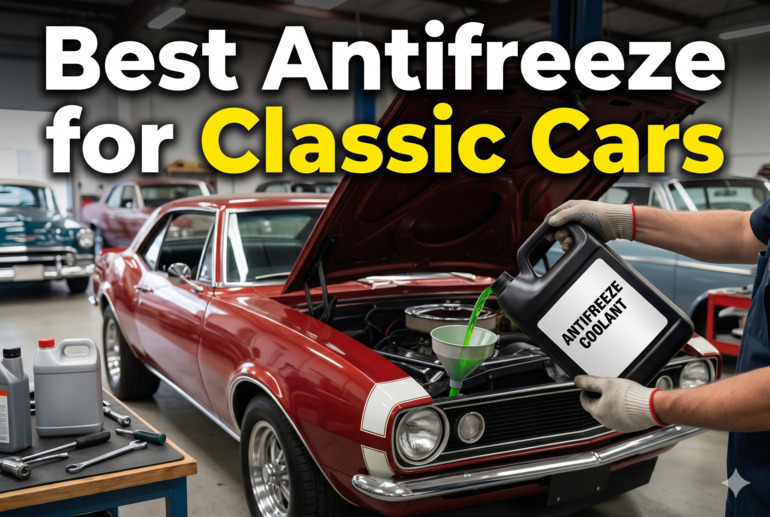
How We Selected the Best Antifreeze for Classic Cars
We evaluated these products by examining their formulation chemistry, compatibility specifications, temperature protection ranges, and metal protection claims. Classic cars present unique challenges that modern vehicles do not, including older cooling system materials, mixed metals, and engines that were never designed with modern OAT chemistry in mind. Every pick on this list was assessed with those real-world conditions as the baseline.
- Formulation Type: Whether the product uses HOAT, OAT, or a waterless formula matters enormously for older engines with cast iron blocks and mixed-metal systems.
- Corrosion and Rust Protection: Classic car cooling systems are far more vulnerable to internal corrosion, so we prioritized products that specifically address rust, scale, and deposit buildup.
- Temperature Range: We looked at both freeze protection (low end) and boil-over protection (high end) to ensure year-round reliability.
- Metal Compatibility: Older vehicles often contain copper, brass, and cast iron components alongside aluminum, so broad metal compatibility was a key factor.
- Ease of Use: Ready-to-use pre-mixed formulas versus concentrates, and whether any special preparation steps are required before installation.
- Service Life: How long the coolant is rated to last before it needs replacing, since longer service intervals mean less frequent maintenance on a cherished vehicle.
- Compatibility Transparency: Products with clear OEM specifications and vehicle fitment guidance ranked higher because guesswork is not acceptable when it comes to an irreplaceable classic.
Every product on this list earned its place by meeting a high standard across these factors, not just one or two of them. That gives you a reliable starting point regardless of what you are working with.
Best Antifreeze for Classic Cars (Expert Ranking & Review)
Below you will find in-depth reviews of five standout antifreeze options. Each one has been chosen for a specific strength, and together they cover a wide range of classic car needs, from daily drivers to weekend showpieces.
1. Valvoline Multi-Vehicle 50/50: The Reliable All-Rounder for Older Engines
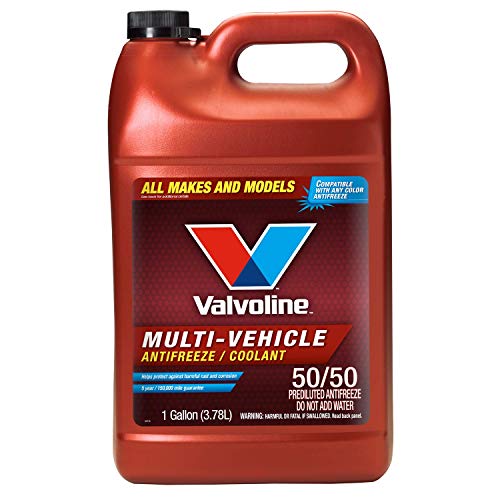
The Valvoline Multi-Vehicle 50/50 Antifreeze is built around an exclusive patented additive called Alugard Plus, which allows it to work alongside any color or type of ethylene glycol-based coolant already in your system. For classic car owners who are unsure what the previous owner put in the radiator, that flexibility is genuinely valuable. It meets ASTM D3306, the industry standard specification for automobiles and light duty trucks.
We found that this coolant performs consistently across a wide temperature window. It protects against freezing down to -34°F and guards against boil-over up to 265°F, which covers everything from a cold garage start in January to a hot summer cruise. That kind of range gives you peace of mind in all four seasons without having to think twice.
The pre-mixed 50/50 formula is poured directly into the reservoir without any measuring or diluting. There is no distilled water to source separately, no ratios to calculate. For someone working in a home garage on a car they love, that kind of simplicity matters. It also contains a bittering agent to discourage accidental ingestion by pets or children.
On the protection side, Valvoline specifically calls out compatibility with aluminum components, which is important for classics that have had modern aluminum radiators installed as replacements over the years. It also protects gaskets, hoses, and plastics, meaning it will not quietly degrade the softer parts of an aging cooling system.
Key Specifications
- Formulation: Ethylene Glycol (ASTM D3306)
- Mix Ratio: 50/50 Pre-diluted
- Freeze Protection: Down to -34°F
- Boil Protection: Up to 265°F
- Volume: 1 Gallon
- Compatibility: Universal multi-vehicle
Pros
- Works with all ethylene glycol-based coolants via Alugard Plus
- Broad freeze and boil-over protection range
- Protects aluminum, gaskets, hoses, and plastics
- Ready to pour with no mixing required
Cons
- Not formulated specifically for vintage cast iron engines
2. Mopar 68163849AB: The OEM-Grade Pick for Chrysler-Family Classics
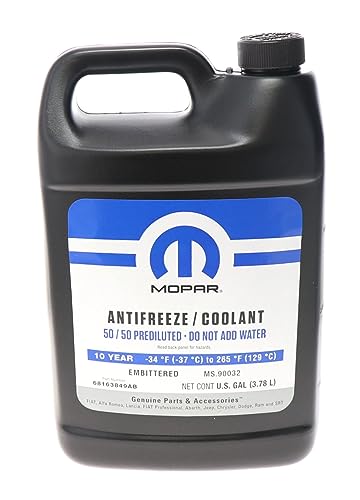
If your classic wears a Chrysler, Dodge, Jeep, or Ram badge, this is the coolant the factory would have specified. The Mopar 68163849AB uses Organic Acid Technology (OAT) chemistry and carries the MS.90032 specification, which covers a broad range of Stellantis-platform vehicles. It is the same coolant sold through dealerships, just without the dealership markup.
One thing that stood out to us about this product is its long service rating. The 10-year or 150,000-mile protection window is among the longest in this category, making it a strong fit for classic car owners who prefer to minimize the number of times they disturb a cooling system that is already running well. Corrosion protection is a core part of its design, with the OAT formula targeting rust, scale, and deposit buildup inside the cooling circuit.
The packaging is a simple, no-nonsense one-gallon jug. It comes premixed at 50/50, so there is nothing to prepare before pouring. The distinctive appearance of this coolant also makes it easy to spot any contamination or mixing with an incompatible product during a system inspection.
Key Specifications
- Formulation: OAT (Organic Acid Technology)
- Mix Ratio: 50/50 Pre-diluted
- Freeze Protection: Down to -34°F
- Boil Protection: Up to 265°F
- Service Life: 10 years / 150,000 miles
- Spec: ASTM D3306 Type 3, MS.90032
Pros
- Genuine OEM-grade formula at a fraction of dealership cost
- Exceptionally long 10-year service life
- Clear vehicle fitment for Chrysler, Dodge, Jeep, and Ram
Cons
- OAT formula cannot be mixed with older HOAT coolants without a full system flush
- Best suited to Mopar-platform vehicles; less compelling for other makes
3. Zerex Asian Vehicle Blue: Purpose-Built Protection for Japanese Iron

The Zerex Asian Vehicle Blue is specifically engineered for Asian-make vehicles requiring a silicate-free and borate-free HOAT formula. It meets the specifications of Hyundai, KIA, Mitsubishi, and Ford WSS-M97B55-A, among others. For owners of classic Japanese vehicles, Acura, Honda, Infiniti, or Nissan, this is the kind of OEM-matched chemistry that gives a vintage cooling system exactly what it was designed to run on.
The silicate-free formulation is particularly important for older Asian vehicle cooling systems. Silicates can cause abrasive wear on water pump seals over time, and for a classic car with an original water pump, that is a risk worth avoiding. Zerex replaces those silicates with a phosphate-based additive that provides strong corrosion protection without the abrasive side effects. The formula also contains no borates, 2-EHA, amines, or nitrites.
We found the product’s 5-year or 150,000-mile service rating competitive with other premium options in this category. The pre-diluted 50/50 formula is ready to pour directly into the system, and the clear blue appearance makes it easy to identify in the reservoir and to spot any unexpected leak or contamination during a visual inspection.
Key Specifications
- Formulation: HOAT, Silicate and Borate-Free
- Mix Ratio: 50/50 Pre-diluted
- Freeze Protection: Down to -34°F
- Boil Protection: Up to 265°F
- Service Life: 5 years / 150,000 miles
- Spec: Hyundai/KIA MS 591-08, JIS K 2234
Pros
- OEM-matched chemistry for Asian-make vehicles
- Phosphate additive protects water pump seals without abrasion
- No silicates, borates, amines, or nitrites
Cons
- Formulated for Asian vehicles specifically; not a universal pick for European or American classics
4. PEAK OET Extended Life Orange: Long-Haul Coverage for American V8 Classics

PEAK built this coolant around Organic Acid Technology specifically for North American vehicles, with compatibility squarely targeting Ford, Chrysler, and GM models. That covers a huge portion of the classic American car market, from muscle cars to full-size trucks and everything in between. The advanced OAT formulation focuses on preventing rust and corrosion across all cooling system metals, keeping radiators, water pumps, and engine passages clean over a long service period.
The headline number here is the protection guarantee: up to 400,000 miles or 15 years when installed as part of a complete flush and fill. That is one of the most ambitious service life claims in the category, and it speaks to how confidently PEAK stands behind the formula’s long-term effectiveness. For a classic car that does not accumulate high annual mileage, that kind of longevity means you may not need to think about a coolant change for a very long time.
This product arrives pre-diluted at 50/50, so topping off is as simple as opening the bottle and pouring. The orange fluid also functions as a useful diagnostic tool during routine checks, since any change in the appearance or unexpected contamination in the overflow tank becomes easy to spot at a glance.
Key Specifications
- Formulation: OAT (Organic Acid Technology)
- Mix Ratio: 50/50 Pre-diluted
- Service Life: Up to 15 years / 400,000 miles
- Vehicle Fit: Ford, Chrysler, GM
- Volume: 1 Gallon
- Contains: Denatonium Benzoate bittering agent
Pros
- Industry-leading 15-year protection guarantee
- Tailored for the most common American classic car makes
- OAT formula delivers long-term deposit and rust control
- Pre-diluted and ready to use straight from the bottle
Cons
- Full guarantee requires a complete flush and fill, not just a top-off
5. EVANS High Performance Waterless Coolant: The Premium Choice for Serious Builds

EVANS takes a fundamentally different approach from every other coolant on this list. It contains no water at all. That single fact changes how the entire cooling system behaves. Without water, there is no boil-over, no vapor formation, and no pressure buildup from steam. The boiling point sits at 375°F, which is nearly 110 degrees higher than conventional 50/50 mixes. For a classic car that runs hot, sits in traffic, or is pushed hard at track days, that margin is significant.
The absence of water also eliminates the root cause of most cooling system corrosion and electrolysis. Traditional coolants require corrosion inhibitors that deplete over time precisely because they are constantly fighting the electrochemical reaction between water and metal. With no water in the system, that battle simply does not happen. EVANS specifically designed this formula for modern, classic, and vintage gasoline-powered vehicles, as well as light duty diesels, LP, and CNG engines.
Installation requires more preparation than a standard coolant swap. You need to flush out all old water-based fluid and then use EVANS Prep Fluid to purge residual moisture before filling. Cutting corners on this step will compromise the system’s performance. Once properly installed, the coolant operates at very low system pressures, which reduces strain on hoses, radiator seams, and water pump seals, all of which tend to be weak points on older vehicles.
This is the most premium option on this list in both price and performance ceiling. Owners of highly valued classics, restored show cars, or performance builds will find it a compelling investment for the protection it provides. Budget-focused buyers or those doing basic maintenance on a driver-class classic may prefer one of the more conventional options reviewed above.
Key Specifications
- Formulation: Waterless (no water content)
- Boiling Point: 375°F
- Freeze Protection: Down to -40°F
- System Pressure: Very low vapor pressure
- Volume: 128 fl. oz. (1 Gallon)
- Vehicle Type: Classic, modern, light diesel, LP, CNG
Pros
- 375°F boiling point eliminates boil-over entirely
- No water means no corrosion or electrolysis
- Low system pressure extends hose and radiator life
Cons
- Requires full system purge before installation, which adds cost and effort
- Significantly higher price point than conventional coolants
Best Antifreeze for Classic Cars: A Quick Rundown
- Valvoline Multi-Vehicle 50/50 — Best for universal compatibility across mixed-coolant systems
- Mopar 68163849AB 10 Year/150,000 Mile Coolant — Best OEM-grade pick for Chrysler, Dodge, Jeep, and Ram classics
- Zerex Asian Vehicle Blue — Best for vintage Japanese vehicles requiring silicate-free HOAT formula
- PEAK OET Extended Life Orange — Best long-service-life option for American Ford, GM, and Chrysler classics
- EVANS High Performance Waterless Coolant — Best for high-performance builds and show cars demanding maximum protection
Final Thoughts
Choosing the right antifreeze for a classic car is not a one-size-fits-all decision. The formulation type matters, whether OAT, HOAT, or waterless, and it needs to match the metallurgy and original specifications of your cooling system. Pay close attention to whether a product requires a full flush before installation, because mixing incompatible chemistries can cause more damage than running an old coolant would have. Service life is also worth factoring in, since longer intervals mean fewer opportunities to introduce air or disturb components that have been sealed and stable for years.
Trust what your car actually needs rather than defaulting to the most convenient option on the shelf. A classic car that has been preserved for decades deserves coolant chosen with the same care you give to every other part of the build. Pick the product that fits your engine, your climate, and how hard you drive, and your cooling system will reward you with years of trouble-free performance.