
You turn the key, hear your Chevrolet Spark’s engine cranking away, but it just won’t fire up and run. That grinding sound keeps going, but your car sits there refusing to start. This scenario plays out more often than you’d think, and it’s one of those problems that can leave you stranded at the worst possible moment.
Your Spark might crank beautifully, sounding like it’s trying its best, yet something’s keeping it from catching and running. The frustration builds as you try again and again, hoping this next turn of the key will be the one that works. Understanding why this happens and how to fix it can save you time, money, and a whole lot of stress.
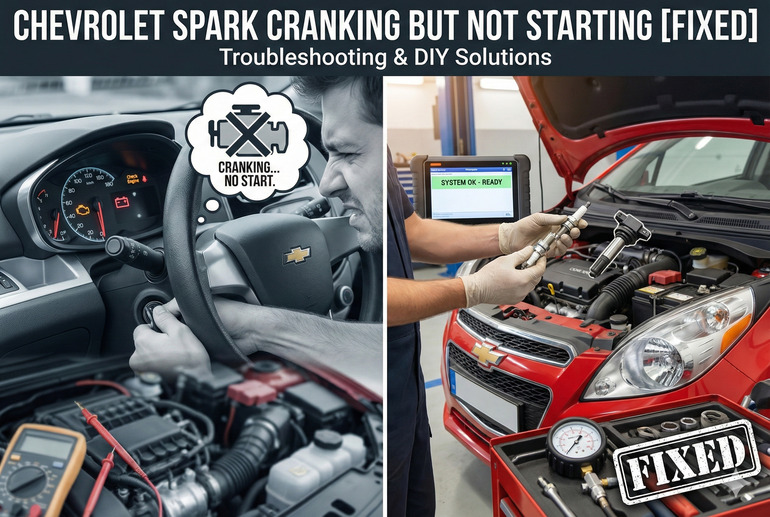
What’s Really Happening Under Your Hood
Your Spark’s engine needs three basic things to start and run: fuel, air, and spark. When your car cranks but won’t start, the starter motor is doing its job perfectly fine. You can hear it turning the engine over, which means your battery has enough juice and the starter itself works. But somewhere along the line, one of those three critical ingredients is missing or not showing up at the right time.
Think of it like trying to light a campfire. You need dry wood, oxygen, and a flame. If any one of those is missing, you’re sitting in the dark. Your engine works the same way. The cranking sound tells you the mechanical parts are moving, but the combustion process that actually makes your car run isn’t happening. This disconnect between cranking and starting is what separates a simple battery issue from something a bit trickier.
Ignoring this problem won’t make it go away. Your Spark might eventually start after several attempts, making you think everything’s fine. But that’s usually your car giving you a warning. Each failed start attempt drains your battery a little more. Keep trying too long, and you’ll end up with a dead battery on top of your original problem. Plus, repeatedly cranking an engine that won’t start can flood it with fuel, making the situation even worse.
The good news here is that most causes are fixable without tearing apart your entire engine. Some fixes take five minutes, others might need a trip to the parts store. Either way, you’re looking at problems that have solutions, and many of them are things you can handle yourself with basic tools and a little patience.
Chevrolet Spark Cranking but Not Starting: Likely Causes
Several things can prevent your Spark from starting even when it cranks perfectly. Some of these issues develop gradually, while others pop up out of nowhere. Let’s look at what’s most likely stopping your engine from firing up.
1. Faulty Fuel Pump
Your fuel pump’s job is pushing gas from your tank to your engine. When it fails or gets weak, your engine cranks but gets no fuel to burn. You might hear a humming sound from near your back seat for a second or two when you turn the key to the “on” position. That’s your fuel pump priming. If you don’t hear it, your pump might be dead.
Fuel pumps don’t always die completely at once. Sometimes they get weak and can’t build enough pressure. Your Spark might start when the tank is full because the pump doesn’t have to work as hard, but struggle when you’re running on empty. Temperature matters too. A failing pump might work fine when cold but quit after your car sits in the sun all day.
2. Clogged Fuel Filter
Think of your fuel filter as a coffee filter for gasoline. Over time, it catches all the tiny particles and gunk from your fuel tank. Eventually, it gets so packed with debris that fuel can’t flow through properly. Your pump works overtime trying to push fuel through a clogged filter, but not enough reaches your engine to start it.
This problem builds slowly. You might notice your Spark hesitating or struggling to accelerate before it stops starting altogether. The filter usually sits somewhere along the fuel line between your tank and engine. Most manufacturers recommend changing it every 30,000 miles or so, but many people forget about it until it causes problems.
3. Bad Crankshaft or Camshaft Position Sensor
These sensors tell your car’s computer exactly where the engine’s moving parts are and how fast they’re spinning. Your computer uses this information to time the fuel injection and spark perfectly. When one of these sensors fails, your computer doesn’t know when to fire the spark plugs or inject fuel. The engine cranks, but nothing happens because the timing is completely off.
Position sensor failures often happen suddenly. Your car runs fine one minute, then won’t start the next. Sometimes a bad sensor sends wrong information instead of no information, which can make your engine try to start at the wrong time. You might see a check engine light before the no-start condition happens, or the light might come on right when the problem starts.
Temperature affects these sensors too. A sensor might work fine when your engine is cold but fail once everything heats up. This creates an annoying pattern where your Spark starts perfectly in the morning but won’t restart after running errands.
4. Ignition System Problems
Your ignition system creates the spark that lights the fuel in your cylinders. Bad spark plugs, worn ignition coils, or faulty spark plug wires can all prevent starting. Even if some cylinders get spark, your engine needs all of them firing to start reliably. One or two dead cylinders might let your engine sputter and maybe catch, but it won’t run smoothly enough to keep going.
Spark plugs wear out gradually. The gap between the electrodes gets wider, making it harder to create a strong spark. Ignition coils can crack or break down internally, especially on older Sparks. You won’t always see visible damage, but these parts fail from heat and electrical stress over time.
5. Empty or Contaminated Fuel Tank
Sometimes the simplest answer is the right one. Your fuel gauge might be broken, showing you have gas when your tank is actually empty. Or you might have just enough fuel that it sloshes away from the pickup when you’re parked on a hill. The engine cranks perfectly because the starter doesn’t need fuel, but nothing burns because there’s nothing to burn.
Water or bad gas can cause the same symptoms. If moisture gets into your tank or you accidentally fill up with contaminated fuel, your engine won’t start even with a full tank. Water doesn’t burn, and old gasoline loses its volatility. Your fuel pump sends this useless liquid to your engine, but combustion never happens.
Chevrolet Spark Cranking but Not Starting: DIY Fixes
Now that you know what might be wrong, let’s talk about fixing it. You can handle most of these repairs yourself with common tools and some careful attention. Start with the easiest checks first before moving to more complicated fixes.
1. Check Your Fuel Level and Add Fresh Gas
This sounds almost too simple, but verify you actually have fuel. Don’t trust your gauge completely. Add a few gallons of fresh gas from a station you trust. If your tank was nearly empty, this might solve everything immediately. Gas stations occasionally have contaminated fuel, so fresh gas from a different station can help if that’s your issue.
After adding fuel, turn your key to the “on” position without cranking. Wait five seconds, then turn it off. Repeat this three times. This lets your fuel pump prime and build pressure in the fuel lines. On the fourth try, crank your engine. If fuel was your problem, your Spark should start right up.
Consider adding a bottle of fuel system cleaner if you suspect old or bad gas. These additives help remove water and clean your fuel system. They won’t fix a completely empty tank or severe contamination, but they can help with marginal fuel quality issues.
2. Replace Your Fuel Filter
Locate your fuel filter by checking your owner’s manual. You’ll need a new filter from your auto parts store, some wrenches, and a container to catch spilled fuel. Release the fuel system pressure first by removing the fuel pump fuse and cranking the engine until it quits trying to start.
Disconnect the fuel lines from both ends of the old filter. Fuel will spill, so have rags and your container ready. Note which direction the arrow on the old filter points before removing it. Install the new filter with the arrow pointing the same direction. Reconnect your fuel lines, making sure they click or seal properly. Put the fuel pump fuse back in and prime the system by cycling your key like we discussed earlier.
3. Test and Replace Ignition Components
Start by checking your spark plugs. Pull them out one at a time and look at the electrodes. They should be tan or light brown, with a small gap between the center and ground electrode. Black, sooty plugs or white, crusty deposits mean problems. Worn plugs with a huge gap need replacement. New spark plugs are cheap and can fix your problem immediately if the old ones were bad.
While the plugs are out, check the ignition coils if your Spark has individual coils for each cylinder. Look for cracks, burn marks, or oil contamination. These coils either work or they don’t, so testing requires a spark tester or multimeter. If you spot visible damage, replace the bad coil. If you don’t have testing equipment, many auto parts stores will test coils for free.
Installing new spark plugs is straightforward. Gap them according to your manual’s specifications using a gap tool. Screw them in by hand first to avoid cross-threading, then tighten with a spark plug socket. Don’t overtighten them or you’ll strip the threads in your cylinder head.
4. Replace the Crankshaft or Camshaft Position Sensor
If you have a check engine light, get the code read at an auto parts store. Codes related to these sensors usually start with P0335 through P0344. Your crankshaft position sensor typically sits near the crankshaft pulley at the front of your engine or by the transmission bell housing. The camshaft sensor usually mounts on the cylinder head.
Replacing these sensors takes about 30 minutes per sensor. You’ll need a socket set and maybe a small extension to reach them. Unplug the electrical connector, unbolt the old sensor, pull it out, and install the new one. Make sure the new sensor seats completely in its hole before tightening the bolt. Reconnect the electrical connector and clear the check engine code.
5. Test and Replace Your Fuel Pump
Testing fuel pressure requires a fuel pressure gauge that connects to your fuel rail. Compare the reading against your manual’s specifications. Low or zero pressure means a bad pump or clogged filter. You already checked the filter, so a bad pump is likely. Unfortunately, fuel pump replacement is the most involved fix on this list.
The fuel pump lives inside your gas tank on the Spark. You’ll need to drop the tank or access it through a panel under your back seat, depending on your model year. This job requires extra safety precautions because you’re working with gasoline. Disconnect your battery first. Work in a well-ventilated area away from any sparks or flames.
If you’re not comfortable working with fuel systems, this is a good time to call a mechanic. The job involves heavy lifting, fuel line disconnection, and electrical connections that need to be right for safety reasons. A shop can knock this out in a few hours, and you’ll know it’s done correctly.
6. Contact a Professional Mechanic
If you’ve tried these fixes and your Spark still won’t start, you’ve likely got a more complex issue. Problems with your engine computer, timing belt or chain, internal engine damage, or complicated electrical gremlins need professional diagnosis. A good mechanic has scan tools and testing equipment that can pinpoint problems you can’t see or test at home.
Don’t feel bad about calling for help. Some problems require specialized knowledge and tools that most people don’t have sitting in their garage. A professional can often diagnose the issue in minutes using equipment that would cost you hundreds or thousands to buy. Spending money on proper diagnosis beats throwing parts at your car and hoping something works.
Wrapping Up
Your Chevrolet Spark cranking but not starting usually points to fuel delivery, ignition, or sensor problems. Most of these issues are fixable at home with basic tools and some patience. Start with the simple checks like fuel level and spark plugs before moving to more involved repairs. Each test eliminates possibilities and gets you closer to a running car.
Keep up with regular maintenance and your Spark will reward you with reliable starts. Change your fuel filter on schedule, replace spark plugs before they fail completely, and address check engine lights promptly. These small steps prevent many no-start situations before they happen. Your car talks to you through symptoms and warning lights, so listen carefully and act quickly. Most problems cost less and take less time to fix when you catch them early.