
You turn the key in your Ford van, expecting that familiar rumble, but nothing happens. Maybe you hear a clicking sound, or perhaps total silence greets you. Either way, your day just got complicated.
A van that refuses to start can throw off your entire schedule, whether you rely on it for work, family trips, or daily errands. The good news is that most starting problems stem from a handful of common issues that you can often identify and fix yourself. This guide walks you through what might be stopping your Ford van from firing up and shows you practical ways to get back on the road.
What’s Actually Happening When Your Van Won’t Start
Starting problems usually fall into a few categories, and recognizing the symptoms helps you narrow down the culprit. Your van needs three things to start: fuel, air, and spark. When one of these elements goes missing, the engine stays silent.
Sometimes the issue isn’t with the engine at all. Your starter motor might be failing, or the battery could be drained. You might hear rapid clicking sounds, which typically point to electrical problems. Other times, the engine cranks over normally but just won’t catch and run.
Temperature plays a role too. Cold weather makes starting problems worse because it thickens oil and reduces battery power. If your van struggles more in winter mornings, that’s a clue pointing toward battery or starter issues.
Ignoring starting problems rarely makes them better. A weak battery will eventually die completely. A failing starter motor will leave you stranded at the worst possible moment. The sooner you address these issues, the less likely you’ll face a complete breakdown.
Ford Van Won’t Start: Common Causes
Several factors can prevent your Ford van from starting, and some are more prevalent than others. Let’s look at what typically goes wrong so you can pinpoint your specific problem.
1. Dead or Weak Battery
Your battery provides the electrical juice needed to crank the starter motor. Over time, batteries lose their ability to hold a charge. Most car batteries last three to five years, but extreme temperatures and short trips can shorten that lifespan.
When you turn the key and hear clicking or see dim dashboard lights, your battery is likely the problem. Sometimes you’ll get no response at all. Cold weather can push a weak battery over the edge because chemical reactions inside the battery slow down when temperatures drop.
2. Faulty Starter Motor
The starter motor is what physically turns your engine over when you turn the key. This component endures significant stress every time you start your van, and eventually it wears out.
A failing starter often makes a grinding noise or a single loud click when you turn the key. Sometimes the starter works intermittently, starting fine one moment and failing the next. This unpredictability makes the problem particularly frustrating.
Heat can make starter problems worse. If your van refuses to start when the engine is hot but starts fine when cold, the starter motor is probably on its way out.
3. Bad Alternator
Your alternator charges the battery while the engine runs. When it fails, the battery drains down and eventually can’t provide enough power to start the van.
If your battery keeps dying even after you’ve charged it or jumped it, suspect the alternator. You might notice dimming headlights or flickering dashboard lights before the starting problem appears.
4. Fuel System Problems
Your engine needs fuel to run, and several things can interrupt that supply. The fuel pump might have failed, preventing gas from reaching the engine. Fuel filters can clog over time, restricting flow.
With fuel issues, the engine typically cranks normally but won’t catch. You might smell gas, suggesting fuel is reaching the engine but not igniting properly. Sometimes the engine sputters briefly before dying.
5. Ignition System Failure
Spark plugs, ignition coils, and related components create the spark that ignites fuel in your engine. When these parts fail, your engine cranks but won’t start because there’s no spark to ignite the fuel mixture.
Worn spark plugs are common in older vans with high mileage. If you haven’t replaced them in over 60,000 miles, they could be the source of your trouble. Ignition coils can fail suddenly, often without warning.
Ford Van Won’t Start: How to Fix
Now that you know what might be wrong, let’s tackle how to fix it. These solutions range from simple checks to more involved repairs.
1. Test and Charge Your Battery
Start with the simplest solution. Pop the hood and check your battery terminals for corrosion, which looks like white or greenish crusty buildup. Clean any corrosion with a wire brush and a mixture of baking soda and water.
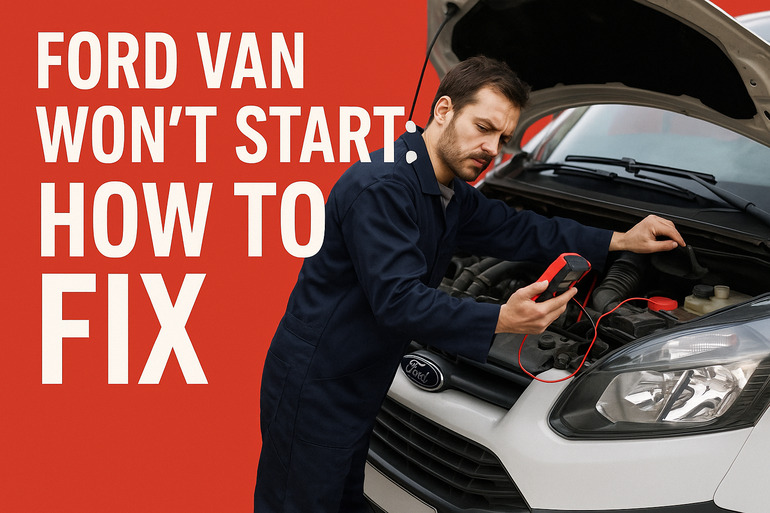
Use a multimeter to test battery voltage. A healthy battery shows 12.6 volts or higher when the engine is off. Anything below 12.4 volts means the battery is partially discharged. Below 12 volts indicates a battery that needs charging or replacement.
Try jump-starting your van using jumper cables and another vehicle. If it starts, let it run for at least 20 minutes to recharge the battery. If the van won’t hold a charge after this, you need a new battery.
2. Check Battery Connections
Loose or corroded battery cables can prevent proper electrical flow even if your battery is fine. Wiggle the battery terminals gently. They shouldn’t move at all if properly tightened.
Remove the cables (negative first, then positive) and clean both the terminals and cable ends thoroughly. Look for any fraying or damage to the cables themselves. Reconnect everything tightly, positive first, then negative.
3. Tap the Starter Motor
This old mechanic’s trick sometimes works when your starter is failing. Locate the starter motor under your van (usually near where the transmission meets the engine). Give it a few firm taps with a hammer or wrench while someone tries to start the van.
The tapping can temporarily free up stuck components inside the starter. This isn’t a permanent fix, but it might get you started so you can drive to a repair shop. If tapping works, plan to replace the starter soon because it will fail again.
4. Inspect and Clean the Fuel Filter
A clogged fuel filter restricts gas flow to your engine. Locate your fuel filter (check your owner’s manual for the exact location, as it varies by model year). On many Ford vans, it’s along the frame rail underneath the vehicle.
If the filter looks dirty or you haven’t replaced it in over 30,000 miles, install a new one. This is an inexpensive part that can make a huge difference. Make sure you relieve fuel system pressure before disconnecting any fuel lines to avoid spraying gas everywhere.
After installing a new filter, turn the key to the “on” position (without starting) for a few seconds, then off. Repeat this three or four times to let the fuel pump prime the system before trying to start the engine.
5. Replace Spark Plugs
Old or fouled spark plugs won’t create the spark needed for ignition. Pull out your spark plugs one at a time and inspect them. They should have a light tan or gray color. Black, oily plugs indicate problems.
Replace all spark plugs at once, not just the bad ones. Use the type specified in your owner’s manual. Gap them correctly before installation (the gap specification is also in your manual).
6. Test the Alternator
With the engine running, use your multimeter to check voltage at the battery. It should read between 13.5 and 14.5 volts. If it’s lower, your alternator isn’t charging properly.
You can also watch your dashboard lights. If they dim significantly when you turn on accessories like the radio or air conditioning, the alternator is struggling. Most auto parts stores will test your alternator for free if you remove it and bring it in.
7. Contact a Professional Mechanic
If you’ve tried these fixes and your Ford van still won’t start, it’s time to call in a professional. Some problems require diagnostic equipment to identify. Issues like a faulty engine control module, crankshaft position sensor, or security system malfunction need professional attention. A qualified mechanic has the tools and expertise to diagnose complex electrical or computer-related problems that go beyond basic troubleshooting.
Wrapping Up
Starting problems with your Ford van can stem from various sources, but most are fixable with basic tools and a little patience. Battery issues top the list of common culprits, followed by starter motor problems and fuel system troubles.
Regular maintenance prevents many of these issues. Replace your battery every four years, change fuel filters on schedule, and swap out spark plugs at recommended intervals. These simple steps keep your van starting reliably and save you from roadside headaches. When DIY fixes don’t solve the problem, a professional mechanic can handle the more complex repairs your van might need.