
Winter mornings in your Nissan Leaf should feel cozy, not like sitting in a refrigerator. When your heater stops working, it’s more than just uncomfortable. It can actually be dangerous, especially if your windshield fogs up and you can’t see properly.
Here’s what makes this problem particularly frustrating for Leaf owners: your electric car doesn’t have a traditional engine that generates heat as a byproduct. Instead, it relies entirely on an electric heating system, which means when something goes wrong, you’re dealing with a completely different set of issues than you would in a gas-powered vehicle. This article will walk you through exactly what’s happening when your heater fails, why it happens, and most importantly, how you can fix it yourself without spending hundreds at the dealership.
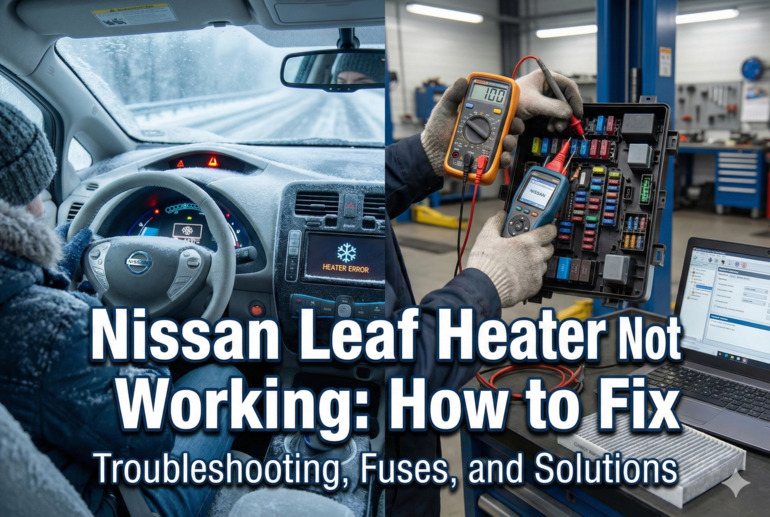
Why Your Nissan Leaf Heater Stops Working
Your Leaf’s heating system works differently from what you might be used to. There’s no hot engine coolant flowing through a heater core. Instead, your car uses a PTC (Positive Temperature Coefficient) heater that runs directly off your battery pack. Think of it like a giant hair dryer built into your dashboard.
This system pulls a serious amount of power. We’re talking about 3 to 6 kilowatts when running at full blast. That’s roughly equivalent to running 60 standard lightbulbs at once, all drawing from your battery. Because of this massive power draw, your Leaf’s computer system monitors the heater constantly, ready to shut it down if something seems off.
Several things can interrupt this process. Electrical connections can corrode over time, especially in areas with harsh winters where road salt is common. Software glitches can confuse the climate control system. The actual heating elements can fail. Sometimes, your battery management system decides the battery is too cold or too low on charge to spare the power for heating.
What happens if you ignore a broken heater? Beyond the obvious discomfort, you’re looking at serious safety risks. Your windows will fog up constantly, making it hard to see. In freezing temperatures, that fog can actually turn to ice on the inside of your windshield. Your battery efficiency will also take a hit because cold batteries don’t perform as well, creating a frustrating cycle where your range drops even further.
Nissan Leaf Heater Not Working: Common Causes
Understanding what’s causing your heater problem is half the battle. Let’s look at the most frequent culprits so you know what you’re dealing with.
1. Climate Control Fuse Blown
Your Leaf has a dedicated fuse for the climate control system, and it’s one of the first things that can go wrong. This fuse protects the heating circuit from electrical overload. When it blows, your heater simply won’t turn on at all.
Fuses blow for a reason, though. Maybe there was a power surge. Perhaps moisture got into an electrical connection somewhere. Sometimes a fuse just reaches the end of its lifespan after years of thermal cycling.
You’ll know it’s a fuse issue if your heater controls light up and seem to work, but no warm air comes out. The fan might even blow, but it’ll just be cold air circulating.
2. PTC Heater Element Failure
The PTC heater itself can fail, and this is more common in older Leafs with high mileage. These heating elements endure constant thermal stress, heating up and cooling down repeatedly over thousands of cycles. Eventually, they can crack or break internally.
When a PTC element fails, you might notice the heater works intermittently. Sometimes it blows warm air, other times just cold. This inconsistency is a telltale sign. The system might also trigger warning messages on your dashboard about the climate control system malfunctioning.
3. Low Battery State of Charge
Here’s something that catches many new Leaf owners off guard: your car will actually disable the heater if the battery charge drops below a certain threshold. The vehicle prioritizes keeping enough power to get you home safely over keeping you warm.
This protective feature kicks in around 20% battery charge, though the exact percentage can vary depending on your model year and software version. If you’ve been running errands all day and your battery is getting low, don’t be surprised when the heat cuts out. Your Leaf is essentially telling you to charge up before worrying about comfort features.
4. Faulty Climate Control Module
The climate control module is the brain behind your heating system. It decides when to turn the heater on, how much power to send to it, and how to distribute the warm air. When this module fails, all sorts of strange symptoms can appear.
You might see error codes on your dashboard. The temperature controls might not respond when you adjust them. Sometimes the system will blow hot air when you want cold, or vice versa.
This module sits behind your dashboard and connects to multiple sensors throughout the cabin. A loose connection or corroded wire can make the whole system act erratic. Software bugs can also cause problems, especially if your Leaf hasn’t had its climate control software updated in years.
5. Cabin Temperature Sensor Malfunction
Your Nissan Leaf uses several temperature sensors to monitor cabin conditions. The main sensor usually sits near the rearview mirror or in the dashboard. When this sensor fails, your climate control system gets confused about the actual temperature inside your car.
A faulty sensor might tell the system your cabin is already at 75 degrees when it’s actually 40 degrees outside. The heater won’t turn on because the computer thinks you’re already warm enough. Other times, the sensor might report wildly fluctuating temperatures, causing your heater to cycle on and off constantly.
Nissan Leaf Heater Not Working: How to Fix
Getting your heat back doesn’t always require a trip to the dealership. Here are practical solutions you can try in your own driveway.
1. Check and Replace the Climate Control Fuse
Start with the simplest fix first. Open your Leaf’s fuse box, which is located under the dashboard on the driver’s side. Your owner’s manual has a diagram showing which fuse controls the climate system.
Pull out the fuse using the small plastic tool usually clipped inside the fuse box cover. Hold it up to the light. If the thin metal strip inside is broken or blackened, you need a new fuse. They cost less than a dollar at any auto parts store.
Replace it with a fuse of the exact same amperage. Don’t try using a higher-rated fuse thinking it’ll prevent future blowouts. That’s actually dangerous and can cause electrical fires. After replacing the fuse, test your heater. If it blows again immediately, you’ve got a deeper electrical problem that needs professional diagnosis.
2. Perform a Climate Control System Reset
Sometimes your Leaf’s climate control just needs a reboot, like turning your computer off and on again. This can clear software glitches that prevent the heater from working properly.
Here’s how to do it:
- Turn off your Leaf completely and remove the key or push-button fob
- Open the driver’s door and leave it open for about two minutes
- Press the brake pedal five times to discharge any residual electrical charge
- Close the door, wait another minute, then restart your car
Check if your heater works now. This reset forces all the climate control modules to reinitialize, which often resolves communication errors between different system components. If the heater starts working, great. If not, move on to the next solution.
3. Charge Your Battery Above 30%
If your battery is running low, plug in and charge it up before doing anything else. Your Leaf won’t use precious battery power for heating when it needs that energy to keep you mobile.
Watch your charge level on the dashboard. Once you’re above 30%, try the heater again. If it starts working, you’ve found your issue. Going forward, try to keep your charge higher during winter months. Not only will this ensure your heater works, but your overall battery performance will improve since cold batteries are already less efficient.
4. Inspect and Clean Battery Connections
Corrosion on battery terminals can reduce the power available to your heating system. Pop your hood and locate the 12-volt auxiliary battery. It’s usually on the right side of the engine bay in most Leaf models.
Look at both terminals. Do you see white, blue, or green crusty buildup? That’s corrosion, and it creates resistance in your electrical system. Mix a tablespoon of baking soda with a cup of water. Use an old toothbrush to scrub the terminals and cable connections with this mixture. The fizzing reaction neutralizes the acid that causes corrosion.
Rinse everything with clean water and dry thoroughly. Reconnect the cables tightly. This simple maintenance task can restore proper electrical flow to all your systems, including the heater. Many owners are shocked at how much better their car performs after cleaning corroded battery terminals.
5. Update Climate Control Software
Nissan has released several software updates for the Leaf’s climate control system over the years. These updates fix bugs that can cause heating problems. You’ll need to visit a Nissan dealership for this, but it’s often covered under warranty or offered as a free service update.
Call ahead and ask if there are any outstanding software updates for your specific Leaf model and year. Provide your VIN so they can check their system. The actual update process usually takes about 30 minutes while you wait.
Some owners report significant improvements after software updates, especially if their Leaf is several years old and has never had its systems updated. Modern electric vehicles rely heavily on software, and keeping it current is just as important as changing oil used to be in gas cars.
6. Test the Cabin Temperature Sensor
You can check if your temperature sensor is working by monitoring how your climate system responds. Set your desired temperature to something noticeably different from the current cabin temperature. Maybe set it to 75 degrees on a cold morning.
Watch what happens. Does the system try to heat up? Or does it seem like nothing changes? If your fan speed doesn’t increase and warm air doesn’t start flowing, your sensor might be lying to the system about the actual temperature.
The sensor itself is usually accessible behind a small grille near your rearview mirror or in the center dashboard area. You can test it with a multimeter if you’re comfortable with basic electrical diagnostics. If the resistance readings don’t change when you warm it up with your hand, the sensor is dead and needs replacement.
7. Contact a Nissan-Certified EV Technician
If you’ve tried everything above and your heater still won’t cooperate, it’s time to bring in a professional who specializes in electric vehicles. The PTC heater element itself might need replacement, or there could be a deeper electrical issue in the high-voltage system that requires specialized diagnostic equipment.
Don’t take your Leaf to just any mechanic. Electric vehicles have unique safety requirements, especially when working around high-voltage components. A certified EV technician has the proper training and tools to safely diagnose and repair your heating system without risk of electric shock or damage to sensitive electronics.
Wrapping Up
A broken heater in your Nissan Leaf isn’t something you should just tolerate until spring arrives. Beyond basic comfort, your safety depends on having clear windows and good visibility. Most heater problems have straightforward solutions you can tackle yourself, from replacing a blown fuse to cleaning battery terminals.
Start with the easy fixes and work your way through the list. Pay attention to your battery charge level, especially in cold weather, since low power is one of the most common reasons the heater shuts down. If DIY solutions don’t solve the problem, finding a qualified EV technician ensures your Leaf gets the specialized care it needs to keep you warm all winter long.