
You’re cruising along, someone cuts you off, and you reach for the horn button. Nothing happens. Dead silence. That’s frustrating, especially in traffic where your horn is your main safety tool for alerting other drivers.
Your Nissan Qashqai’s horn might seem like a minor feature until it stops working. Then you realize how often you rely on it to prevent accidents, warn pedestrians, or just communicate with other drivers on the road.
Here’s what you need to know about why your horn stopped working and how to get it honking again without spending a fortune at the repair shop.
What’s Actually Happening When Your Horn Goes Silent
Your horn system is pretty straightforward, but that doesn’t mean it can’t break down. When you press that button on your steering wheel, you’re completing an electrical circuit that sends power to the horn itself. The horn then uses an electromagnet to vibrate a metal diaphragm rapidly, creating that familiar sound.
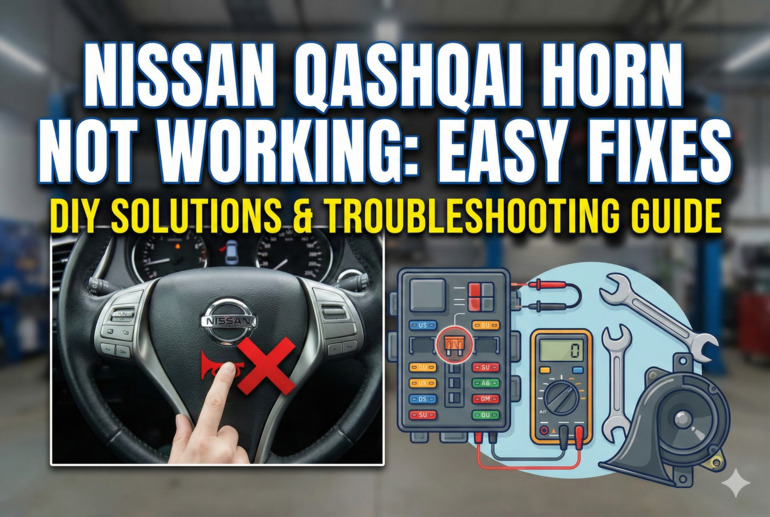
Several components work together to make this happen. You’ve got the horn button, the wiring that connects everything, a relay that acts like a switch, a fuse for protection, and the horn unit itself. Any one of these can fail, leaving you without your warning signal.
Most horn failures happen gradually. Maybe you notice the sound getting weaker over time, or it only works intermittently when you press harder on the steering wheel. Some failures are sudden, though. One day it works fine, the next day it’s completely dead.
What happens if you ignore this problem?
- You lose a critical safety feature that helps prevent collisions
- You might fail vehicle inspections in areas where working horns are required
- You could face legal issues in some jurisdictions where functional safety equipment is mandatory
- You’re left vulnerable in emergency situations where you need to alert other drivers quickly
Nissan Qashqai Horn Not Working: Common Causes
Your horn can quit for several reasons, and pinpointing the exact cause makes fixing it much easier. Let’s look at what typically goes wrong with these systems.
1. Blown Fuse
The fuse is your horn circuit’s first line of defense against electrical overload. When too much current flows through the system, this small component sacrifices itself to protect everything else. You’ll find your horn fuse in the fuse box, usually under the dashboard or in the engine bay.
Fuses blow for different reasons. Sometimes it’s just age and wear. Other times, a short circuit somewhere in the wiring causes a sudden surge. Check your owner’s manual to locate the exact fuse position for your Qashqai’s year and model.
A blown fuse is one of the easiest problems to spot and fix. The fuse will have a broken metal strip inside the clear plastic housing, visible when you pull it out and hold it up to the light.
2. Faulty Horn Relay
Your horn relay is basically an electronic switch that handles the heavy electrical load so your steering wheel button doesn’t have to. This component sits in the fuse box alongside your fuses, and it clicks on and off each time you use the horn.
Relays wear out over time from repeated use. Inside, there are contact points that eventually corrode or burn. When this happens, the relay can’t complete the circuit anymore, even when you press the horn button. You might hear a clicking sound from the relay without getting any horn sound.
3. Worn Out Horn Button or Clock Spring
That button in your steering wheel gets pressed hundreds of times over your vehicle’s life. Eventually, the contacts inside can wear down or break. The clock spring, which is a coiled ribbon of wires behind your steering wheel, can also fail. This spring allows your steering wheel to turn while maintaining electrical connections to the horn and airbag.
Clock spring failures are tricky because they often come with other symptoms. Your airbag light might come on, or other steering wheel controls might stop working too.
4. Corroded or Loose Wiring Connections
Electrical connections hate moisture and vibration. Your Qashqai’s horn wiring runs from the steering wheel through the vehicle body to the horn itself, passing through several connection points along the way. Each connection is a potential failure point.
Corrosion builds up on metal contacts when they’re exposed to moisture from rain, car washes, or just humidity. You’ll often find this near the horn itself, which sits exposed in the front of your vehicle. The green or white crusty stuff you see on corroded connections blocks electrical current.
Vibration from driving loosens connections over time. A loose wire might make intermittent contact, giving you a horn that works sometimes but not others. This can be the most frustrating problem to track down because it’s so inconsistent.
5. Failed Horn Unit
The horn itself can simply wear out or fail. These units contain moving parts that vibrate thousands of times per second when activated. Eventually, the internal components break down, the diaphragm cracks, or the electromagnet stops working properly.
Physical damage is another common culprit. The horn mounts low on your vehicle, often behind the front bumper. Road debris, water splashes, and minor impacts from parking can damage the unit. Some horns also develop internal rust from moisture exposure.
Nissan Qashqai Horn Not Working: DIY Fixes
Getting your horn back in action is usually something you can handle yourself with basic tools and a bit of patience. Here’s how to troubleshoot and fix the most common problems.
1. Check and Replace the Fuse
Start with the simplest fix first. Grab your owner’s manual and find the fuse diagram for your specific Qashqai model year. The horn fuse is typically labeled clearly.
Pull out the fuse using the small plastic fuse puller tool in your fuse box. Hold it up to a light source and look at the metal strip inside. If it’s broken or burned, you need a new one. Replacement fuses cost less than a dollar at any auto parts store.
Steps to replace:
- Turn off your ignition completely
- Locate the correct fuse in the box
- Pull the old fuse straight out
- Push the new fuse of the same amperage rating straight in
- Test your horn
2. Test and Replace the Horn Relay
The relay is usually next to the fuses in the same box. Your manual will show you which one controls the horn. You can test it by swapping it with another identical relay in your fuse box, like the one for your headlights or fog lights.
If your horn works with the swapped relay, you’ve found your problem. Buy a replacement relay, which typically costs between five and fifteen dollars. Make sure you get the exact type your vehicle needs.
Pop the old relay out by pulling straight up, then push the new one firmly into place until it clicks. Give your horn a test press to confirm everything works.
3. Clean Corroded Connections
Put on some gloves because you’ll be getting your hands dirty. Start at the horn itself, which you’ll find behind the front grille or bumper. You might need to remove some plastic trim pieces to access it.
Look for the wire connector plugged into the horn. Pull it off and inspect both the male and female terminals. Any green, white, or brown crusty buildup is corrosion that needs cleaning.
Cleaning process:
- Spray electrical contact cleaner on the corroded areas
- Use a small wire brush or fine sandpaper to scrub the contacts
- Wipe everything clean with a cloth
- Apply a tiny bit of dielectric grease to prevent future corrosion
- Reconnect everything firmly
Check other connection points along the wire path too. Any place where wires connect to other wires or components could have corrosion.
4. Replace the Horn Unit
If you’ve checked everything else and the horn still doesn’t work, the unit itself is probably dead. You can test this by running a direct wire from your battery positive terminal to the horn connection. If it doesn’t sound, it’s toast.
New horn units for the Qashqai range from twenty to sixty dollars depending on whether you want original equipment or aftermarket. Installing one is straightforward for most models.
Disconnect the old horn by unplugging the wire connector and removing the mounting bolt. The horn usually bolts to a bracket with a single nut or bolt. Bolt the new horn in the same spot, plug in the connector, and test it before putting trim pieces back.
5. Inspect the Horn Button and Clock Spring
This repair gets more involved because you’re working with your steering wheel and airbag. If you’re not comfortable with this, skip to the next fix. Safety first.
You’ll need to remove the airbag to access the horn contacts. Always disconnect your battery and wait at least fifteen minutes before touching anything near the airbag. There are specific bolts or clips holding the airbag module that you’ll need to release according to your service manual.
Once the airbag is out, you can see the horn contacts and test them with a multimeter. The clock spring sits right behind this assembly. If it’s faulty, you’ll need a replacement, which can cost between one hundred and two hundred dollars.
6. Check Ground Connections
Sometimes the problem is a bad ground. Your horn needs both power and a good ground connection to complete the circuit. The ground wire is usually a black wire that bolts directly to the vehicle’s metal frame or body.
Find where the horn’s ground wire connects to the vehicle. Loosen the bolt, clean both the metal frame and the wire terminal with sandpaper, then tighten everything back down firmly. A poor ground creates high resistance that stops current flow.
7. Contact a Professional Mechanic
After trying all these fixes, your horn should be working. If it’s still silent, you might have a more complex wiring problem that requires professional diagnostic equipment to trace. An automotive electrician can track down wiring breaks, short circuits, or computer-related issues that aren’t easily visible.
Some problems just need an expert’s touch. There’s no shame in knowing when to hand things over to someone with specialized tools and training.
Wrapping Up
Your Qashqai’s horn is a simple system, but it’s also an essential one. Most failures come down to electrical issues like blown fuses, bad relays, or corroded connections. These are things you can fix yourself with minimal tools and experience.
Start with the easiest checks first and work your way through the system methodically. You’ll likely find the problem before you need professional help. Keep those connections clean, and your horn should serve you reliably for years to come.