
There’s nothing worse than sitting in your Nissan Qashqai on a freezing morning, twisting the temperature dial all the way up, and still feeling cold air blowing through the vents. Your fingers stay numb, your breath forms clouds, and you start wondering if something’s seriously broken.
Here’s what you need to know: a heater that won’t warm up properly usually has a simple explanation, and most of the time, you can fix it yourself without spending a fortune at the mechanic. This guide will walk you through why your Qashqai’s heater might be acting cold, what’s causing the problem, and exactly how to get that warm air flowing again.
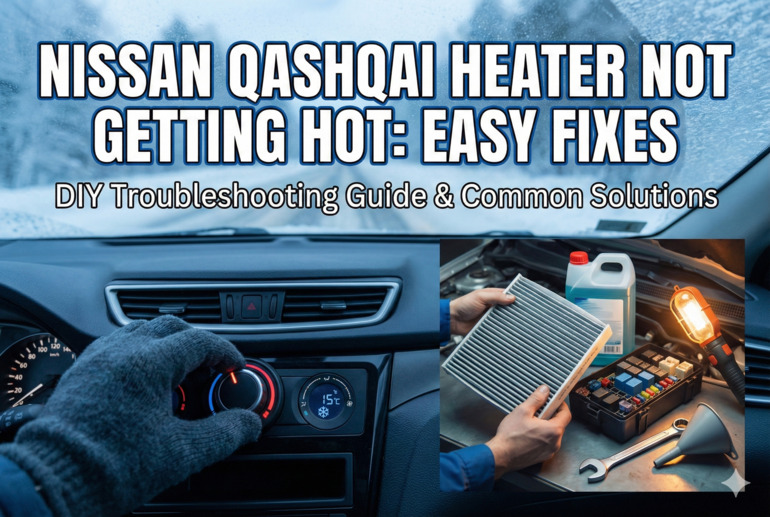
Why Your Heater Feels Like an Air Conditioner
Your Qashqai’s heating system works by pulling heat from the engine’s coolant and pushing it through a small radiator called a heater core. That warm air then gets blown into your cabin through the vents. Think of it like this: your engine gets hot while running, and your heater simply borrows some of that heat to keep you comfortable.
Several things can interrupt this process. The coolant might not be flowing properly through the heater core. Your thermostat could be stuck open, preventing the engine from reaching the right temperature. Sometimes the blend door, which controls how much hot air enters the cabin, gets jammed in the wrong position.
If you ignore a cold heater, you’re doing more than just suffering through chilly drives. Low coolant levels can lead to engine overheating, which means expensive repairs down the line. A failing thermostat can hurt your fuel economy and increase emissions. Plus, without proper cabin heating, your windshield might fog up constantly, creating a serious safety hazard while driving.
The good news? Most heater problems announce themselves before they cause major damage. You might notice your temperature gauge reading lower than normal, or the heater might work on some drives but not others. Paying attention to these early signs can save you from bigger headaches later.
Nissan Qashqai Heater Not Getting Hot: Common Causes
Understanding what’s behind your cold heater makes fixing it much easier. Here are the usual suspects that prevent your Qashqai from warming up properly.
1. Low Coolant Level
This is the most common reason your heater stops working. Coolant is the liquid that carries heat from your engine to the heater core. If there’s not enough coolant in the system, there’s nothing to heat up and blow into your cabin.
Your Qashqai might be leaking coolant from a cracked hose, a worn water pump seal, or even a tiny hole in the radiator. Sometimes coolant just evaporates over time if you haven’t topped it up in a while. Either way, low levels mean cold air.
You’ll often notice other symptoms alongside the cold heater. Your temperature gauge might fluctuate or run cooler than normal. You could spot puddles of sweet-smelling liquid under your car after parking, usually greenish or pink in color.
2. Faulty Thermostat
Your thermostat controls when coolant flows through the engine. If it gets stuck in the open position, coolant circulates constantly, even before the engine warms up. This keeps everything too cool, including the air coming through your vents.
A stuck thermostat usually shows itself through a temperature gauge that barely moves off the cold mark, even after driving for several miles. Your fuel consumption might increase too, since the engine runs less efficiently when cold.
3. Clogged Heater Core
Over time, rust, scale, and debris can build up inside the heater core, blocking coolant flow. This tiny radiator needs clear passages for hot coolant to flow through. Any blockage means less heat transfer and colder cabin air.
Clogs develop slowly, so you might notice the heat getting gradually weaker over weeks or months. Sometimes only one side of the car gets warm while the other stays cold. You might also detect a sweet smell inside the cabin, which indicates coolant leaking from a corroded heater core.
Hard water and old coolant that hasn’t been changed regularly cause most heater core clogs. If your Qashqai has high mileage and you can’t remember the last coolant flush, this could be your problem.
4. Air Trapped in the Cooling System
Air bubbles can get trapped in your cooling system after a coolant change or if there’s been a leak. These bubbles prevent hot coolant from reaching the heater core properly. Even a small air pocket can completely block heat flow.
You’ll often hear gurgling sounds from behind the dashboard when air is trapped. The heat might work sometimes and fail other times, depending on how the air moves around in the system as you drive.
5. Broken Blend Door Actuator
The blend door actuator is a small motor that controls a flap inside your heating system. This flap mixes hot and cold air to give you the temperature you select on your climate control. If the actuator fails, the door can get stuck in the cold position.
Listen carefully when you adjust your temperature settings. A clicking, ticking, or grinding noise from behind the dashboard usually means the actuator is trying to move but can’t. The air temperature might not change at all, no matter where you set the dial.
Nissan Qashqai Heater Not Getting Hot: DIY Fixes
Ready to get your heat back? These repairs range from super simple to moderately involved, but most Qashqai owners can handle them with basic tools and a little patience.
1. Check and Top Up Coolant
Start with the easiest fix first. Pop your hood and locate the coolant reservoir, a translucent plastic tank usually near the front of the engine bay. Check if the coolant level sits between the minimum and maximum marks printed on the side.
If it’s low, buy the correct coolant type for your Qashqai (check your owner’s manual) and pour it into the reservoir until it reaches the maximum line. Make sure the engine is completely cold before opening the cap, otherwise hot coolant can spray out and burn you.
After topping up, start your car and let it run for a few minutes with the heater on full blast. Check if warm air starts coming through. If the level drops again quickly, you probably have a leak that needs professional attention.
2. Bleed Air from the Cooling System
Getting air out requires a bit more effort but still counts as a simple job. Park on level ground and let the engine cool completely. Remove the radiator cap (carefully) and start the engine with the heater set to maximum heat.
Watch the coolant level in the radiator as the engine warms up. Add more coolant as needed to keep it topped up. You should see bubbles rising and popping as the air escapes. Squeeze the upper radiator hose a few times to help move stubborn air pockets along.
3. Replace the Thermostat
If your temperature gauge never gets past the first quarter mark, your thermostat likely needs replacing. This job requires basic hand tools and takes about an hour. You’ll need to drain some coolant first, then locate the thermostat housing (follow the upper radiator hose to the engine).
Remove the bolts holding the housing in place, take out the old thermostat, and install the new one with a fresh gasket. Make sure it sits in the correct orientation, usually with the spring side facing the engine. Tighten everything back up, refill the coolant, and bleed any air from the system.
New thermostats for the Qashqai cost between $15 and $40. Choosing an OEM (Original Equipment Manufacturer) part ensures it opens and closes at exactly the right temperature for your specific engine.
4. Flush the Heater Core
A clogged heater core needs a good flush to clear out the gunk. You’ll need a garden hose and some patience. Locate the two heater hoses under the hood (they run from the engine to the firewall, where the heater core sits behind the dashboard).
Carefully disconnect both hoses and attach your garden hose to one of them. Let water flow through the heater core in the opposite direction of normal coolant flow. Keep flushing until the water runs clear instead of rusty or murky.
Reconnect the hoses, refill the coolant system, and bleed out any air. This often restores heat if the blockage wasn’t too severe. If flushing doesn’t help, the heater core might be damaged internally and need replacement, which usually requires removing the entire dashboard.
5. Test and Replace the Blend Door Actuator
Start by listening near the dashboard while someone else adjusts the temperature. If you hear clicking or grinding, the actuator is probably bad. These little motors typically live behind the glove box or under the dashboard on the passenger side.
Removing the glove box usually involves popping out a few clips or removing some screws. Once you can see the actuator (a small plastic box with a wiring harness), disconnect the plug and remove the mounting screws. Install the new actuator, reconnect everything, and test the temperature control.
6. Inspect All Hoses and Connections
Sometimes the problem hides in a simple loose clamp or cracked hose. With the engine cold, check every coolant hose you can see and reach. Look for cracks, soft spots, or wetness around the connections.
Tighten any loose hose clamps with a screwdriver or small wrench. Replace hoses that feel spongy or show visible damage. Pay special attention to the heater hoses running through the firewall, as these often get overlooked during regular maintenance.
7. Call a Qualified Mechanic
If you’ve tried everything and your heater still blows cold, something more serious might be wrong. A cracked engine block, a failing water pump, or a severely damaged heater core all require professional diagnosis and repair. Don’t risk driving with a malfunctioning cooling system, as overheating can destroy your engine.
A trusted mechanic has the tools to pressure test your cooling system, check for internal leaks, and access hard-to-reach components. Sometimes spending money on professional help saves you from making an expensive problem even worse.
Wrapping Up
Getting your Qashqai’s heater working again usually comes down to finding and fixing a simple issue. Low coolant, trapped air, or a stuck thermostat account for most cold heater complaints, and these fixes won’t break the bank or require special skills. Start with the easy checks and work your way up to the more involved repairs.
Keep your cooling system maintained with regular coolant changes every two to three years. This prevents corrosion, keeps everything flowing smoothly, and helps you avoid frozen mornings wondering why your car hates you. A little prevention goes a long way toward keeping you warm and comfortable all winter long.