
You press the button on your Nissan Pathfinder’s trunk, and nothing happens. You press it again. Still nothing. Your groceries are getting heavy, and that button refuses to cooperate.
This frustrating issue affects many Pathfinder owners, but the good news is that most causes are surprisingly simple to fix. You’ll learn exactly why your trunk button stops responding and get practical solutions you can try right in your driveway.
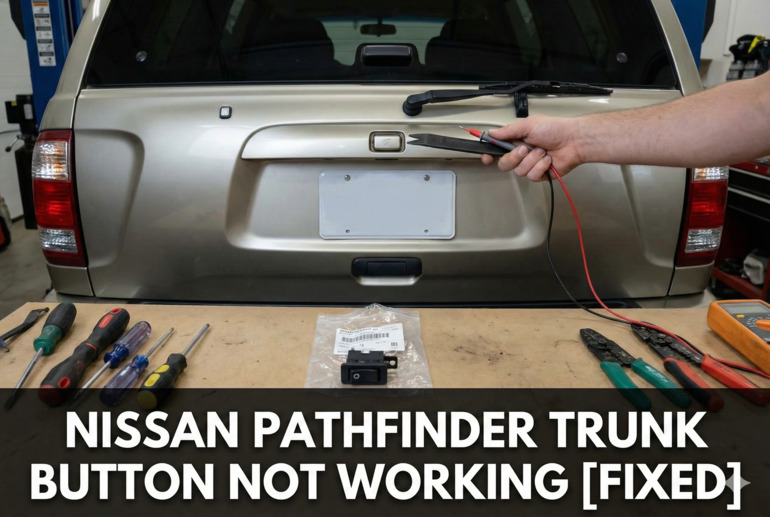
Why Your Trunk Button Stops Responding
The trunk release button on your Pathfinder relies on several connected systems to work properly. Think of it like a chain reaction: the button sends an electrical signal that tells the latch mechanism to unlock and pop open. If any link in that chain breaks down, you’re stuck pressing a dead button.
This problem often starts gradually. Maybe your trunk takes an extra second to open, or you need to press the button twice before it responds. These early warning signs tell you something’s wearing out or getting dirty. Ignoring them usually means the button will fail completely at the worst possible time.
What makes this particularly annoying is that your Pathfinder might have multiple ways to open the trunk. The key fob button might still work, or you could use the interior release switch. But when that exterior button dies, it’s often the one you reach for most, especially when your hands are full. The underlying issue could be as simple as a dirty contact or as complex as a failing latch motor.
Leaving this problem unresolved doesn’t just mean inconvenience. Over time, electrical issues can spread to other components. A short circuit in the trunk button wiring could drain your battery or damage other electrical systems. Plus, manually opening your trunk from inside the vehicle every single time gets old fast. Your back seat passengers won’t appreciate you climbing over them to reach the release handle either.
Nissan Pathfinder Trunk Button Not Working: Common Causes
Several culprits usually hide behind a non-responsive trunk button. Understanding what typically goes wrong helps you fix the problem faster instead of guessing randomly.
1. Dirty or Corroded Button Contacts
Your trunk button lives outside, exposed to rain, snow, road salt, and dirt every single day. That constant exposure takes a toll on the internal contacts that complete the electrical circuit. When you press the button, those contacts need to touch each other cleanly to send the signal.
Corrosion builds up gradually, creating a layer of gunk that blocks the electrical connection. You might not see anything wrong from the outside, but inside the button housing, green or white crusty deposits prevent proper contact. Even regular dirt and moisture can create enough interference to stop the button from working.
This happens more often if you park outside or live in areas with harsh winters. Road salt is especially brutal on electrical contacts. The button might work on dry days but fail when it’s humid or right after washing your vehicle.
2. Blown Fuse or Faulty Relay
Your Pathfinder’s trunk release system runs through a dedicated fuse that protects the circuit from electrical surges. When that fuse blows, the entire trunk release system goes dead. You could press that button until your finger falls off and nothing would happen.
Fuses blow for different reasons. Sometimes it’s just age and normal wear. Other times, a power surge or short circuit somewhere in the system causes the fuse to sacrifice itself to protect more expensive components. The relay, which acts like an electrical switch for the trunk latch motor, can also fail and produce the same symptoms.
3. Worn Out Trunk Latch Motor
Inside your trunk, a small motor powers the latch mechanism that holds everything closed. Every time you press that button, the motor activates to release the latch. After thousands of cycles, motors wear out. The internal components get tired, brushes wear down, and eventually the motor can’t generate enough force to move the latch.
You might hear a faint clicking sound when you press the button, which tells you the electrical signal is getting through but the motor itself can’t do its job anymore. Sometimes the motor works intermittently, succeeding on some attempts but failing on others. This inconsistent behavior points directly to a motor on its last legs.
4. Damaged Wiring or Loose Connections
Between your trunk button and the latch motor, several wires carry the electrical signal. These wires run through tight spaces, bend around corners, and pass through rubber boots between your body and trunk lid. All that flexing, especially after years of opening and closing your trunk, can damage the wiring.
Wires can break internally while looking perfectly fine on the outside. The insulation might crack, letting moisture in to corrode the copper. Connectors can vibrate loose over bumpy roads. Each connection point in the circuit is a potential failure spot where corrosion or looseness can interrupt the signal.
Rodents sometimes nest in vehicles and chew through wiring harnesses. If you’ve noticed other electrical gremlins in your Pathfinder, damaged wiring becomes even more likely as your culprit.
5. Faulty Trunk Button Switch
The button itself is a mechanical switch that wears out with use. Every press compresses internal components that eventually lose their springiness and conductivity. The button might feel mushy instead of clicking crisply, or it could stick in the pressed position.
Quality varies between original equipment and aftermarket replacement buttons. If someone replaced your button before with a cheap alternative, it probably won’t last as long as the factory part. Physical damage from impacts, like bumping the button while loading cargo, can also break the internal mechanism without leaving visible external damage.
Nissan Pathfinder Trunk Button Not Working: How to Fix
Fixing your trunk button doesn’t require advanced mechanical skills for most causes. Let’s walk through the solutions that solve this problem in order from simplest to more involved.
1. Clean the Button Contacts
Start with the easiest fix first. Pop out your trunk button by gently prying around the edges with a plastic trim tool or flat screwdriver wrapped in tape. Most buttons snap into place without screws. Once removed, you’ll see the back of the button assembly and the electrical contacts.
Spray electrical contact cleaner on the contacts and the corresponding points where they connect in the housing. Let it sit for a minute, then wipe everything clean with a dry cloth. You can use a small wire brush or fine sandpaper to gently remove stubborn corrosion. Just be careful not to damage the contacts themselves.
Before reinstalling, apply a thin coat of dielectric grease to the contacts. This grease protects against future moisture and corrosion while maintaining electrical conductivity. Snap the button back in place and test it. This simple cleaning solves the problem more often than you’d expect.
2. Check and Replace the Fuse
Your owner’s manual shows exactly where to find the fuse box and which fuse controls the trunk release. Pull that fuse out and hold it up to the light. You should see a thin metal strip inside connecting both ends. If that strip is broken or looks burned, the fuse is blown.
Replace it with a new fuse of the exact same amperage. Using a higher amp fuse might seem like a solution but actually creates a fire risk since it won’t protect the circuit properly. If the new fuse blows immediately or within a few days, you have a short circuit somewhere that needs professional diagnosis.
3. Test and Replace the Trunk Latch Motor
Access your trunk latch by opening the trunk and removing the interior trim panel. You’ll need to unscrew several fasteners and possibly unclip some plastic retainers. The latch motor is usually held in place by two or three bolts.
Before removing anything, test the motor directly. Disconnect the electrical connector and use jumper wires to apply 12 volts directly from your battery to the motor terminals. If the motor doesn’t activate, it’s dead and needs replacement. If it works, your problem lies elsewhere in the circuit.
Installing a new latch motor is straightforward. Unbolt the old unit, disconnect the rod that connects to the latch mechanism, then reverse the process with your new motor. Make sure all connections are tight and test thoroughly before reassembling the trim panel.
4. Inspect and Repair Wiring
Check the wiring running from your trunk button through the rubber boot between the body and trunk lid. Open and close the trunk slowly while examining the wires for any that look pinched, stretched, or damaged. Look for spots where the insulation has worn through.
Use a multimeter to test continuity through each wire. Set the meter to continuity mode, touch one probe to each end of a wire, and check if you get a beep or reading. No continuity means that wire is broken somewhere. You’ll need to splice in a new section of wire using solder and heat shrink tubing for a reliable repair.
5. Replace the Trunk Button Assembly
If cleaning didn’t help and everything else checks out, your button switch itself is probably worn out internally. Order a genuine Nissan replacement part using your vehicle’s VIN to ensure correct fitment. Aftermarket buttons are cheaper but often fail faster.
Installation takes just minutes. Remove the old button, disconnect the electrical connector, connect the new button, and snap it into place. Test it several times before considering the job done. A new button should click firmly and respond every single time you press it.
6. Consult a Professional Mechanic
If you’ve tried everything and your trunk button still won’t cooperate, electrical issues can get complicated. A professional mechanic has diagnostic tools that can pinpoint problems faster than trial and error. They can scan for error codes, test electrical signals throughout the circuit, and access technical service bulletins that might describe known issues with your specific model year.
Sometimes the problem involves the body control module or other computer systems that require specialized knowledge to diagnose and repair safely. Spending money on professional help beats wasting time and money replacing parts that aren’t actually broken.
Wrapping Up
Your Pathfinder’s trunk button problem usually stems from something simple like dirty contacts or a blown fuse. Starting with basic cleaning and fuse checks often gets you back in business without spending a dime. Even the more involved fixes like replacing a latch motor or button assembly are manageable with basic tools and patience.
Regular maintenance helps prevent these issues. Spray your trunk button with water-displacing lubricant a couple times a year, especially before winter. Check your fuses occasionally. These small preventive steps keep your trunk button working smoothly for years. Your back will thank you every time you can pop that trunk open without wrestling with workarounds.