
You hop into your Nissan Juke, ready to run some errands, and notice something odd. Your fuel gauge sits stubbornly at empty even though you filled up yesterday. Or maybe it’s stuck at full, refusing to budge no matter how many miles you drive.
This happens more often than you’d think with the Juke. A faulty fuel gauge can turn every trip into a guessing game about how much gas you actually have left. Nobody wants to be stranded on the side of the road because their gauge lied to them.
Here’s what you need to know about fixing this frustrating issue yourself, from understanding what’s going wrong to getting your gauge reading accurately again.
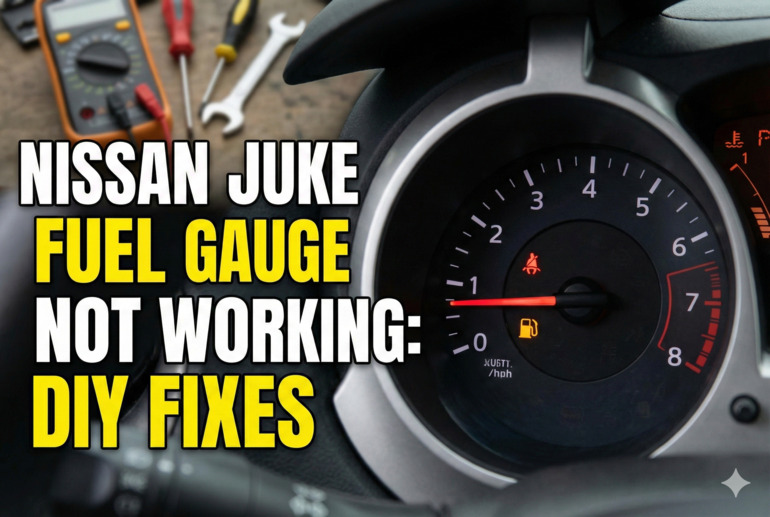
What’s Really Happening With Your Fuel Gauge
Your fuel gauge seems simple enough on the surface, but there’s actually a small system at work behind that needle or digital display. A sensor called the fuel level sender sits inside your gas tank, floating on top of the fuel. As your tank empties, this float drops, sending different electrical signals to your dashboard gauge. Your gauge then translates those signals into the reading you see.
Things get messy when any part of this chain breaks down. The gauge might show empty when you’re nearly full, stick in one position regardless of your fuel level, or swing wildly between readings. Sometimes it works perfectly for a few minutes, then goes haywire without warning.
Running on a faulty gauge creates real problems beyond just inconvenience. You could run out of gas unexpectedly, which can damage your fuel pump since it relies on being submerged in gasoline to stay cool. Constantly keeping your tank too full to compensate wastes money and adds unnecessary weight to your vehicle.
The electrical nature of this system means several different components could be at fault. Your gauge cluster itself, the wiring connecting everything, the fuel pump module, or that sender unit floating in your tank could all be culprits. Pinpointing the exact cause takes some detective work.
Nissan Juke Fuel Gauge Not Working: Common Causes
Multiple things can knock your fuel gauge off track, and figuring out which one is causing your headache requires looking at the symptoms. Here are the usual suspects behind a misbehaving fuel gauge.
1. Failing Fuel Level Sender
That float and sensor assembly in your tank doesn’t last forever. Over time, the float can develop cracks and fill with gasoline, causing it to sink lower than it should. The arm connecting the float to the sensor can also corrode or bend, especially if you’ve had your Juke for several years or put on serious mileage.
Contaminated fuel accelerates this wear. Water, dirt, or debris in your gas tank attacks the delicate components of the sender unit. The electrical contacts inside can corrode, creating intermittent connections that make your gauge act erratically.
You’ll often notice this problem getting worse gradually. First, the gauge might read a bit off. Then it starts sticking at certain levels. Eventually, it stops responding altogether or gives you completely random readings.
2. Bad Wiring or Loose Connections
Your fuel sender communicates with the gauge through wiring that runs from the tank all the way to your dashboard. This wiring takes a beating from road vibrations, temperature changes, and general wear over time. Connections can work loose, wires can fray, and corrosion can build up at contact points.
The connector at the fuel pump module, located on top of your tank, is particularly vulnerable. Moisture can seep in around the access panel, creating corrosion that interrupts the electrical signal. Even a tiny bit of corrosion can cause big problems with these low-voltage circuits.
3. Faulty Instrument Cluster
Sometimes the gauge itself goes bad rather than the sender. The stepper motor that moves the needle can fail, or the circuit board inside your instrument cluster can develop problems. This is less common than sender issues but still happens.
Your gauge might stick in one position, twitch randomly, or show readings that clearly don’t match reality. If multiple gauges in your cluster are acting up at the same time, this points toward a cluster problem rather than individual sender issues.
4. Blown Fuse or Relay Issues
Your instrument cluster and fuel system both rely on fuses for protection. A blown fuse can knock out your fuel gauge along with other dashboard functions. This is one of the easiest problems to check and fix.
Related electrical issues, like a failing body control module or ground connection problems, can also affect gauge operation. These create intermittent problems that come and go seemingly at random.
5. Fuel Pump Module Problems
The sender unit is part of your fuel pump module, which handles several jobs at once. If you’ve recently had fuel pump work done or if your pump is showing signs of failure, related components including the sender could be affected.
A failing pump module can cause voltage drops or signal interference that throws off your gauge readings. You might notice other symptoms like rough running or hesitation along with the gauge issues.
Nissan Juke Fuel Gauge Not Working: DIY Fixes
Getting your fuel gauge working again doesn’t always mean expensive shop visits. Start with these fixes and work your way through them systematically.
1. Check the Fuses First
Pop open your fuse box and locate the fuse for your instrument cluster. Your owner’s manual shows exactly where to find it. Pull the fuse out and inspect it closely under good light.
A blown fuse has a broken wire visible inside the clear plastic housing. Replace it with one of the exact same amperage. Never use a higher-rated fuse as a substitute.
If the new fuse blows immediately, you’ve got a short circuit somewhere that needs professional attention. Otherwise, test your gauge to see if this simple fix solved the problem.
2. Reset the Instrument Cluster
Electronic glitches sometimes cause gauge problems that a simple reset can fix. Disconnect your battery’s negative terminal and wait about 15 minutes. This drains the capacitors and resets the vehicle’s computers.
Reconnect the battery and start your Juke. Let it run for a few minutes while the systems reinitialize. Check if your fuel gauge starts responding properly. This won’t fix mechanical problems, but it can resolve software hiccups.
3. Inspect and Clean the Sender Connections
You’ll need to access the fuel pump module on top of your tank for this one. Fold down the rear seats and remove the small access panel in the floor. You’ll see the fuel pump assembly with an electrical connector plugged into it.
Disconnect the connector carefully. Look for any signs of corrosion, dirt, or damage on the pins. Clean both the connector and the pins using electrical contact cleaner. Let everything dry completely.
Push the connector back firmly until you hear or feel it click into place. A loose connection here causes all sorts of erratic gauge behavior. Test your gauge after reassembling everything.
4. Test the Fuel Level Sender
With the access panel still open, you can test the sender using a multimeter. Disconnect the electrical connector and set your multimeter to measure resistance (ohms). Check your service manual for the correct resistance values at different fuel levels.
Touch the multimeter probes to the appropriate pins on the sender. The resistance should change as you rock the vehicle gently, moving the float. No change means a bad sender that needs replacement.
Replacing the sender typically means replacing the entire fuel pump module since they’re integrated. This runs a few hundred dollars for the part, but you can install it yourself if you’re comfortable working with fuel systems. Always relieve fuel system pressure first and work in a well-ventilated area away from sparks or flames.
5. Check Ground Connections
Poor grounding causes all kinds of electrical gremlins. Locate the ground points for your instrument cluster and fuel pump circuit. These are typically bolts that connect ground wires to the vehicle’s body or frame.
Remove each ground connection, clean away any rust or corrosion with a wire brush, and reattach the connection tightly. A bad ground can make your gauge read incorrectly even when everything else works perfectly. This takes maybe 20 minutes and costs nothing but often fixes mysterious electrical problems.
6. Consider Professional Diagnosis
If you’ve tried these fixes and your gauge still won’t cooperate, it’s time to call in a professional mechanic or auto electrician. They have specialized diagnostic tools that can pinpoint exactly where the circuit is failing. Some problems, like a faulty instrument cluster or complex wiring issues, require expertise and equipment beyond basic DIY repairs.
Wrapping Up
A broken fuel gauge in your Nissan Juke doesn’t have to mean expensive repair bills right away. Many causes have simple solutions you can tackle yourself with basic tools and a little patience. Start with the easy checks like fuses and connections before moving on to more involved repairs.
Keep track of what you’ve tried and how your gauge responds. This information helps both you and any mechanic you eventually consult. Most importantly, don’t ignore this problem or try to just live with it. Knowing how much fuel you actually have keeps you safe on the road and protects your vehicle from potential damage.