
You glance at your dashboard, and your fuel gauge is stuck on empty even though you just filled up. Or maybe it’s sitting at full when you know you’ve been driving for days. Either way, that little needle has stopped doing its job, and now you’re left guessing how much gas you actually have.
This is frustrating, and honestly, a bit nerve-wracking. Running out of fuel on a busy highway or in an unfamiliar neighborhood isn’t exactly on anyone’s bucket list. The good part is that a faulty fuel gauge in your Nissan Tiida usually has fixable causes, and many of them you can tackle yourself with basic tools and a little patience.
In this article, you’ll learn what makes your fuel gauge stop working, the most common reasons behind this problem, and practical fixes you can try at home before calling in professional help.
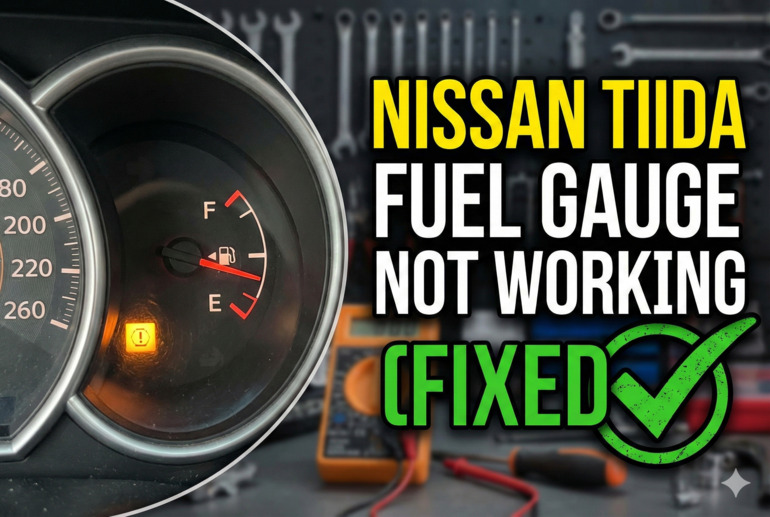
Why Your Fuel Gauge Stops Telling the Truth
Your fuel gauge seems simple, but there’s actually a small system working behind that needle or digital readout. Inside your fuel tank sits a sender unit with a float attached to an arm. As fuel levels change, the float moves up and down, which changes the electrical resistance in the sender. This resistance signal travels to your gauge, telling it where the needle should point.
When this system breaks down anywhere along the chain, your gauge gives you wrong information or no information at all. Sometimes the needle gets stuck in one position. Other times it bounces around erratically, jumping from full to empty and back again. You might even see it reading backwards, showing empty when you’re full and full when you’re running low.
Ignoring this problem means you’re flying blind on fuel. You could run out of gas unexpectedly, which can damage your fuel pump since it uses gasoline for cooling. Stranding yourself somewhere inconvenient is the obvious risk, but there’s also the wear on your engine from running a tank too low, which lets sediment from the bottom get sucked into your fuel system.
The electrical components involved are pretty straightforward, which is why many Tiida owners can fix this themselves. But you need to know what you’re looking for first.
Nissan Tiida Fuel Gauge Not Working: Common Causes
Several things can knock your fuel gauge out of commission, and pinpointing the exact culprit saves you time and money. Here are the usual suspects that mechanics see most often with the Nissan Tiida.
1. Faulty Fuel Sending Unit
The sending unit in your tank takes the most abuse. It’s constantly submerged in gasoline, dealing with temperature changes, and moving parts that eventually wear out.
The float arm can corrode or the float itself can develop a leak and sink. When that happens, it can’t accurately track your fuel level. The resistor inside the sender can also fail, sending incorrect signals to your gauge.
If you notice the gauge working intermittently or reading correctly only at certain fuel levels, the sending unit is usually the problem. This component fails more often in older Tiidas or ones that have sat unused for long periods.
2. Blown Fuse or Bad Wiring
Your fuel gauge runs on your car’s electrical system, which means fuses and wires keep everything connected. A blown fuse cuts power completely, leaving your gauge dead.
Wiring problems are sneakier. Connections can corrode, especially near the fuel tank where moisture accumulates. Wires can break or short out, and connectors can come loose from vibration over time. Check behind your gauge cluster and along the fuel tank’s wiring harness. These are common failure points.
3. Defective Gauge Cluster
Sometimes the problem isn’t in the tank at all but right there on your dashboard. The gauge itself can fail internally, or the circuit board behind it can develop issues.
This is more common if other gauges are acting strange too. Maybe your temperature gauge is flickering, or your speedometer occasionally drops to zero. These symptoms point to cluster problems rather than tank issues.
Gauge clusters can also malfunction after accidents or if someone installed aftermarket accessories incorrectly, tapping into the wrong circuits and causing shorts.
4. Ground Connection Issues
Electrical systems need a solid ground to complete their circuits. Your fuel gauge system grounds to your car’s chassis, and if that connection gets rusty, dirty, or loose, electrical signals can’t flow properly.
Ground issues create all sorts of weird symptoms. Your gauge might work sometimes and not others, or it might give readings that seem random. Cold or damp weather often makes ground problems worse because moisture affects conductivity.
5. Damaged Instrument Cluster Connector
The connector that plugs into the back of your instrument cluster takes a beating every time your car hits a bump or pothole. Over years of driving, the pins inside can bend, corrode, or lose their tension.
When this connector gets compromised, you might see multiple gauges acting up at once. The fuel gauge shares this connection with other instruments, so a bad connector affects everything plugged into it. Sometimes just wiggling the connector makes the gauge jump to life temporarily, which is a telltale sign of this problem.
Nissan Tiida Fuel Gauge Not Working: DIY Fixes
Fixing your fuel gauge doesn’t always mean a trip to the mechanic. Many solutions are within reach if you’re comfortable with basic car maintenance and have a multimeter handy. Here’s what you can try.
1. Check and Replace the Fuse
Start with the easiest fix. Your owner’s manual shows which fuse controls the instrument cluster. Pop open your fuse box, usually located under the dashboard or in the engine bay, and find the right fuse.
Pull it out and look at the metal strip inside. If it’s broken or burned, replace it with a new fuse of the same amperage. Never use a higher-amp fuse, as this can damage your electrical system or cause fires.
If the new fuse blows immediately, you have a short circuit somewhere that needs professional diagnosis. But if the fuse was just old and worn out, this five-minute fix might solve everything.
2. Test the Fuel Sending Unit
You’ll need to access your fuel tank for this one. On the Tiida, you can often reach the sending unit by removing the back seat cushion and lifting a small access panel, which beats dropping the entire tank.
Disconnect the electrical connector from the sending unit and use your multimeter to check resistance. With the tank empty, resistance should be around 110 ohms, and with the tank full, it should drop to about 10 ohms. Move the float arm manually and watch the resistance change smoothly.
If the readings jump around or don’t change at all, your sending unit needs replacement. This part isn’t terribly expensive, and changing it yourself saves significant labor costs. Just remember to work in a well-ventilated area and keep sparks away from fuel vapors.
3. Inspect and Clean Ground Connections
Look for ground wires attached to your chassis near the fuel tank and behind the dashboard. These are usually black or brown wires bolted to bare metal.
Remove each ground connection, clean both the wire terminal and the metal surface with a wire brush or sandpaper until you see shiny metal, then reattach everything tightly. Corrosion here acts like an insulator, blocking electrical flow. A clean, tight ground can bring a dead gauge back to life.
Sometimes adding a bit of dielectric grease to the cleaned connection prevents future corrosion. This simple maintenance step fixes more electrical gremlins than most people realize.
4. Check Wiring Harness Connections
Trace the wires from your fuel tank to your dashboard, looking for damaged insulation, loose connectors, or signs of corrosion. Pay special attention to connector plugs, which can work loose or collect moisture.
Unplug each connector you find, inspect the pins for corrosion or damage, and plug them back in firmly. You should hear or feel a solid click. Wiggle them gently to make sure they’re seated properly.
If you find damaged wires, repair them with proper automotive wire connectors and heat shrink tubing. Electrical tape alone won’t hold up long term in a car environment. Take your time here because a loose connection that seems fine now can fail again next week.
5. Test the Gauge Cluster
If everything else checks out but your gauge still doesn’t work, the cluster itself might be faulty. You can remove the instrument cluster by taking out a few screws around the bezel and carefully pulling it forward while disconnecting the harness behind it.
With the cluster out, you can visually inspect the circuit board for burned components, cracked solder joints, or obvious damage. Sometimes reflowing solder joints on the fuel gauge connector pins fixes the issue. If you’re not comfortable with electronics work, this is where you might want professional help.
Some auto parts stores and online retailers sell rebuilt instrument clusters for the Tiida. Swapping in a known-good cluster is often cheaper and easier than trying to repair circuit board issues yourself.
6. When All Else Fails, See a Professional
If you’ve worked through these fixes and your gauge still isn’t cooperating, it’s time to get an experienced automotive electrician involved. Some problems require diagnostic tools and expertise that go beyond basic troubleshooting.
A professional can perform voltage drop tests, check for computer communication errors, and diagnose issues that aren’t obvious to the naked eye. Sometimes the problem lies in the body control module or other systems that communicate with your gauge cluster. These scenarios need specialized equipment and knowledge to fix safely.
Wrapping Up
A broken fuel gauge in your Nissan Tiida doesn’t have to leave you stranded or stressed. Most causes are straightforward electrical or mechanical failures that you can identify and fix with basic tools and some patience. Whether it’s a blown fuse, a worn-out sending unit, or a corroded ground connection, the solution is usually simpler than you’d think.
Taking the time to troubleshoot systematically saves you money and gives you confidence in handling your car’s quirks. Start with the easy checks and work your way deeper into the system. Even if you end up needing professional help, you’ll understand what’s wrong and why, which helps you make informed decisions about repairs.