
You press down on your gas pedal expecting your Nissan Altima to accelerate smoothly, but nothing happens. Or maybe it hesitates before finally responding. This can be scary, especially if you’re merging onto a busy highway or trying to avoid a potential accident.
A gas pedal that won’t respond properly turns your reliable Altima into a safety hazard. The lack of acceleration when you need it most puts you and other drivers at risk. Understanding why this happens and knowing how to fix it can save you from dangerous situations and expensive mechanic bills.
This guide walks you through everything you need to know about a non-responsive gas pedal, from identifying what’s causing the problem to practical fixes you can handle yourself.
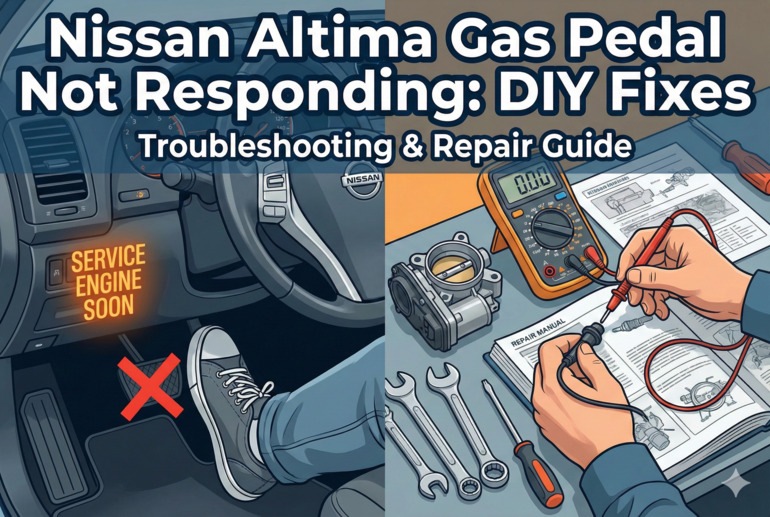
What’s Really Happening When Your Gas Pedal Stops Working
Your gas pedal connects to a complex system that tells your engine how much power to deliver. Most modern Nissan Altimas use an electronic throttle control system instead of the old-style cables. This means your pedal sends electrical signals to the engine computer, which then adjusts the throttle opening.
When this system fails, your engine doesn’t get the message that you want more power. You might experience complete lack of response, delayed acceleration, or intermittent issues where the pedal works sometimes but not others. Some drivers report pressing the pedal all the way down only to feel the car crawl forward at a snail’s pace.
The check engine light often comes on when there’s a throttle system problem, though not always. Your Altima might also enter “limp mode,” a safety feature that limits engine power to prevent damage. This feels like your car refuses to go faster than 30 or 40 miles per hour no matter how hard you push the pedal.
Ignoring this problem won’t make it go away. A malfunctioning gas pedal can leave you stranded in traffic or cause accidents if the car suddenly responds after a delay. The longer you wait, the more damage might occur to related components, turning a simple fix into an expensive repair job.
Nissan Altima Gas Pedal Not Responding: Common Causes
Several things can make your gas pedal stop responding properly. Pinpointing the exact cause helps you apply the right fix without wasting time and money on the wrong solution.
1. Faulty Accelerator Pedal Position Sensor
The accelerator pedal position sensor sits inside your pedal assembly and tracks how far down you’re pressing. Your engine computer relies on this sensor to know how much throttle to give. When the sensor fails, the computer receives incorrect or no information about your pedal position.
This sensor wears out over time from constant use. Every time you press and release the pedal, tiny components inside the sensor move. After years of driving, these parts can break down or lose their calibration. You might notice the problem getting worse gradually, or it might happen suddenly.
Moisture can also damage the sensor. If you’ve had water leaks in your car or driven through deep puddles, water might have gotten into the pedal assembly. Corrosion builds up on the electrical contacts, causing erratic signals or complete failure.
2. Throttle Body Problems
Your throttle body controls the amount of air flowing into your engine. It contains a butterfly valve that opens and closes based on signals from the pedal sensor and engine computer. When the throttle body gets dirty or the valve sticks, your engine can’t breathe properly.
Carbon deposits build up inside the throttle body over time. These deposits come from oil vapor in the air intake system and fuel residue. A dirty throttle body restricts airflow and prevents the valve from moving smoothly. Your car might feel sluggish even when the pedal sensor works perfectly.
The throttle position sensor, which sits on the throttle body itself, can also fail. This sensor tells the computer where the throttle valve is positioned. A bad sensor sends wrong information, causing poor throttle response or making the engine computer confused about what’s happening.
3. Electrical Connection Issues
Your throttle system depends on clean, solid electrical connections. Loose or corroded connectors can interrupt the signals between your pedal, sensors, and engine computer. This creates intermittent problems that seem to come and go randomly.
Connector pins can corrode from exposure to moisture and road salt. The protective boots that seal these connectors sometimes crack or tear, letting water inside. Once corrosion starts, it spreads quickly and disrupts the electrical signals your engine needs.
4. Engine Control Module Software Glitches
Your Altima’s engine computer runs sophisticated software that manages the throttle system. Sometimes this software develops glitches or gets out of sync with the sensors. Nissan has issued several software updates over the years to fix throttle-related bugs in various Altima models.
These glitches can make your pedal response unpredictable. The computer might interpret normal pedal movements as errors and limit engine power to protect itself. Other times, the software gets stuck in a fault state even after the original problem is fixed.
Electrical interference from other vehicle systems or aftermarket accessories can also confuse the engine computer. Bad grounds or voltage fluctuations might trigger false error codes that put your car into limp mode.
5. Mass Airflow Sensor Failure
Your mass airflow sensor measures how much air enters the engine. The engine computer uses this information along with pedal position to calculate proper fuel delivery and throttle opening. A failing MAF sensor sends incorrect air measurement data, causing hesitation and poor acceleration.
Dirty MAF sensors are extremely common. Dust and oil particles coat the delicate sensing element inside, throwing off the readings. Your engine thinks it’s getting less or more air than reality, so it can’t match fuel delivery properly. This makes acceleration feel weak or unresponsive even though your pedal and throttle body work fine.
Nissan Altima Gas Pedal Not Responding: DIY Fixes
Fixing a non-responsive gas pedal often takes less effort than you’d think. These solutions tackle the most common causes and can restore normal operation without professional help.
1. Reset the Engine Control Module
Your first step should be resetting the engine computer. This clears temporary glitches and lets the system relearn proper sensor values. Pop your hood and locate the battery.
Disconnect the negative battery cable using a wrench. Wait at least 15 minutes before reconnecting it. This gives the computer time to fully discharge and reset. Some people wait 30 minutes just to be thorough.
After reconnecting the battery, start your car and let it idle for about five minutes. Take a short drive, accelerating gently at first. The computer needs to relearn your driving patterns and sensor ranges. Many throttle issues disappear after this simple reset, especially if the problem was caused by software glitches or sensor drift.
2. Clean the Throttle Body
A dirty throttle body responds well to cleaning, and you can do this yourself with basic tools. You’ll need throttle body cleaner spray and a clean rag. Start by locating the throttle body, which sits between your air filter box and intake manifold.
Remove the air intake duct to access the throttle body opening. Spray throttle body cleaner directly onto the butterfly valve and inside the bore. Use the rag to wipe away carbon deposits. Be gentle with the valve itself since it’s delicate.
Don’t use carburetor cleaner or brake cleaner, as these are too harsh and can damage sensors. Throttle body cleaner is specifically formulated for this job. Spray liberally and wipe until the inside looks clean and shiny. Reassemble everything, then reset the computer using the battery disconnect method. Your Altima should show improved throttle response immediately if dirt was the culprit.
3. Check and Clean Electrical Connections
Inspecting electrical connections takes patience but costs nothing. Locate the connector at your accelerator pedal assembly under the dashboard. Press the release tab and carefully disconnect it.
Look inside both the male and female sides of the connector. Green or white crusty buildup indicates corrosion. Spray the connector with electrical contact cleaner and let it dry completely. You can also use a small wire brush to gently clean the pins.
Check the connector at the throttle body and MAF sensor too. Follow the wires from these components to find their connectors. Clean them the same way. Make sure all connections click firmly back together. Loose connections cause intermittent problems that are hard to diagnose, so give each connector a gentle tug after reconnecting to confirm it’s secure.
4. Inspect and Replace the Accelerator Pedal Position Sensor
Testing the pedal sensor requires a multimeter, but replacement is straightforward if you find it’s bad. The sensor is part of the pedal assembly in most Altimas. You’ll need to remove the pedal assembly from under the dash.
Look for three or four bolts holding the pedal assembly to the firewall or mounting bracket. Remove these bolts and disconnect the electrical connector. Pull the assembly out carefully. Most auto parts stores sell complete pedal assemblies with new sensors already installed for $50 to $150.
Installation reverses the removal process. Bolt the new assembly in place and plug in the connector. Reset the computer afterward so it can learn the new sensor’s values. This fix solves persistent problems that cleaning and resets can’t touch.
5. Clean the Mass Airflow Sensor
Your MAF sensor sits in the air intake tube between the air filter and throttle body. Locate it by following the large tube from your air filter box. The sensor has an electrical connector and is usually held by two screws or clamps.
Disconnect the electrical connector first. Remove the screws or loosen the clamps, then pull the sensor out. Buy MAF sensor cleaner spray from any auto parts store. Regular cleaners will destroy the sensor, so use only the proper MAF cleaner.
Spray the sensing element inside the sensor housing. This element looks like a small wire or film. Let the cleaner evaporate completely before reinstalling. The whole job takes ten minutes and often fixes acceleration problems that seem unrelated to the sensor. A clean MAF helps your engine computer make accurate calculations about fuel and throttle settings.
6. Update the Engine Control Module Software
Some Nissan dealerships offer free software updates if your Altima’s computer has known bugs. Call your local dealer’s service department and ask if any throttle-related updates are available for your model year. Have your VIN ready when you call.
If updates exist, the dealer needs to connect special equipment to your car’s diagnostic port. This usually takes 30 minutes to an hour. While some dealers charge for this service, others perform safety-related updates for free. Software updates have fixed throttle response issues in many Altimas, particularly 2013 to 2018 models that had documented electronic throttle problems.
7. Consult a Professional Mechanic
After trying these fixes, if your gas pedal still won’t respond properly, deeper issues might exist. Problems with the throttle body motor, internal engine computer faults, or wiring harness damage require professional diagnostic equipment and expertise. A qualified mechanic can scan for specific error codes and test components you can’t easily access. They have the tools to measure sensor voltages, check for proper signal patterns, and identify problems that aren’t obvious from visual inspection. Safety comes first, so don’t keep driving with a malfunctioning throttle system if these DIY fixes don’t solve your problem.
Wrapping Up
A gas pedal that doesn’t respond properly feels terrifying, but you now have the knowledge to tackle this problem yourself. Start with the simple fixes like resetting the computer and cleaning the throttle body. These solutions work surprisingly often and cost almost nothing.
If basic fixes don’t help, move on to checking electrical connections and sensors. Most Altima throttle problems come from dirty components or worn sensors rather than serious mechanical failures. Taking action now prevents getting stranded and keeps you safe on the road.